De Euskadi a Europa: INBUILT se inspira en Opengela para conocer estrategias avanzadas de rehabilitación urbana a gran escala

De Euskadi a Europa: INBUILT se inspira en Opengela para conocer estrategias avanzadas de rehabilitación urbana a gran escala

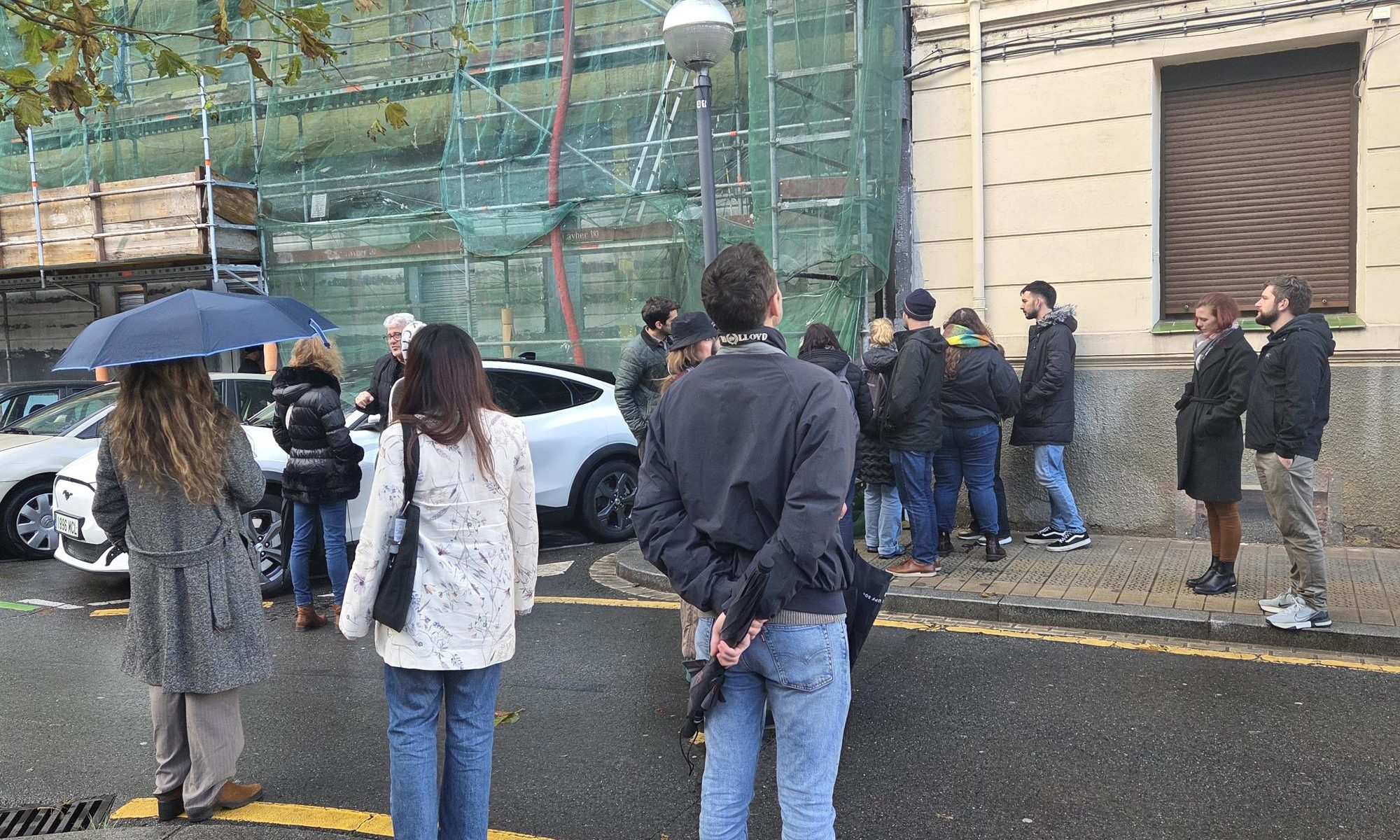
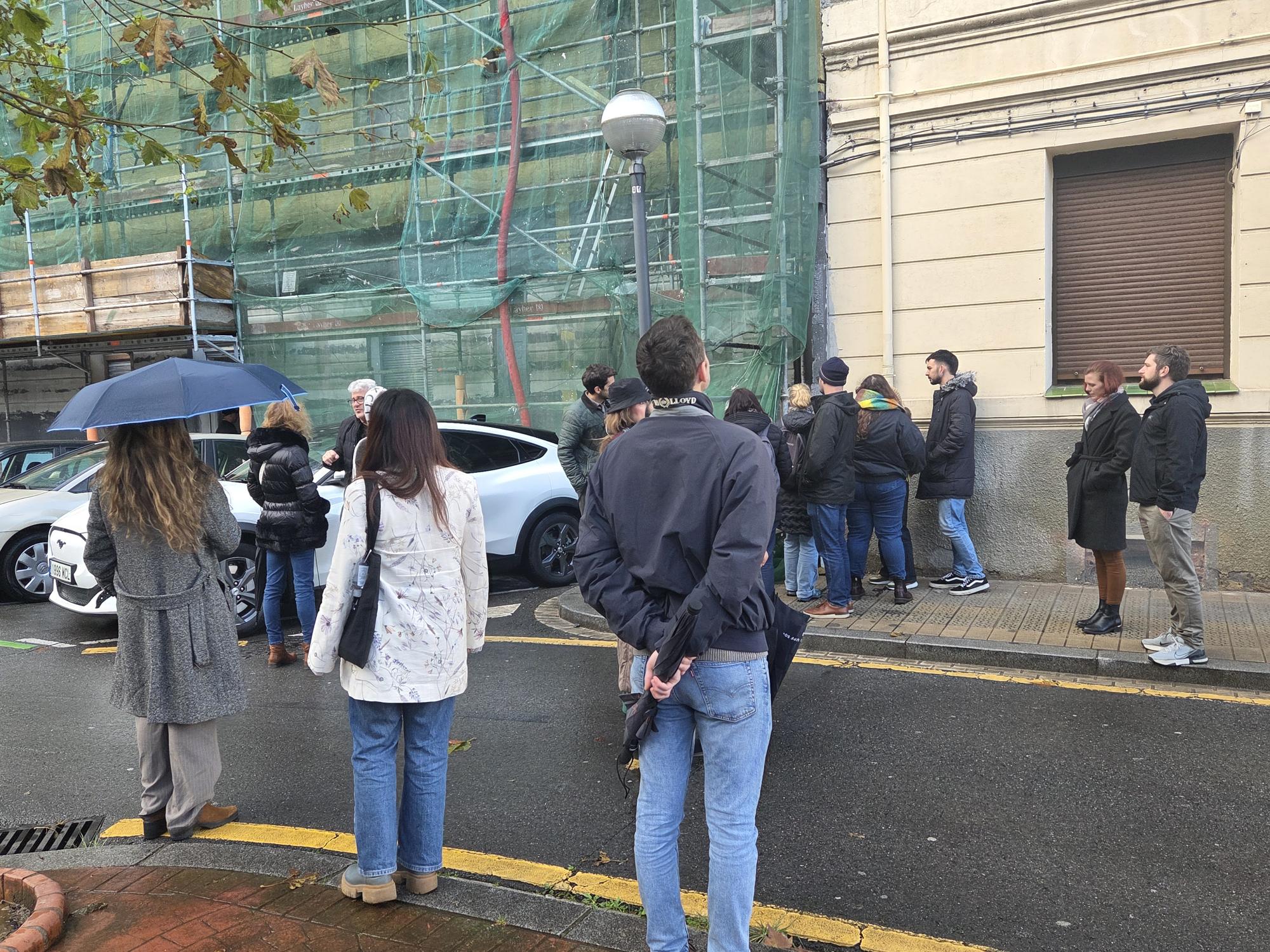
Socios de INBUILT durante la visita

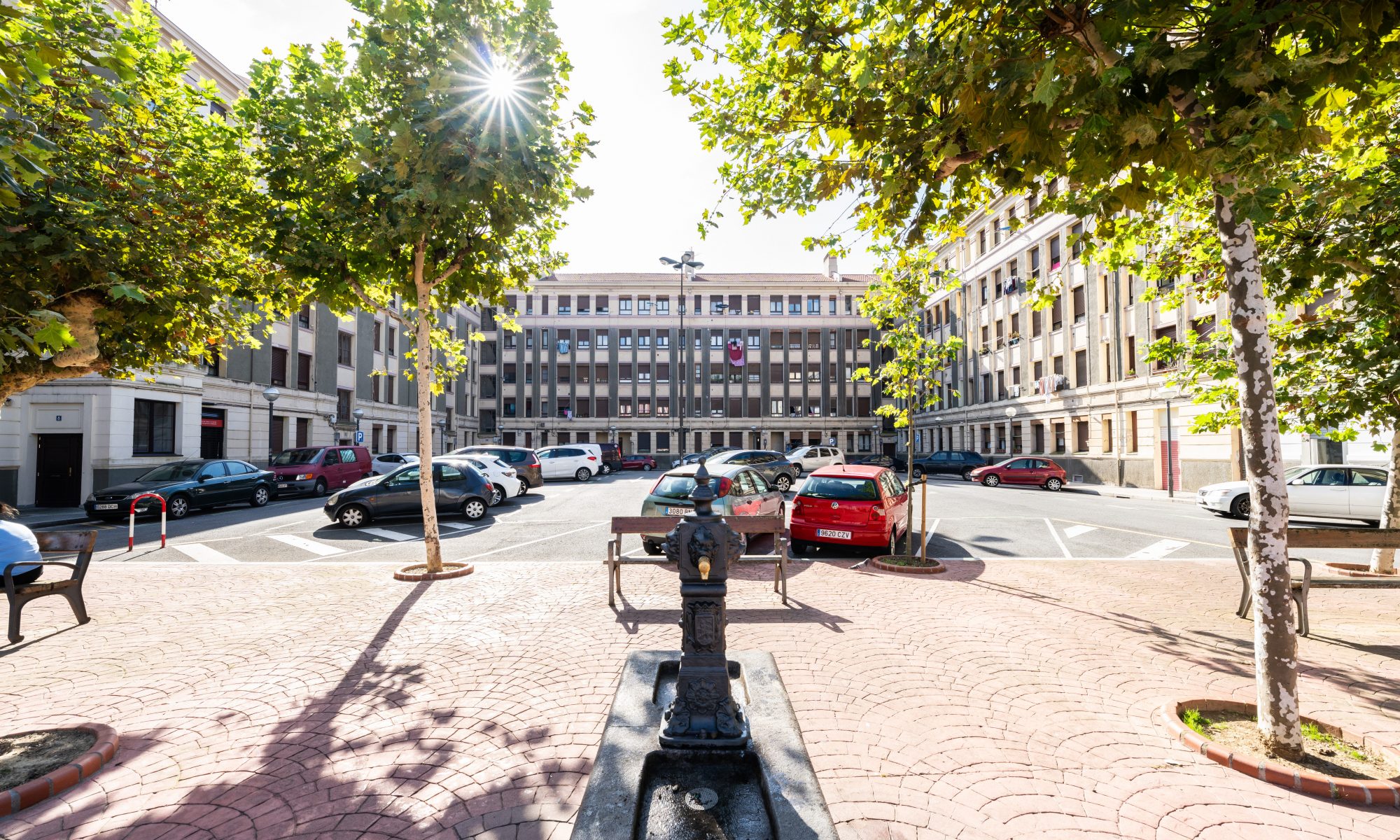
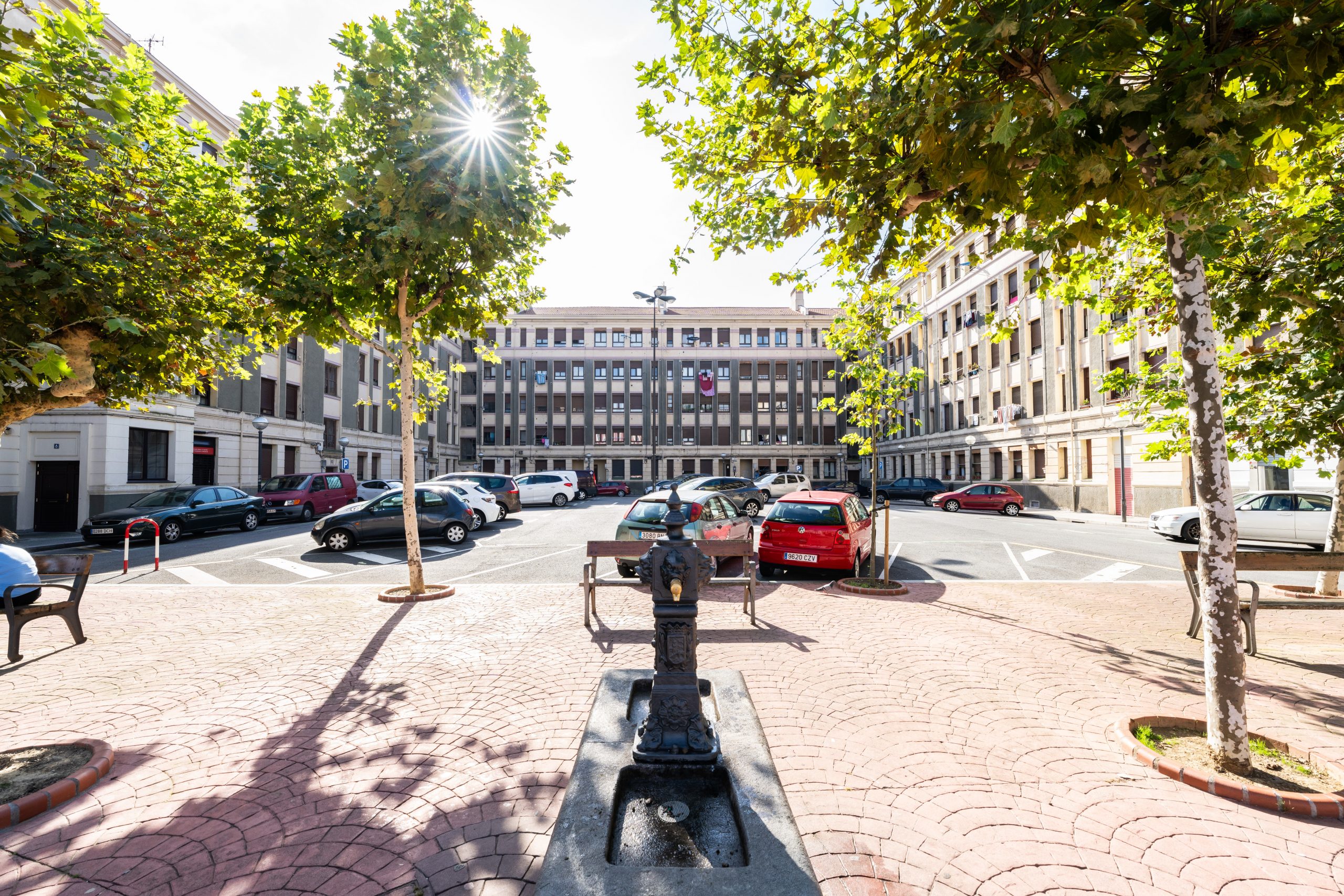
GAIA y Viviendas Municipales de Bilbao, socios del proyecto europeo BIRTUOSS (Opengela), recibieron el pasado 25 de noviembre en el ‘living lab’ de TorreUrizar a varios representantes del proyecto INBUILTcoordinado por la Université Côte d’Azur y formado por 16 socios, que está desarrollando productos y sistemas de construcción innovadores diseñados para reducir significativamente la huella de carbono de los edificios.

La delegación pudo conocer de primera mano cómo las iniciativas vascas asociadas a Opengela están desarrollando un modelo de rehabilitación integral de barrio alineado con la visión de INBUILT: una renovación sistémica, inclusiva y centrada en las personas. Durante la visita se presentó el funcionamiento del modelo de ventanilla única aplicado en Euskadi, que combina asesoramiento técnico, social, jurídico y financiero, y que incorpora mecanismos financieros como MAS Opengela para atender situaciones de vulnerabilidad económica y combatir la pobreza energética.

Asimismo, se explicó la evolución del modelo a través del ‘living lab’ del barrio bilbaíno, que amplía el alcance del enfoque integrando digitalización, pasaportes de edificio, soluciones industrializadas, energías renovables y soluciones basadas en la naturaleza (SBN), junto con marcos de gobernanza que permiten intervenir de manera estructurada a escala de barrio.

La visita a TorreUrizar permitió a los socios de INBUILT observar cómo se aplican estos principios en un entorno real: una intervención de gran escala que combina innovación técnica, participación ciudadana y mejoras ambientales orientadas a fortalecer el bienestar del vecindario. La experiencia aportó referencias valiosas para la explotación futura del proyecto INBUILT, especialmente en ámbitos como la gobernanza, la inclusión social y la integración de SBN.

La jornada evidenció las sinergias entre los proyectos y reforzó el papel de Opengela como modelo de referencia en Europa para la rehabilitación sostenible, inclusiva y basada en el barrio.

El proyecto BIRTUOSS, liderado por el Departamento de Vivienda y Agenda Urbana del Gobierno Vasco, ha puesto en marcha un modelo de regeneración urbana que ya se aplica en 25 barrios de Euskadi.

OPENGELA NEWSLETTER

Recibe todas las noticias relacionadas con Opengela.
Co-financiado por la Unión Europea. Los puntos de vista y opiniones expresadas son únicamente los de sus autores y no reflejan necesariamente los de la UE o CINEA. Ni la Unión Europea ni la autoridad financiadora pueden ser consideradas responsables de ellos.

Artikulu teknikoa: Bizitegi-birgaitze energetikoak indartzea, leihatila bakarren bidez, jarduketa- eta laguntza-eskalen bidez

Artikulu teknikoa: Bizitegi-birgaitze energetikoak indartzea, leihatila bakarren bidez, jarduketa- eta laguntza-eskalen bidez

BUILD UP-ek, eraikinetako energia-eraginkortasunari eta energia berriztagarriei buruzko Europako atariak, hileko gaia lehiatila bakarrei (One-stop-shops) eskaintzen die egoiliarrei laguntzeko.

Testuinguru horretan, FEDARENEk artikulu batean aztertzen du Europako hainbat ekimen nola bultzatzen ari diren etxebizitzen birgaitze energetikoa, eta Opengela sartzen du adibide nabarmenetako bat gisa.

Bertan, Opengela ereduaren eta auzo-komunitateei birgaitze-prozesu osoan laguntzen dieten auzo-bulegoen sarearen balioa aitortzen da: aholkularitza teknikotik eta administrazio- eta finantza-kudeaketatik hasi eta gizarte-bitartekaritzaraino eta komunitate-laguntzaraino. 6.400 pertsonak baino gehiagok eta 2.700 etxebizitzak baliatu dute ikuspegi integral hori.

Gainera, testuak erakusten du nola EU Peers eta CitizenLedRenovation (CLR) bezalako ekimenek osatzen eta zabaltzen duten lan hori estatuan eta Europan, energia-trantsizioa bizkortzeko ekosistema koordinatuagoa sortuz.

Artikulu osoa hemen irakur dezakezu.

OPENGELA NEWSLETTER

JASO ITZAZU OPENGELAREKIN LOTUTAKO ALBISTE GUZTIAK
Europar Batasunak kofinantzatua. Adierazitako ikuspuntuak eta iritziak egileenak baino ez dira, eta ez dituzte nahitaez EBrenak edo CINEArenak islatzen. Europar Batasuna eta finantzaketa-agintaritza ezin dira horien erantzuletzat jo.

Technical Article: Strengthening residential energy renovations through one-stop-shops across scales of action and support

Technical Article: Strengthening residential energy renovations through one-stop-shops across scales of action and support

BUILD UP, the European portal on energy efficiency and renewable energy in buildings, dedicates its topic of the month to the role of one-stop shops in supporting residents.

In this context, FEDARENE analyses in an article how various European initiatives are promoting residential energy renovation and includes the Opengela as one of the notable examples.

The article recognises the value of the Opengela model and its network of neighbourhood offices that accompany local communities throughout the renovation process: from technical advice and administrative and financial management to social mediation and community support. More than 6,400 people and 2,700 dwellings have already benefited from this comprehensive approach.

In addition, the text shows how initiatives such as EU Peers and CitizenLedRenovation (CLR) complement and extend this work at national and European level, creating a more coordinated ecosystem to accelerate the energy transition.

You can read the full article here.

OPENGELA NEWSLETTER

Receive all news related to Opengela
Co-funded by the European Union. The views and opinions expressed are solely those of the authors and do not necessarily reflect those of the EU or CINEA. Neither the European Union nor the funding authority can be held responsible for them.

The comprehensive refurbishment of 202 homes in Altza (San Sebastian) will be finished before the end of the year

The comprehensive refurbishment of 202 homes in Altza (San Sebastian) will be finished before the end of the year

Picture: Durango Town Council
  • The project, which involves eight buildings and a semi-detached house in the San Sebastian neighbourhood, represents a total investment of €15.1 million.
  • It also includes the redevelopment of public spaces, landscaping work and energy and sustainability improvements, among other measures.

With around 20,000 inhabitants and more than 8,900 homes, Altza is one of the most densely populated neighbourhoods in San Sebastian. More than 85% of its residential stock was built before 1981, making comprehensive investment in refurbishment and modernisation essential. The works, which have been underway since the second quarter of 2024, are now entering their final phase, with all comprehensive refurbishment work expected to be completed by the end of the year. However, work on public spaces is expected to continue throughout 2026.

This is one of the largest operations promoted by the Department of Housing and Urban Agenda, with a total investment of €15.1 million: €9.2 million contributed by the Basque Government through PIIE funds; €3.2 million by Donostia City Council and €2.6 million from the neighbourhood.

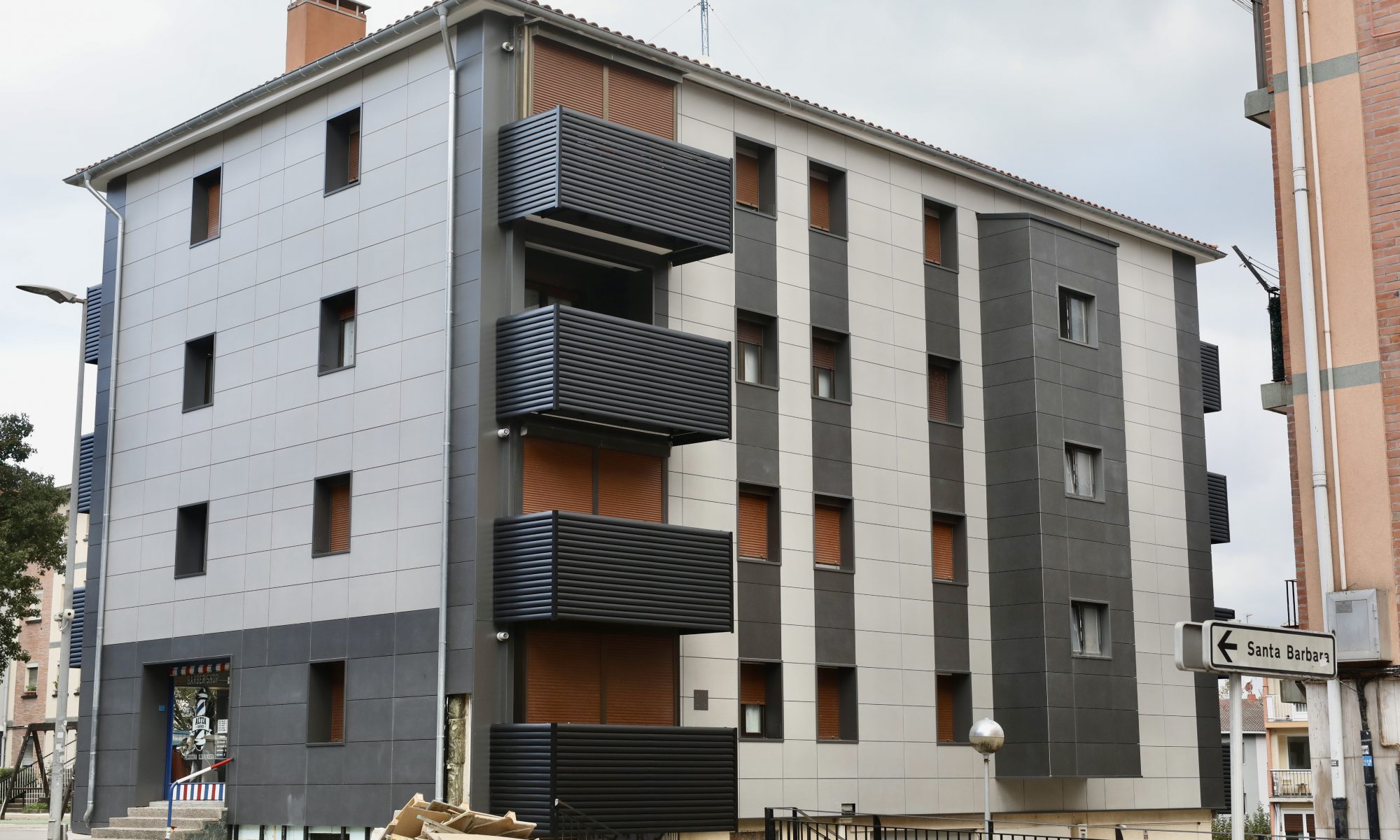
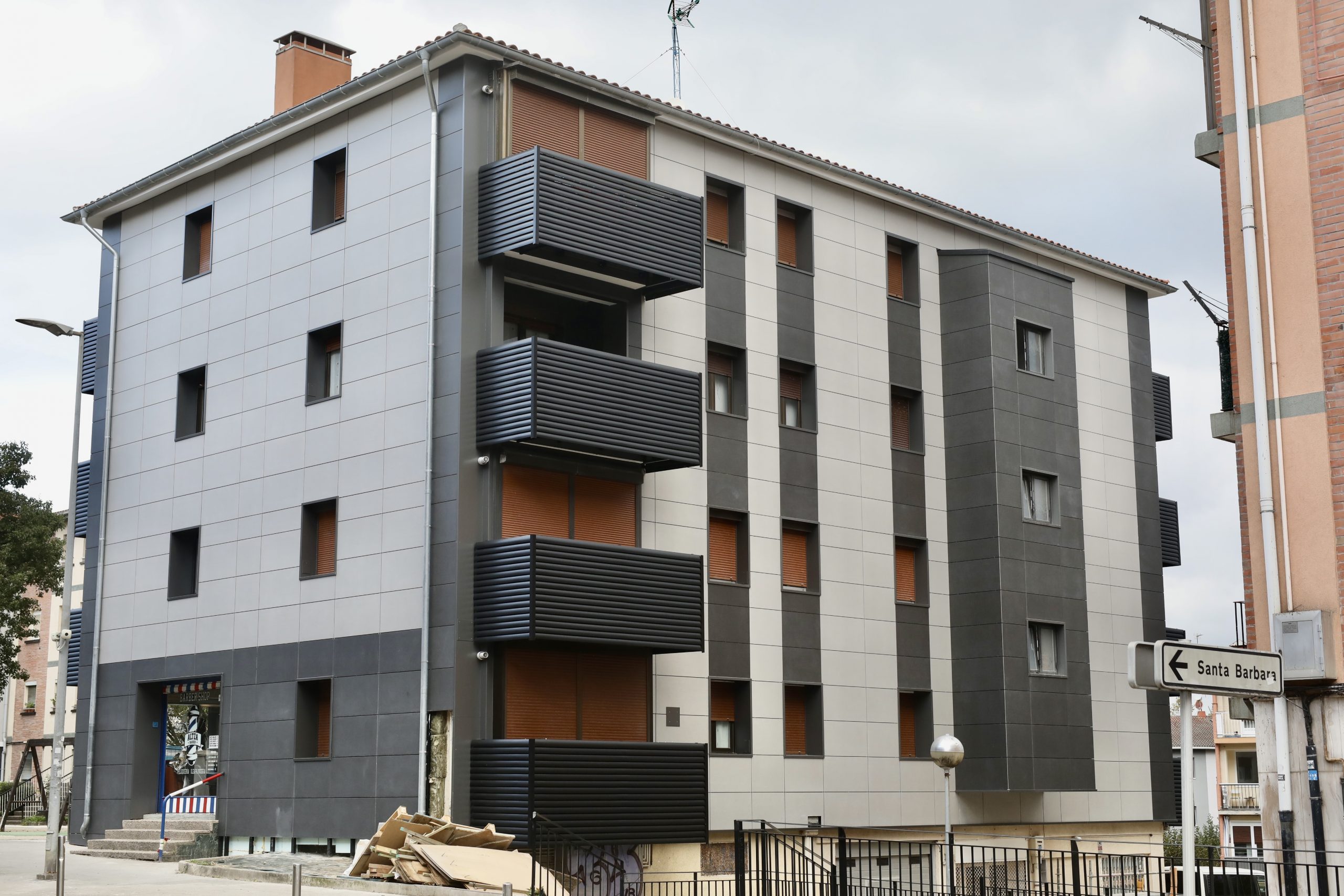
The first line of action has focused on the extensive renovation of residential buildings, reaching a total of 202 homes distributed across eight homeowners’ associations and one semi-detached house, located in the most vulnerable areas of the neighbourhood. These actions improve accessibility, energy efficiency (with an approximate economic saving of 60%), habitability and fire protection, and reinforce structures and adapt buildings to current regulations. The ventilated façades incorporate a metal substructure, air chamber and thermal insulation, thus improving the interior temperature and humidity. In addition, several entrances have newly constructed external lifts.

At the same time, to support communities throughout the process, a neighbourhood office (Opengela) has been set up to offer local, professional advice on procedures, information and resolving queries, encouraging active community participation.

The project also includes the redevelopment and improvement of public spaces, with the renaturalisation of streams in Auditz Akular; the recovery of contaminated soil in the Larres Watercourse; and the creation of greener environments in Ederrena Square and the accesses to the Herrera pelota court. In addition, the routes to the Altza health centre and the Harri Berri ikastola (Basque-medium school) are being improved, with the aim of facilitating mobility for hundreds of families.

In terms of energy sustainability, local energy communities have been set up: a photovoltaic plant on the roof of the Altza public school supplies 13 buildings and public facilities with 98,075 kWh per year, and another plant in the sports centre will produce 377,505 kWh per year in a shared self-consumption scheme that will benefit municipal facilities.

The digitisation of homes allows real-time monitoring of parameters such as air quality, humidity, temperature, CO₂ levels and energy consumption, and provides families with tools to optimise energy use and improve their comfort and health.

The project also highlights the value of Lau Haizeta Park, renewing signage by designing environmental trails with QR codes. A study of visitor numbers has been carried out to guide future improvements, consolidating a natural space that is widely used by the community.

In this way, the comprehensive regeneration of Altza has established itself as a pioneering project in the Basque Country, both for its economic scope and its social impact. The combination of housing renovation, local services, clean energy, digitalisation and improvement of the urban landscape represents a model to be followed for future operations in other neighbourhoods of San Sebastian and the Basque Country as a whole.

OPENGELA NEWSLETTER

Receive all news related to Opengela
Co-funded by the European Union. The views and opinions expressed are solely those of the authors and do not necessarily reflect those of the EU or CINEA. Neither the European Union nor the funding authority can be held responsible for them.

Las obras de rehabilitación integral de 202 viviendas en Altza finalizarán antes de final de año

Las obras de rehabilitación integral de 202 viviendas en Altza finalizarán antes de final de año

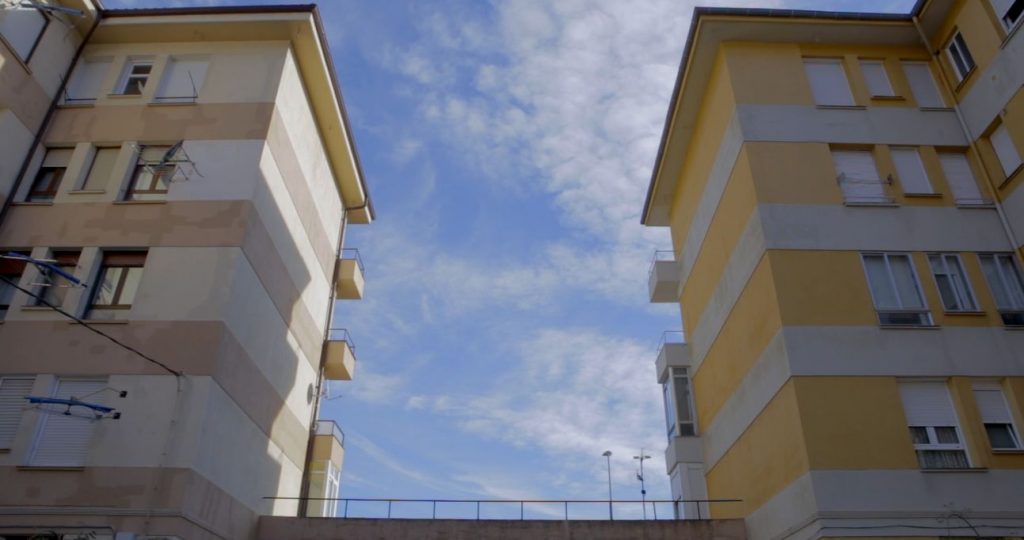
Uno de los edificios en rehabilitación
  • El proyecto, que abarca 8 edificios y una vivienda adosada del barrio donostiarra, supone una inversión total de 15,1 millones de euros.
  • Incluye a su vez la reurbanización de espacios públicos, intervenciones en el paisaje y mejoras energéticas y de sostenibilidad, entre otras actuaciones.

Con cerca de 20.000 habitantes y más de 8.900 viviendas, Altza es uno de los barrios más densamente poblados de Donostia. Más del 85% de su parque residencial fue construido antes de 1981, lo que hacía imprescindible una inversión integral en rehabilitación y modernización. Las obras, que llevan en marcha desde el segundo trimestre de 2024, entran ahora en su recta final, con la previsión de que todas las actuaciones de rehabilitación integral concluyan antes de final de año. Aun así, está previsto que los trabajos en el espacio público se prolonguen durante 2026.

Se trata de una de las operaciones más grandes impulsadas por el Departamento de Vivienda y Agenda Urbana, con una inversión total de 15,1 millones de euros: 9,2 millones aportados por el Gobierno Vasco a través de los fondos PIIE; 3,2 millones por el Ayuntamiento de Donostia y 2,6 millones de participación del vecindario.

La primera línea de intervención se ha centrado en la rehabilitación profunda de edificios residenciales, alcanzando un total de 202 viviendas distribuidas en ocho comunidades de propietarios y una vivienda adosada, situadas en las zonas más vulnerables del barrio. Estas actuaciones mejoran la accesibilidad, eficiencia energética (con un ahorro económico aproximado del 60 %), habitabilidad y protección contra incendios, y refuerzan estructuras y adaptan los edificios a la normativa actual. Las fachadas ventiladas incorporan subestructura metálica, cámara de aire y aislamiento térmico, y mejoran así la temperatura y humedad interiores. Asimismo, varios portales cuentan con ascensores exteriores de nueva construcción.

En paralelo, para acompañar a las comunidades durante todo el proceso, se ha puesto en marcha una Oficina Técnica y de Gestión de Proximidad (Opengela), que ofrece asesoramiento cercano y profesional en la tramitación, información y resolución de dudas, fomentando la participación activa de la comunidad.

El proyecto incluye también la reurbanización y mejora del espacio público, con renaturalización de regatas en Auditz Akular; recuperación de suelos contaminados en la Vaguada de Larres; creación de entornos más verdes en la plaza Ederrena y los accesos al frontón de Herrera. Además, se están mejorando los itinerarios hacia el ambulatorio de Altza y la ikastola Harri Berri, con el objetivo de facilitar la movilidad de cientos de familias.

En materia de sostenibilidad energética, se han instalado comunidades energéticas locales: una planta fotovoltaica en la cubierta del colegio público de Altza abastece a 13 edificios e instalaciones públicas con 98.075 kWh al año, y otra planta en el polideportivo producirá 377.505 kWh anuales en un esquema de autoconsumo compartido que beneficiará a equipamientos municipales.

La digitalización de las viviendas permite monitorizar en tiempo real parámetros como la calidad del aire, humedad, temperatura, niveles de CO₂ y consumo energético, y ofrece a las familias herramientas para optimizar el uso de energía y mejorar su confort y salud.

El proyecto también pone en valor el parque Lau Haizeta, y renueva cartelería mediante el diseño de recorridos medioambientales con códigos QR y se ha llevado a cabo un estudio de frecuentación para orientar futuras mejoras, consolidando un espacio natural muy utilizado por la comunidad.

De esta forma, la regeneración integral de Altza se ha consolidado como un proyecto pionero en Euskadi, tanto por su alcance económico como por su impacto social. La combinación de rehabilitación de viviendas, servicios de proximidad, energías limpias, digitalización y mejora del paisaje urbano representa un modelo a seguir para futuras operaciones en otros barrios de Donostia y del conjunto del País Vasco.

OPENGELA NEWSLETTER

Recibe todas las noticias relacionadas con Opengela.
Co-financiado por la Unión Europea. Los puntos de vista y opiniones expresadas son únicamente los de sus autores y no reflejan necesariamente los de la UE o CINEA. Ni la Unión Europea ni la autoridad financiadora pueden ser consideradas responsables de ellos.

Aramotz, primer barrio del programa Opengela del Gobierno Vasco en completar su regeneración integral

Aramotz, primer barrio del programa Opengela del Gobierno Vasco en completar su regeneración integral

Foto: Ayuntamiento de Durango
  • La rehabilitación de 130 viviendas y la reurbanización del barrio han supuesto una inversión de 10,8 millones de euros, de los cuales 3,3 (el 30%) provienen del Departamento de Vivienda y Agenda.
  • El proyecto integra soluciones basadas en la naturaleza (SBN) y reduce en más del 60% el consumo de energía primaria no renovable.
  • La participación vecinal y la oficina de proximidad (Opengela) han sido los pilares de la renovación del barrio.

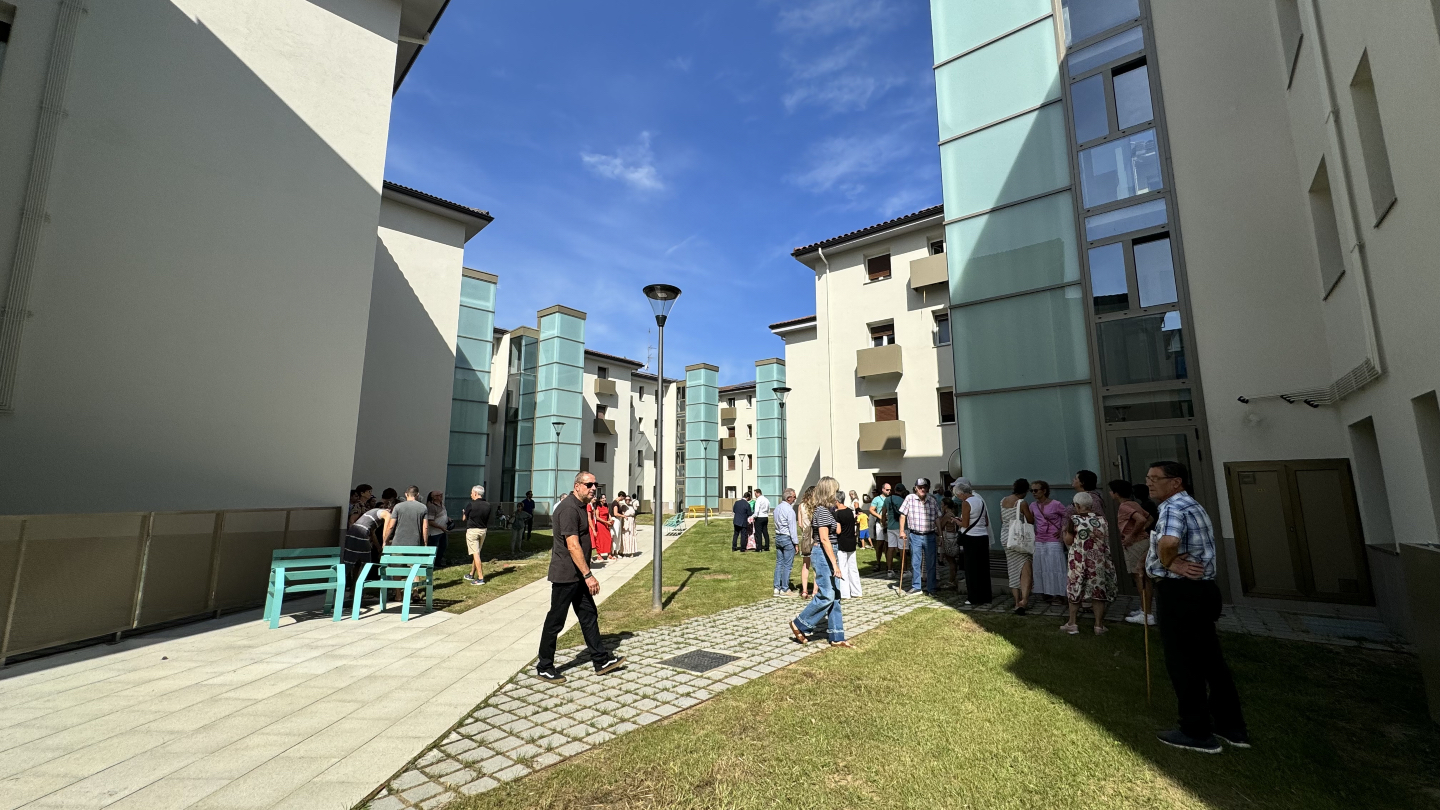
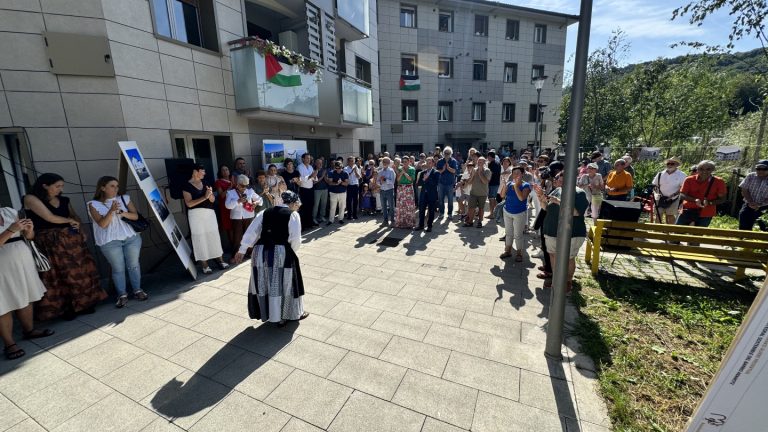
El barrio de Aramotz, en Durango, ha marcado un hito histórico al convertirse en el primer barrio del proyecto BIRTUOSS-Opengela en culminar con éxito su proceso de regeneración urbana integral. Este logro supone un paso decisivo en el camino hacia barrios más sostenibles, accesibles y cohesionados, y se convierte en un modelo de referencia para futuras intervenciones en Euskadi.

La actuación ha supuesto una inversión global de 10.796.589 de euros, financiados de manera compartida entre diferentes agentes: el Departamento de Vivienda y Agenda Urbana del Gobierno Vasco (30,47%), los fondos europeos Next Generation EU (32,57 %), el Ayuntamiento de Durango (18,42%) y las aportaciones directas de las y los vecinos del barrio (18,54%). Este esfuerzo conjunto refleja el compromiso común por impulsar una transformación que trasciende lo físico y se centra en mejorar la calidad de vida de las personas.

Un barrio renovado y más sostenible

El proyecto ha abarcado la rehabilitación de 130 viviendas y 6 locales, distribuidos en 16 portales de edificios de planta baja más tres alturas. Las actuaciones han incluido la instalación de ascensores para garantizar la accesibilidad, el refuerzo de estructuras, la modernización de instalaciones y la mejora integral de la eficiencia energética.

Una de las claves ha sido el compromiso con la sostenibilidad: las intervenciones realizadas han permitido alcanzar una reducción superior al 60% en el consumo de energía primaria no renovable, requisito imprescindible para acceder a las ayudas del Plan de Recuperación, Transformación y Resiliencia. Este avance supone no solo un beneficio medioambiental, sino también un importante ahorro en los gastos energéticos de las familias.

Se ha apostado, además, por soluciones basadas en la naturaleza (SBN) como eje de la regeneración. Estas medidas permiten integrar la naturaleza en la planificación urbana y dar respuesta a los desafíos del cambio climático mediante sistemas sostenibles de drenaje, la renaturalización de espacios y una gestión más eficiente del ciclo del agua.

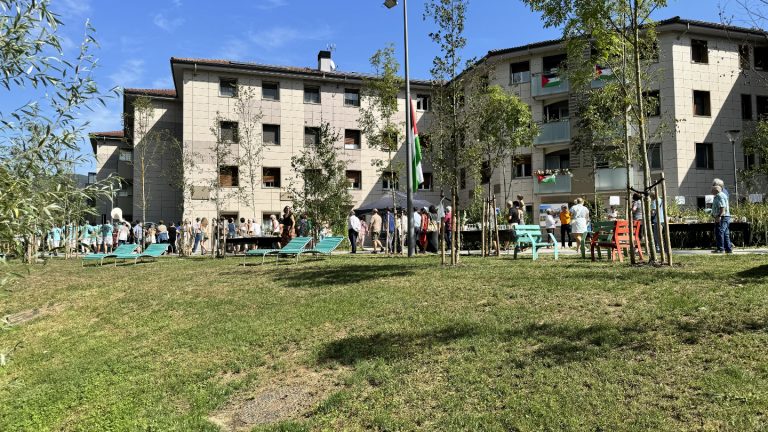
En paralelo, la reurbanización del barrio ha transformado el espacio público con la creación de nuevas zonas verdes, calles peatonales, alumbrado renovado, mobiliario urbano moderno y espacios de encuentro para la vida comunitaria. También se ha renaturalizado el arroyo Larrinagatxu, y se ha mejorado la integración del entorno natural con la trama urbana.

El papel del equipo técnico y vecindario

La oficina de proximidad (Opengela), gestionada por la empresa pública municipal Durango Eraikitzen y ubicada en el propio barrio, ha sido otro de los ejes clave del proyecto. Desde allí se ha prestado asistencia técnica, administrativa y social a las comunidades de vecinos, facilitando la tramitación de las ayudas, la coordinación de las intervenciones y la gestión integral de las obras.

En el ámbito técnico, la responsabilidad del diseño y la proyección ha recaído en MAAB Arquitectura y Urbanismo, en colaboración con el estudio SOIL Arquitectura del Paisaje. Su trabajo ha sido reconocido por la calidad del proyecto y por el esfuerzo realizado en la transformación integral del barrio. A su vez, la ejecución de las obras ha corrido a cargo de Codenor Bizkaina de Rehabilitaciones y Construcciones Intxausti, cuya coordinación ejemplar y cumplimiento riguroso de los plazos han sido determinantes para el éxito del proceso.

Asimismo, uno de los elementos más destacados de esta regeneración ha sido la participación activa del vecindario. Las y los residentes no solo han contribuido económicamente, sino que han estado presentes en todo el proceso, tomando decisiones en comunidad, colaborando con la oficina de proximidad y aportando su visión sobre cómo querían que fuese el barrio del futuro.

Gracias a esta implicación, Aramotz se ha convertido en un ejemplo de regeneración urbana cocreada entre ciudadanía, instituciones y equipos técnicos, un modelo basado en la transparencia, la cercanía y el compromiso compartido.

Un modelo que se expande

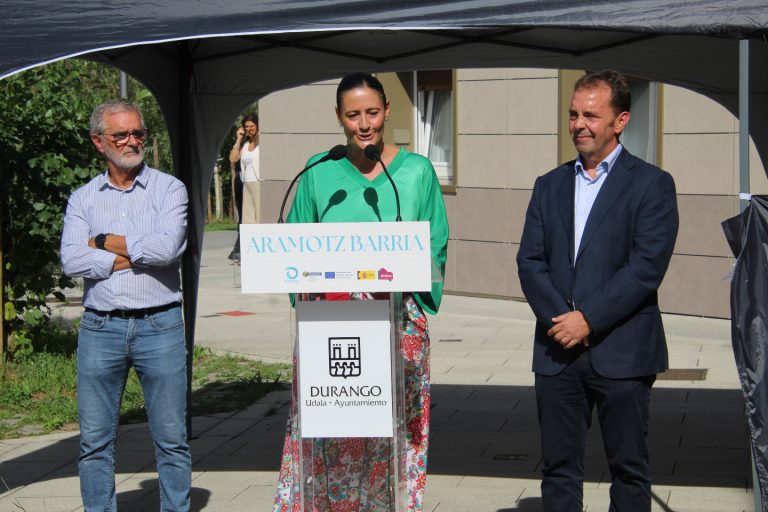
La alcaldesa de Durango, Mireia Elkoroiribe, ha destacado que “la regeneración integral de Aramotz ha sido un proyecto estratégico para Durango, no solo por su envergadura presupuestaria, sino por el profundo impacto que tiene en la vida cotidiana de las personas que viven en el barrio. Hablamos de mejorar viviendas, de hacer accesibles los portales, de crear espacios públicos pensados para convivir, descansar y compartir”.

A su vez, ha añadido que “es una actuación que transforma el entorno físico, sí, pero sobre todo transforma las condiciones de vida de cientos de vecinos y vecinas”. Elkoroiribe ha concluido subrayando que “Aramotz renace, y eso es resultado de años de trabajo compartido entre instituciones y las y los durangarras. Un orgullo compartido, un modelo de municipio que estamos extendiendo a todo Durango: más accesible, más verde e inclusivo”.

Por su parte, el viceconsejero de Planificación Territorial y Agenda Urbana del Gobierno Vasco, Juan Carlos Abascal, ha señalado que el éxito alcanzado en Aramotz es fruto de la colaboración entre instituciones, ciudadanía y empresas, y un ejemplo claro de cómo se pueden llevar adelante proyectos complejos si se afrontan de manera coordinada.

El proyecto BIRTUOSS-Opengela tiene como meta regenerar de manera integral barrios enteros, poniendo a las personas en el centro. La regeneración de Aramotz comenzó a gestarse en 2016, a través de distintos estudios urbanísticos y diagnósticos sociales, y su experiencia servirá como referencia y guía para futuras intervenciones en otros municipios.

Con esta finalización, Durango y Euskadi dan un paso decisivo hacia un nuevo modelo urbano que apuesta por la accesibilidad, la sostenibilidad, la cohesión social y la participación ciudadana. Aramotz no solo se ha transformado como barrio: se ha convertido en el símbolo de un cambio de paradigma en la forma de concebir y vivir las ciudades.

OPENGELA NEWSLETTER

Recibe todas las noticias relacionadas con Opengela.
Co-financiado por la Unión Europea. Los puntos de vista y opiniones expresadas son únicamente los de sus autores y no reflejan necesariamente los de la UE o CINEA. Ni la Unión Europea ni la autoridad financiadora pueden ser consideradas responsables de ellos.

Aramotz, the first neighbourhood in the Basque Government’s Opengela project to complete its comprehensive regeneration

Aramotz, the first neighbourhood in the Basque Government’s Opengela project to complete its comprehensive regeneration

Picture: Durango Town Council
  • The renovation of 130 homes and the reurbanisation of the neighbourhood have involved an investment of €10.8 million, of which €3.3 million (30%) comes from the Department of Housing and Agenda.
  • The project integrates nature-based solutions (NBS) and reduces non-renewable primary energy consumption by more than 60%.
  • Neighbourhood participation and the proximity office (Opengela) have been the cornerstones of the neighbourhood’s regeneration.

The Aramotz neighbourhood in Durango has reached a historic milestone by becoming the first neighbourhood in the BIRTUOSS-Opengela project to successfully complete its comprehensive urban regeneration process. This achievement represents a decisive step towards more sustainable, accessible and cohesive neighbourhoods, and sets a benchmark for future interventions in the Basque Country.

The intervention involved a total investment of €10,796,589, jointly financed by various entities: the Basque Government’s Department of Housing and Urban Agenda (30.47%), Next Generation EU funds (32.57%), Durango Town Council (18.42%) and direct contributions from local residents (18.54%). This joint effort reflects a shared commitment to promoting a transformation that goes beyond the physical and focuses on improving people’s quality of life.

A renovated and more sustainable neighbourhood

The project involved the renovation of 130 homes and six commercial premises, distributed across 16 buildings with ground floors and three upper floors. The work included the installation of lifts to ensure accessibility, structural reinforcement, the modernisation of facilities and comprehensive improvements to energy efficiency.

One of the keys has been the commitment to sustainability: the interventions carried out have enabled a reduction of more than 60% in non-renewable primary energy consumption, an essential requirement for accessing aid from the Recovery, Transformation and Resilience Plan. This progress not only benefits the environment, but also represents significant savings in energy costs for families.

Nature-based solutions (NBS) have also been adopted as the cornerstone of regeneration. These measures enable nature to be integrated into urban planning and respond to the challenges of climate change through sustainable drainage systems, the renaturalisation of spaces and more efficient water cycle management.

At the same time, the reurbanisation of the neighbourhood has transformed public spaces with the creation of new green areas, pedestrian streets, renovated lighting, modern street furniture and meeting places for community life. The Larrinagatxu stream has also been renaturalised, and the integration of the natural environment with the urban fabric has been improved.

The role of the technical team and neighbourhood

The neighbourhood office (Opengela), managed by the municipal public company Durango Eraikitzen and located in the neighbourhood itself, has been another key element of the project. From there, technical, administrative and social assistance has been provided to the residents’ communities, facilitating the processing of grants, the coordination of interventions and the comprehensive management of the works.

On the technical side, MAAB Arquitectura y Urbanismo was responsible for the design and planning, in collaboration with the SOIL Arquitectura del Paisaje studio. Their work has been recognised for the quality of the project and for the effort made in the comprehensive transformation of the neighbourhood. In turn, the execution of the works has been carried out by Codenor Bizkaina de Rehabilitaciones and Construcciones Intxausti, whose exemplary coordination and rigorous compliance with deadlines have been decisive for the success of the process.

One of the most notable elements of this regeneration has been the active participation of the neighbourhood. Residents have not only contributed financially, but have also been involved throughout the process, making decisions as a community, collaborating with the proximity office and contributing their vision of how they wanted the neighbourhood to be in the future.

Thanks to this involvement, Aramotz has become an example of urban regeneration co-created by citizens, institutions and technical teams, a model based on transparency, proximity and shared commitment.

A model that is expanding

The Mayor of Durango, Mireia Elkoroiribe, emphasised that ‘the comprehensive regeneration of Aramotz has been a strategic project for Durango, not only because of its budgetary scale, but also because of the profound impact it has on the daily lives of the people who live in the neighbourhood. We are talking about improving homes, making doorways accessible, and creating public spaces designed for living together, resting and sharing. We are talking about improving homes, making doorways accessible, creating public spaces designed for socialising, relaxing and sharing’.

She added that ‘it is an initiative that transforms the physical environment, yes, but above all it transforms the living conditions of hundreds of residents’. Elkoroiribe concluded by emphasising that ‘Aramotz is being reborn, and this is the result of years of joint work between institutions and the people of Durango. It is a shared source of pride, a model of a municipality that we are extending to the whole of Durango: more accessible, greener and more inclusive’.

For his part, Juan Carlos Abascal, Deputy Minister for Territorial Planning and Urban Agenda of the Basque Government, pointed out that the success achieved in Aramotz is the result of collaboration between institutions, citizens and businesses, and a clear example of how complex projects can be carried out if they are tackled in a coordinated manner.

The BIRTUOSS-Opengela project aims to comprehensively regenerate entire neighbourhoods, putting people at the centre. The regeneration of Aramotz began to take shape in 2016, through various urban studies and social diagnoses, and its experience will serve as a reference and guide for future interventions in other municipalities.

With this completion, Durango and the Basque Country are taking a decisive step towards a new urban model that is committed to accessibility, sustainability, social cohesion and citizen participation. Aramotz has not only been transformed as a neighbourhood: it has become the symbol of a paradigm shift in the way cities are conceived and experienced.

OPENGELA NEWSLETTER

Receive all news related to Opengela
Co-funded by the European Union. The views and opinions expressed are solely those of the authors and do not necessarily reflect those of the EU or CINEA. Neither the European Union nor the funding authority can be held responsible for them.

Torreurizar, the living lab of the BIRTUOSS-Opengela project, joins the Open House Bilbao 2025 programme

Torreurizar, the living lab of the BIRTUOSS-Opengela project, joins the Open House Bilbao 2025 programme

This year, Torreurizar, the iconic social housing building designed by Ricardo Bastida in 1919 and converted into the living lab of the BIRTUOSS-Opengela project, will be open to visitors as part of the Open House Bilbao 2025 programme.

Visits will be free of charge and will take place on Saturday 4 October, from 10 a.m. to 6 p.m., in groups of 15 people, with each tour lasting 60 minutes.

Torreurizar is currently undergoing sustainable renovation, incorporating improvements such as thermal insulation and solar panels, thus combining historical heritage and energy efficiency. Its opening to the public will allow visitors to discover how architecture can connect history, community and the urban future.

Torreurizar’s participation in Open House Bilbao also reflects the objectives of the Opengela project, which seeks to promote sustainable, inclusive and socially responsible urban regeneration.

OPENGELA NEWSLETTER

Receive all news related to Opengela
Co-funded by the European Union. The views and opinions expressed are solely those of the authors and do not necessarily reflect those of the EU or CINEA. Neither the European Union nor the funding authority can be held responsible for them.

Torreurizar, living lab del proyecto BIRTUOSS-Opengela, se suma al programa Open House Bilbao 2025

Torreurizar, living lab del proyecto BIRTUOSS-Opengela, se suma al programa Open House Bilbao 2025

Este año, Torreurizar, el emblemático edificio de vivienda social diseñado por Ricardo Bastida en 1919 y convertido en living lab del proyecto BIRTUOSS-Opengela, se podrá visitar dentro del programa Open House Bilbao 2025.

Las visitas serán gratuitas y se celebrarán el sábado 4 de octubre, de 10:00 a 18:00 horas, en grupos de 15 personas, con una duración de 60 minutos cada recorrido.

Torreurizar está actualmente en proceso de rehabilitación sostenible, mediante la incorporación de mejoras como aislamiento térmico y placas solares, combinando así patrimonio histórico y eficiencia energética. Su apertura al público permitirá descubrir cómo la arquitectura puede conectar historia, comunidad y futuro urbano.

La participación de Torreurizar en Open House Bilbao refleja también los objetivos del proyecto Opengela, que busca impulsar la regeneración urbana sostenible, inclusiva y socialmente responsable.

OPENGELA NEWSLETTER

Recibe todas las noticias relacionadas con Opengela.
Co-financiado por la Unión Europea. Los puntos de vista y opiniones expresadas son únicamente los de sus autores y no reflejan necesariamente los de la UE o CINEA. Ni la Unión Europea ni la autoridad financiadora pueden ser consideradas responsables de ellos.

Orduña moves forward with the urban regeneration of Landatas and María Dolores Madaria

Orduña moves forward with the urban regeneration of Landatas and María Dolores Madaria

The Basque Government has approved the second amendment to the agreement reached in 2022 with the local council of the town in Vizcaya, which will enable the renovation of 12 buildings comprising 126 homes.

In addition, the Technical Office for Management and Proximity will be set up to support neighbourhood communities throughout the process.

The Basque Government has approved the second amendment to the agreement of 20 December 2022, which granted a direct subsidy to the Orduña Town Council for urban regeneration and the renovation of buildings in the Landatas and Maria Dolores Madaria neighbourhoods.

The aid, which amounts to a maximum of €2,135,908.13, is part of the Berpiztu programme and aims to promote the Opengela regeneration model, in line with the commitments of the Euskadi Bultzatu 2050 Urban Agenda, which is committed to sustainability, energy efficiency and improved accessibility.

The project includes the renovation of 12 building entrances comprising a total of 126 homes: entrances 1, 3, 5 and 7 on Maria Dolores Madaria Street, entrances 3 and 5 on Gran Vía Street, and entrances 4 and 6 on Paseo de La Antigua. It also includes the creation and launch of the Technical and Local Management Office, which has served as a point of reference to support neighbourhood communities throughout the process.

The neighbourhoods of Landatas and María Dolores Madaria were built in the 1960s and have not undergone any improvements since then. A total of 158 families live there (90 in María Dolores Madaria and 68 in Landatas).

OPENGELA NEWSLETTER

Receive all news related to Opengela
Co-funded by the European Union. The views and opinions expressed are solely those of the authors and do not necessarily reflect those of the EU or CINEA. Neither the European Union nor the funding authority can be held responsible for them.

OPENGELA

Successful subscription

Logo

OPENGELA

Harpidetza zuzena

Logo

OPENGELA

Suscripción correcta

Logo