The gender perspective in urban regeneration

The gender perspective in urban regeneration

  • The researcher Sonia De Gregorio has produced a report for the Basque Government with recommendations to be considered in this area. The report includes a pilot test on the actions in Otxarkoaga.

Among the different perspectives that are applied to urban regeneration processes, the gender perspective has not traditionally occupied a prominent place. However, a close analysis can provide many clues about the implications of the urban environment for gender inequality.

Sonia De Gregorio, a researcher at the Department of Urban and Territorial Planning at the Higher Technical School of Architecture of Madrid, has carried out an exhaustive study on the gender perspective in urban regeneration within the scope of the Basque Urban Agenda, called Bultzatu 2050. It is available here (in spanish).

One of the fixed objectives of this work, commissioned by the Basque Government’s Directorate of Territorial Planning and Urban Agenda, is «to guide those potentially involved in urban regeneration programmes in the Basque Country so that they give rise to strategies that are characterised by an integrated approach with a gender perspective.» In this way it aims, on one hand, to «advance the definition of urban regeneration strategies to incorporate the gender perspective (with a demonstrative capacity that can be transferred to other projects)», and on the other hand, to «promote and consolidate the change of values necessary for equality.»

The work calls for «the reality and needs of women to be taken into account in the framework of regeneration strategies.» Participation amongst vulnerable neighbourhoods and calls, among other issues, is needed in order to take the gender perspective into account and to listen to the voice of all social groups, especially women.

Sonia De Gregorio, with the collaboration of staff from the Urban Regeneration Service of the Basque Government Directorate, provides guidelines for defining strategies that establish indicators to «measure» how the actions implemented respond to the needs of women.

The researcher has established three tranversal axes, as have the Territorial Planning Guidelines of the Basque Country: the gender perspective, climate action, and urban health.

Why should this gender perspective be applied to urban regeneration? The key lies in «the transformative capacity that regeneration policy has», which should be used «to advance equality between men and women as a priority for action.»

A diagnosis in Otxarkoaga

De Gregorio provides ideas for taking the gender perspective into account in matters which, although they may seem small, substantially modify the current model. Some actions improve, for example, the daily life of the people who do care work (mostly women).

Possible improvements in public space are also defined from the point of view of «walkability», by making it friendlier and more attractive for walking. This also applies to the perspective of «perceived safety» as well as «renaturalisation and climatic comfort.»

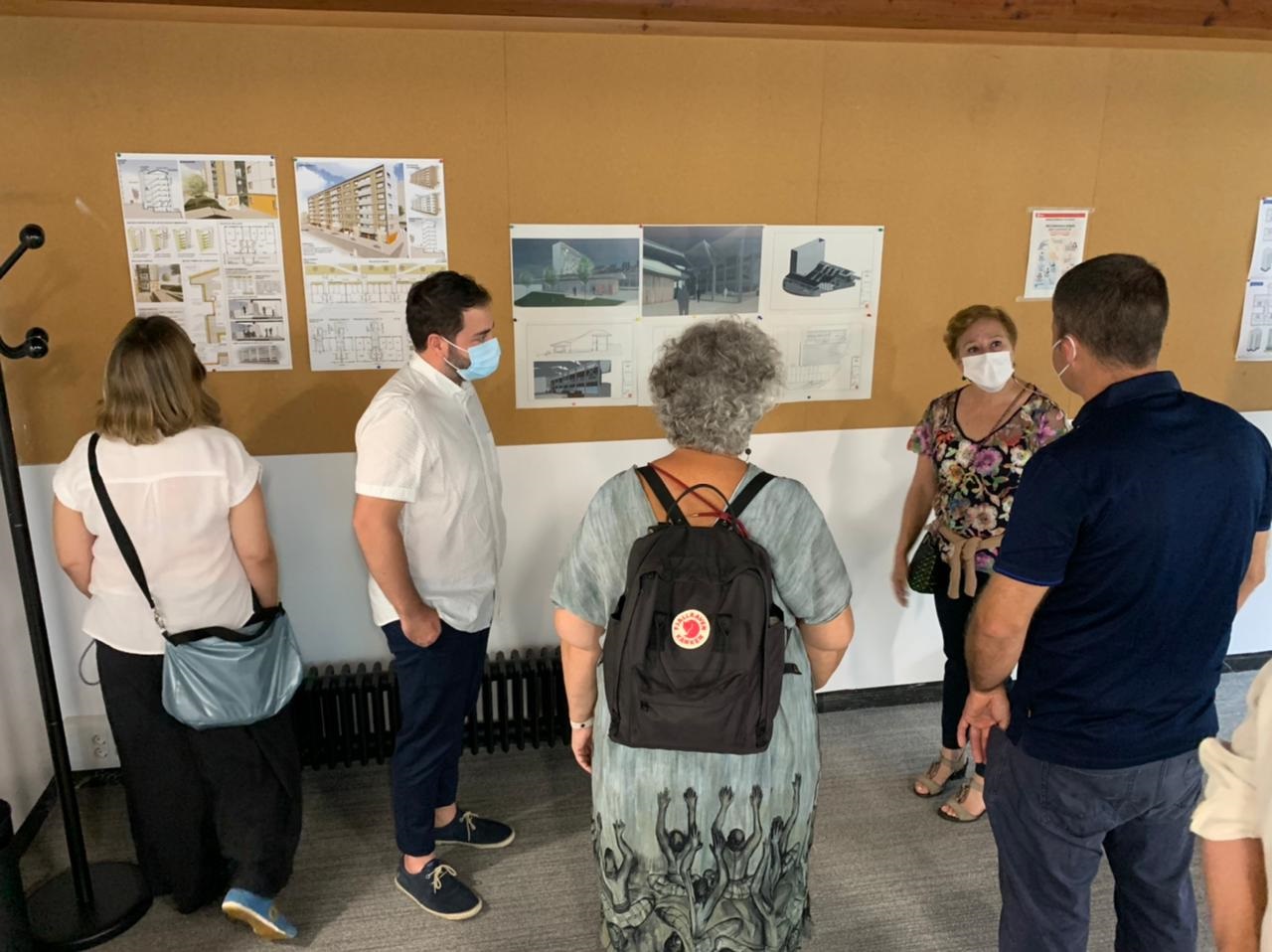
As part of this work, a test has been carried out in the Otxarkoaga neighbourhood, with a diagnosis and a proposal for a pilot intervention to implement a series of actions aimed at integrating the gender perspective in the urban regeneration of the Bilbao neighbourhood.

Bandera de la Unión Europa

This project has received funding from the European Union’s Horizon 2020 research and innovation programme under grant agreement No 846707.

Otxar Opengela

Address: Avenida Pau Casals, No. 16, Otxarkoaga, Bilbao (In front of Plaza Kepa Enbeita)

Telephone: 946 85 19 32

E-mail: otxaropengela@vvmm.bilbao.eus

Txonta Opengela

Address: Calle Txonta No. 3, ground floor, Eibar

Telephone: 688 77 97 37

E-mail: txontabulegoa@eibar.eus

Copyright@2019 | All rights reserved | Legal notice | Icono de Twitter  Icono de Youtube

Copyright@2019 | All rights reserved | Legal notice Icono de Twitter  Icono de Youtube

Learning and sharing with Ireland, France, Italy, and Austria

Learning and sharing with Ireland, France, Italy, and Austria

Peer to peer

Sharing experiences with other one-stop-shops at the European level is one of the objectives that has been an integral part of the Opengela project from its inception. As an initiative supported by the European Union, the exchange of knowledge with similar projects or initiatives on the continent – irrespective of whether they’re more consolidated or incipient – has been one of the priorities of this project from its onset. We aim to learn from others and share our experiences to move forward.

Although the pandemic has hampered this mission, visits have been made to Tipperary (Ireland), Paris-Îlle de France and Amiens/Picardie (France) prior to COVID-19, while virtual sessions have been organised with Milan (Italy) and Vienna (Austria) since the outbreak.

«It is a very interesting process», stresses Andoni Hidalgo, an expert in Urban Agenda who is part of the Opengela team and who has facilitated learning from other programmes, «as there is a lot to learn about the models in other countries. Each case is different, but there are some common characteristics (between them) – for example, in terms of organisational models, financing mechanisms or communication strategies – that have given us very instructive clues.»

This activity has been combined with the participation of Opengela representatives in various international conferences over the last few months and will continue throughout the project.

Bandera de la Unión Europa

This project has received funding from the European Union’s Horizon 2020 research and innovation programme under grant agreement No 846707.

Otxar Opengela

Address: Avenida Pau Casals, No. 16, Otxarkoaga, Bilbao (In front of Plaza Kepa Enbeita)

Telephone: 946 85 19 32

E-mail: otxaropengela@vvmm.bilbao.eus

Txonta Opengela

Address: Calle Txonta No. 3, ground floor, Eibar

Telephone: 688 77 97 37

E-mail: txontabulegoa@eibar.eus

Copyright@2019 | All rights reserved | Legal notice | Icono de Twitter  Icono de Youtube

Copyright@2019 | All rights reserved | Legal notice Icono de Twitter  Icono de Youtube

Opengela passes the halfway mark as a reference for urban regeneration in the Basque Country

Opengela passes the halfway mark as a reference for urban regeneration in the Basque Country

  • In a year and a half, this initiative financed by the European Horizon 2020 programme has already set up two pilot offices functioning as one-stop-shops to serve each of the neighbourhood.
  • Opengela aids communities wishing to renovate their buildings by managing administrative paperwork, building relationships with contractors and construction companies, and processing financial aid on their behalves.
  • In addition to the offices opened in Otxarkoaga (Bilbao) and Txonta (Eibar), this service will soon be extended to other municipalities such as Durango and Lasarte.
  • The plan is led by the Basque Government’s Department of Territorial Planning, Housing and Transport, in cooperation with eight other partner.

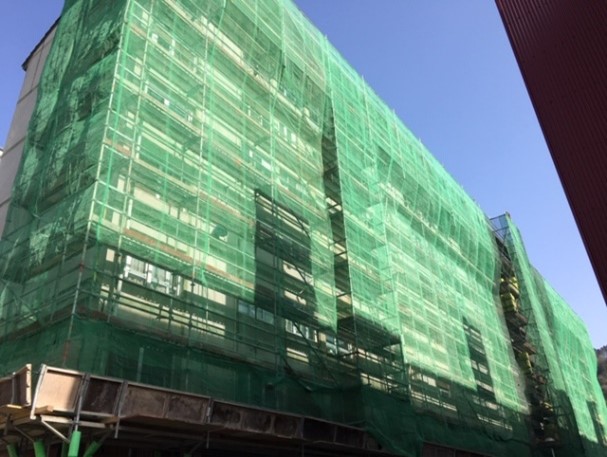
Opengela started in May 2019 to produce a model of replicable local offices which serve neighbourhoods during their urban regeneration processes, and more specifically, with the refurbishment of their buildings. Now, having crossed the halfway mark of the project, the offices in the two pilot neighbourhoods are up and running, works are beginning to take place on local buildings and several Basque municipalities have taken note of the initiative and have expressed their interest in replicating the model. 

The project, funded by the European Commission’s Horizon 2020 programme, has focused on two pilots in the neighbourhoods of Otxarkoaga (Bilbao) and Txonta (Eibar). Opengela is expected to last three years and to be replicated in other municipalities within the Basque Country. Durango and Lasarte, in particular, have already shown interest, as have Vitoria-Gasteiz, San Sebastian and Pasaia. Subsequently, the Opengela model can be used amongst the rest of the Basque Country and scaled to the European level.

The urban, sustainable, and social dimension

The ultimate goal of the programme is to promote deep renovations, greater energy efficiency, improved accessibility, and the incorporation of fire protection and safety systems in the oldest or most needy neighbourhoods in the Basque Country, thereby reversing the conditions which can lead to urban vulnerability.

This project takes the social dimension into special consideration. «The focus is on people and neighbourhoods, making them part of the process», explains Ignacio de la Puerta, Director of Territorial Planning and Urban Agenda of the Basque Government’s Department of Territorial Planning, Housing and Transport, who is leading the project.

The launch of Opengela coincides with a crucial moment in which the Renovation Wave Strategy is being promoted by the European Union. «The current moment», emphasises De la Puerta, «is (an ideal time to) take advantage of the opportunity and put building renovation projects and comprehensive urban regeneration of neighbourhoods on the country’s list of priorities through specific projects. This will not only help us to invest today in a green, digital and fair recovery, but will also prepare us for the demands that – by European mandate – are just around the corner.”

In addition to the Department of Territorial Planning, Housing and Transport of the Basque Government, this project is an example of public-private collaboration, as it includes 8 other partners: the local urban development companies of the two municipalities (Viviendas Municipales de Bilbao and the Gipuzkoa-based Debegesa), the Basque Energy Agency (EVE), a company specialising in financing (GNE Finance), one in European affairs (Zabala),  another in communication (Gabineteseis), and two European organisations based in Brussels, namely the Federation of Energy and Environment Agencies and Regions (Fedarene) and the European Federation of Public, Cooperative and Social Housing (Housing Europe).

Bandera de la Unión Europa

This project has received funding from the European Union’s Horizon 2020 research and innovation programme under grant agreement No 846707.

Otxar Opengela

Address: Avenida Pau Casals, No. 16, Otxarkoaga, Bilbao (In front of Plaza Kepa Enbeita)

Telephone: 946 85 19 32

E-mail: otxaropengela@vvmm.bilbao.eus

Txonta Opengela

Address: Calle Txonta No. 3, ground floor, Eibar

Telephone: 688 77 97 37

E-mail: txontabulegoa@eibar.eus

Copyright@2019 | All rights reserved | Legal notice | Icono de Twitter  Icono de Youtube

Copyright@2019 | All rights reserved | Legal notice Icono de Twitter  Icono de Youtube

A green, social recovery needs a neighbourhood-based EU renovation wave

A green, social recovery needs a neighbourhood-based EU renovation wave

  • An international conference gathering input from 6 EU funded projects working on urban regeneration One-Stop-Shops underlines the importance of local action in the forthcoming European and national recovery plans. 

On 12 May an international multi-stakeholder Webinar was organised by Opengela (an EU-funded project led by the Basque Regional Government), gathering representatives from 5 other projects from France, Austria, Italy, Ireland and Spain. The event, followed by more than 180 participants from 26 countries and 4 continents, aimed to foster a collective brainstorming on how to tackle the situation provoked by the COVID19 crisis in local urban regeneration projects.

Moderated by representatives from EASME, the European Commission’s Agency for Small and Medium-Sized Enterprises, participants fostered a lively debate on the effects of the COVID crisis on local One-Stop-Shops for building renovation, the specific actions foreseen for the “new normal” scenario and the best possible ways to place sustainable urban regeneration at the core of forthcoming regional, national and European recovery programmes.

Among the main challenges for the way ahead, speakers underlined the need for solid financial schemes to overcome the barriers that citizens will face for making the decision of renovating their homes. But, according to the experience drawn on the field from the participant projects, finance is not the main potential barrier: other elements, such as integrating building refurbishment with other socio-economic measures fighting energy poverty, increasing accessibility to buildings and strengthening the social fabric in neighbourhoods, were judged to be as important as the availability of funds.

“European Regional and local authorities need a signal from the EU to ensure that the Renovation Wave is made real not only top-down, but also bottom-up, from our neighbourhoods,” said Ignacio de la Puerta, Opengela Coordinator and Director for Territorial Planning, Urbanism and Urban Regeneration of the Basque Government. “The deployment of the Green Deal on the ground will only be successful if it takes into account the essential contribution of One-Stop-Shops already in place at local level, and working on a broad approach: this is about energy savings, but also about fostering social fabric, ensuring healthy homes and promoting local, long-term job creation».

All participants agreed that the current crisis has shown the importance that our homes and neighbourhoods have in our daily life: the dwellings in which we have spent almost our entire time have suddenly become learning, working and care centres, and – as our societies learn to live with the effects of the pandemic – it is increasingly clear that our immediate vicinity will play an essential role in our daily lives in the future, therefore increasing the importance of holistic, integral and fair urban regeneration, leaving no one behind.

* Interview in the regional media Radio Euskadi to Ignacio De la Puerta and Davide Cannarozi about the Opengela project and the webinar ‘Post Covid-19 Urban Regeneration: One-Stop-Shops for a fair, green and social recoveryHERE


Bandera de la Unión Europa

This project has received funding from the European Union’s Horizon 2020 research and innovation programme under grant agreement No 846707.

Otxar Opengela

Address: Avenida Pau Casals, No. 16, Otxarkoaga, Bilbao (In front of Plaza Kepa Enbeita)

Telephone: 946 85 19 32

E-mail: otxaropengela@vvmm.bilbao.eus

Txonta Opengela

Address: Calle Txonta No. 3, ground floor, Eibar

Telephone: 688 77 97 37

E-mail: txontabulegoa@eibar.eus

Copyright@2019 | All rights reserved | Legal notice | Icono de Twitter  Icono de Youtube

Copyright@2019 | All rights reserved | Legal notice Icono de Twitter  Icono de Youtube

Opengela organises the webinar ‘Post Covid-19 Urban Regeneration: One-Stop-Shops for a fair, green and social recovery’

Opengela organises the webinar ‘Post Covid-19 Urban Regeneration: One-Stop-Shops for a fair, green and social recovery’

What? The webinar will gather speakers from 6 European One-Stop-Shops for Urban Regeneration, and will be moderated by EASME (European Commission)

When? Tuesday May 12 at 11:00 (CET). Maximum 90 minutes.

Registration: You can register HERE.

Agenda:

1.  Short introductory statement from Ignacio de la Puerta, Opengela Coordinator and Director for Territorial Planning, Urbanism and Urban Regeneration, Basque Government.

2.      Debate -moderated by Stephan Renner, EASME– with interventions from the following OSS:

·       Opengela (Basque Region, Spain): Andoni Hidalgo

·       SharingCities (Milan, Italy): Cecilia Hugony

·       EuroPACE (Spain): Davide Cannarozzi

·       RenoBooster (Vienna, Austria): Stephan Hartmann

·       SuperHomes (Ireland): Declan Daly

·       Orfée (France): Françoise Refabert

In order to have a lively debate, there will be no presentations, and discussions will be structured around 3-4 questions. During this debate, the ‘Q&A’ tool will be open for gathering questions from the public.

3.      Finally, we will get to conclusions that will result in a short report gathering the main lessons learnt, and that will be distributed to participants after the meeting.


Context

The Covid-19 pandemic and the subsequent socio-economic crisis facing the EU are going to impact urban regeneration projects. There are a number of important challenges and opportunities ahead:

On the one hand, the period of confinement has proved that our homes play an essential role in our lives, providing us with shelter, workspace, a place to learn and grow. Spending nearly 100% of our time indoors has taught us the value of community and neighbourhood life. It is critical to rebuild resilient community relationships post Covid-19 and to ensure that all Europeans are living in healthy and comfortable homes.

On the other hand, it is likely that -during the social and economic crisis- investments in home renovations may be de-prioritised by Europeans, seeking to cover immediate expenses. In the meanwhile, local, regional and national public authorities will be forced to divert their investments to fostering employment, saving the economy and ensuring social benefits for the most disadvantaged groups.

How can we face this reality? What kind of narratives can urban regeneration OSS contribute to be seen as one of the keys to a fair, equitable, and green exit from the crisis, leaving no one behind?

The Opengela program (funded from the European Union’s Horizon 2020 programme under grant agreement No 846707) is undertaking an internal process of reflection to adapt to the post Covid-19 reality. However, we feel that we will have much to gain if we open this process by inviting other renovation programs, One-Stop-Shops to share their experiences across Europe. With that in mind this webinar intends to generate “collective brainstorming» about the impacts of Covid-19, identifying challenges and opportunities faced by our communities.

This is a period of high uncertainty at many levels, and therefore this webinar does not intend to provide clear answers or magic solutions to the challenges we face, but rather to be a thought-provoking and knowledge-sharing experience. 

REGISTER HERE

Bandera de la Unión Europa

This project has received funding from the European Union’s Horizon 2020 research and innovation programme under grant agreement No 846707.

Otxar Opengela

Address: Avenida Pau Casals, No. 16, Otxarkoaga, Bilbao (In front of Plaza Kepa Enbeita)

Telephone: 946 85 19 32

E-mail: otxaropengela@vvmm.bilbao.eus

Txonta Opengela

Address: Calle Txonta No. 3, ground floor, Eibar

Telephone: 688 77 97 37

E-mail: txontabulegoa@eibar.eus

Copyright@2019 | All rights reserved | Legal notice | Icono de Twitter  Icono de Youtube

Copyright@2019 | All rights reserved | Legal notice Icono de Twitter  Icono de Youtube

The Basque Country receives 1.7 million from the EU for two pilot projects of urban regeneration in the neighbourhoods of Txonta (Eibar) and Otxarkoaga (Bilbao)

The Basque Country receives 1.7 million from the EU for two pilot projects of urban regeneration in the neighbourhoods of Txonta (Eibar) and Otxarkoaga (Bilbao)

  • The main objective is to set up an office in each neighbourhood which will act as a one-stop-shop and provide advice and support to the community throughout the whole process of renovation of the apartment buildings: from the paperwork to dealing with energy services contractors or the provision of financial aid.
  • The project is called Opengela and has the support of the Horizon 2020 programme for three years. Hopefully this model can be replicated, first in some fifteen Basque municipalities, and later in other places in Europe.
  • The plan is headed by the Department of Environment, Territorial Planning and Housing of the Basque Government, but there are also eight partners participating, among them the Energy Agency of the Basque Government and the Basque Urban Regeneration Societies, Viviendas Municipales de Bilbao and Debegesa.

The European Commission has taken note of the urban regeneration plans of the Basque Country and has decided to contribute 1.7 million Euros to the Opengela project. This concerns a novel concept of neighbourhood offices in two places which have been selected for a pilot test: Otxarkoaga (Bilbao) and Txonta (Eibar).

These offices, which will work as one-stop-shops, will help the community of neighbours with every type of procedure related to the process of renovation of their apartment buildings: from administrative paperwork to dealing with energy services contractors or the channelling of financial aid.

The pilot project has received support from the Horizon 2020 programme for the next three years. During which time, the offices will deal with the neighbourhood community while at the same time looking for ways to replicate this very same model in some fifteen Basque municipalities, and in the future, in other places in the European Union.

The offices, which all share the name Opengela, will guide and advise the homeowners about the grants and subsidies that are available to them in order to carry out the work and improve their quality of life. 

The final goal is to encourage integrated renovation of the apartment buildings in the neighbourhoods of the Basque Country which are the oldest or which have the greatest needs. The objectives also include better energy efficiency, with universal accessibility and the incorporation of basic systems of protection and safety against fires. All of this with a social component, that is to say, “putting the spotlight on the people and the communities, making them a real part of the process”, explains Ignacio de la Puerta, director of Territorial Planning, Urbanism and Urban Regeneration of the Department of Environment, Territorial Planning and Housing of the Basque Government, which heads the project.

Almost 500 homes in Otxarkoaga and Txonta

In Otxarkoaga, in Bilbao, this will take place in five apartment buildings encompassing 16 house numbers with a total of 240 homes. The office which will house the one-stop-shop will be set up in the former nursery of the BBK. From there other courses of action will also be undertaken, such as the refurbishment of the old shopping centre and the launch of business initiatives and ventures in premises which are currently empty.

In the neighbourhood of Txonta, in Eibar, the renovation work will follow current standards of energy efficiency and accessibility. The pilot project means the intervention in 221 homes encompassing 17 house numbers. It is about giving priority, above all, to the participation of the people actually living in the neighbourhood.

To carry out the pilot experiences the Department of Environment, Territorial Planning and Housing of the Basque Government, is joined by eight other partners: the local urban regeneration societies of the two municipalities (Viviendas Municipales de Bilbao and Debegesa from Guipúzcoa), the Energy Agency of the Basque Government (EVE), consultants who are specialists in finance (GNE Finance), in European affairs (Zabala) and in communication (Gabineteseis), and two European organizations with headquarters in Brussels: the European Federation of Agencies and Regions for Energy and the Environment (Fedarene) and the European Federation of Public, Cooperative and Social Housing (Housing Europe).

For more information:

Eduardo Ortiz de Arri

prensa@opengela.eus

Bandera de la Unión Europa

This project has received funding from the European Union’s Horizon 2020 research and innovation programme under grant agreement No 846707.

Otxar Opengela

Address: Avenida Pau Casals, No. 16, Otxarkoaga, Bilbao (In front of Plaza Kepa Enbeita)

Telephone: 946 85 19 32

E-mail: otxaropengela@vvmm.bilbao.eus

Txonta Opengela

Address: Calle Txonta No. 3, ground floor, Eibar

Telephone: 688 77 97 37

E-mail: txontabulegoa@eibar.eus

Copyright@2019 | All rights reserved | Legal notice | Icono de Twitter  Icono de Youtube

Copyright@2019 | All rights reserved | Legal notice Icono de Twitter  Icono de Youtube