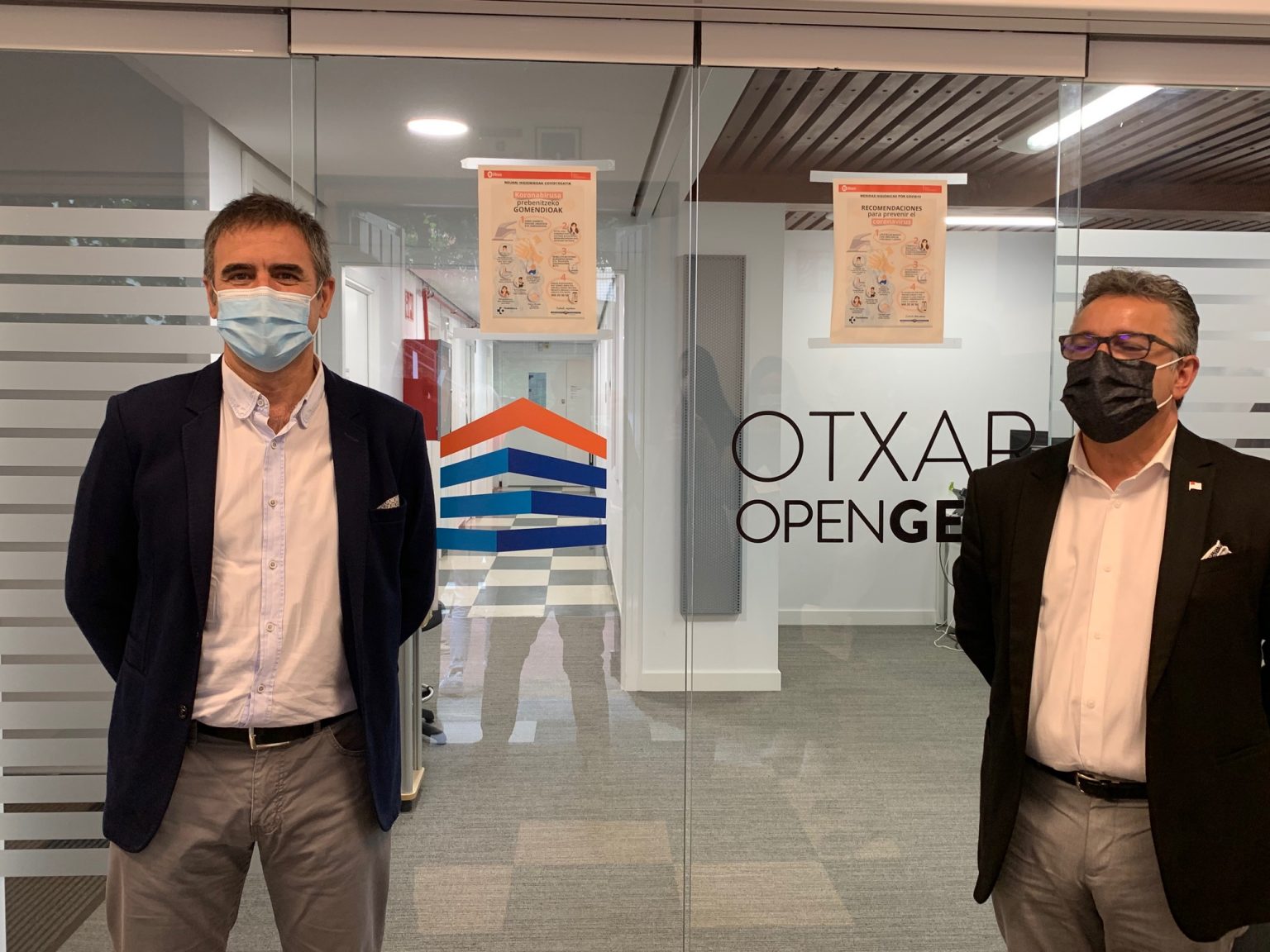
“The neighbourhood office is essential; it is responsible for building the necessary trust between institutions and neighbourhoods”

Interview – JON IRAOLA, MAYOR OF EIBAR

“The neighbourhood office is essential; it is responsible for building the necessary trust between institutions and neighbourhoods”

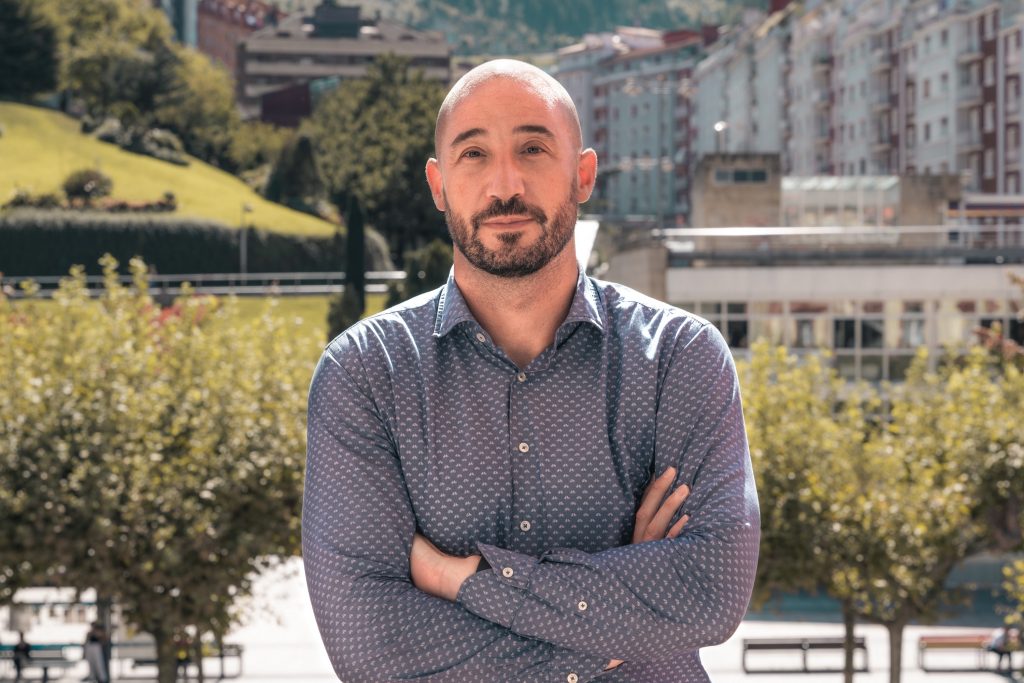
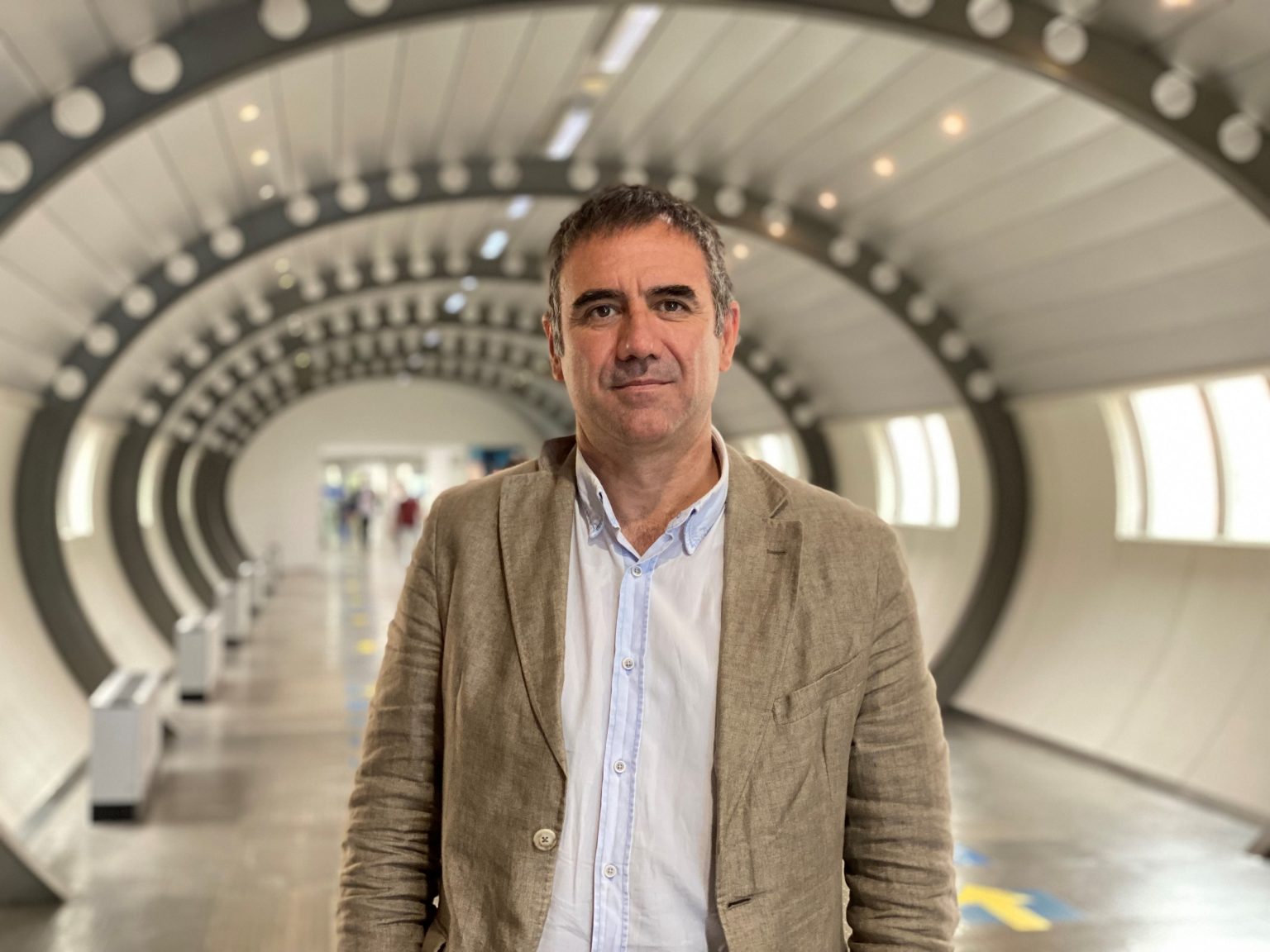
Jon Iraola, alcalde de Eibar

Jon Iraola, mayor of Eibar

The mayor of Eibar, Jon Iraola, knows the Opengela project first hand. Until he took office in March, he was the councillor for Works, Town Planning and the Environment at the Town Council, in charge of managing matters related to urban regeneration in the Txonta neighbourhood, one of the two pilot areas of this European project. He has now added to these responsibilities by becoming the highest authority in the municipality of Gipuzkoa. 

In this interview, he gives his point of view on the progress of Opengela, a European project led by the Basque Government, in which Debegesa (the economic development company of the Debabarrena region, to which Eibar belongs) participates, which implements neighbourhood offices to undertake urban regeneration processes and is financed by the European Commission’s Horizon 2020 programme.   

You have followed the evolution of the Opengela project since it began in May 2019. What does it mean and what value does it have for Eibar? 

The Town Council and the Basque Government started working with the Txonta neighbourhood at the end of 2017, when the Government launched a grant of over 2.3 million euros, which was increased slightly to just over 2.5 million a few months ago. The Town Council is also participating with an additional grant of 400,000 euros to complement the project. 

Urban regeneration was urgently needed. Txonta is a complex neighbourhood from an urbanistic point of view and although there have been attempts in the past, the regeneration of the neighbourhood has not been completed until now. This government grant was a good opportunity to move on to the rehabilitation of the 17 apartment buildings included in the project. Opengela is also an instrument of great potential because it touches on several aspects of regeneration. On the one hand, the office itself, essential to the project, serves to articulate good practices and ways of working that can be extended to other future offices in other cities that want to rehabilitate neighbourhoods. In addition, Opengela brings with it funding, which is essential for the residents of the neighbourhood. The 17 apartment buildings are undertaking rehabilitation of facades, roofs, improving accessibility… These are works of great magnitude and of a very high economic cost. In some cases, they are buildings with few neighbours, so the burden for each neighbour is even greater. The financing offered by Opengela is essential to start the project, as the subsidies are received once the outlay has been made, but in order to be able to do it, it is necessary to have the money, and this is not always the case.  Opengela is a project that still has a lot of development. 

There are many agents involved in the project. What is the role of your Town Council in in this project? 

It has fallen to us to promote the project insofar as we have direct contact with the neighbourhood and we have been in charge of presenting the project to them. It is true that we have gone hand in hand with the Basque Government, but the Txonta office is managed by municipal staff. We have had to do a lot of pedagogical work and in many cases convince the neighbourhood of the goodness and seriousness of the project because at the beginning there was some mistrust about what was going to happen. These are logical mistrusts, insofar as they are ambitious projects, there is a lot of money involved, and it is really difficult to get people involved. We had to organise a lot of meetings and listen to what the neighbours were telling us, what their concerns were, because this also helps us to learn and enriches the project. Often these projects are designed from an abstract point of view, with the best of intentions and always thinking of the good of the neighbours, but in their development, it is necessary to listen to them, detect their real needs, their concerns, and incorporate solutions. Such a project has to meet all these needs and concerns. 

The residents must be convinced of the project, of the works they are going to undertake and that we are going to be there to help and support them. The office has done a very necessary and very important job of listening. 

As you say, the idea of promoting the urban regeneration of Txonta goes back a long way. Do you see that it is finally about to become a reality? 

-It is true that when started in 2018, it was difficult to get started. It took time for all the agents involved in the project to get to know each other and to fit all the pieces together to get the project underway. We had to overcome the mistrust of the neighbours that I mentioned earlier. I think we have achieved this to a large extent. … When planning other similar projects, we will have to take into account how long it has taken to get the Txonta project off the ground. I do not think it is possible to get an idea beforehand. For the future, when setting deadlines for the completion of projects, the experience of the neighbourhood will have to be taken into account. The Town Council and the government have also had to learn things: to listen to the concerns of the residents and to be sufficiently flexible to make the project flow better. In addition, the pandemic has slowed the project down a lot.  

You know the concerns of the residents, what do they tell you, how is the project being received? 

It was difficult for the neighbourhood to have confidence in the project, essentially because of its magnitude, and for them to believe that we were going to deliver everything we offered them. There was a certain, and reasonable, mistrust of the project. In this neighbourhood, things had been tried before and they had not worked out. The residents also demanded a lot of involvement from the institutions, and it was clear to all of us that we had to work together on this. Many concerns had to do with the financing of the works, the deadlines…  

The person who manages the office, Cristina Boyar, and Debegesa –Esther Zarrabeitia- are doing an excellent job. an important part of the success lies in how they are attending to and managing the needs of the residents.  

Do you detect any evolution since that initial mistrust? 

Yes. The projects are moving forward and some apartment buildings are already up and running. In fact, some of them have even finished the works… Almost all the apartment buildings have joined the project. The fact of seeing that the other one has done it is an incentive. There is always a need for somebody to go first. Some communities saw things very clearly, they went ahead with things and the rest have continued along the same path. 

It is true, the rehabilitation work in Txonta can already be seen, although there is still some time to go to see the results and take stock. What would you say to any other municipality interested in applying this model? 

That the neighbourhood office is essential. It has been responsible for building the necessary trust between the institutions and the neighbourhood. The residents have seen that the institutions are accompanying them in this process. Opengela also has a part of financial support, which has come to us a little late because our project was already underway. We are aware that developing the financial instrument to provide this funding is not at all easy and that the Basque Government has worked very hard to achieve it. And now it is finally a reality. There are two very important aspects. In addition to the importance of the neighbourhood office, a mature financing system is needed to help solve the initial liquidity problems involved in these works. An Opengela project with the neighbourhood office, and with a financing system that is already mature, agile, already set up, and that can be set up automatically, would be important aspects.    
Bandera de la Unión Europa

This project has received funding from the European Union’s Horizon 2020 research and innovation programme under grant agreement No 846707.

Otxar Opengela

Address: Avenida Pau Casals, No. 16, Otxarkoaga, Bilbao (In front of Plaza Kepa Enbeita)

Telephone: 946 85 19 32

E-mail: otxaropengela@vvmm.bilbao.eus

Txonta Opengela

Address: Calle Txonta No. 3, ground floor, Eibar

Telephone: 688 77 97 37

E-mail: txontabulegoa@eibar.eus

Copyright@2019 | All rights reserved | Legal notice | Icono de Twitter  Icono de Youtube

Copyright@2019 | All rights reserved | Legal notice Icono de Twitter  Icono de Youtube

Opengela at the EU’s Sustainable Energy Week 2021

Opengela at the EU’s Sustainable Energy Week 2021

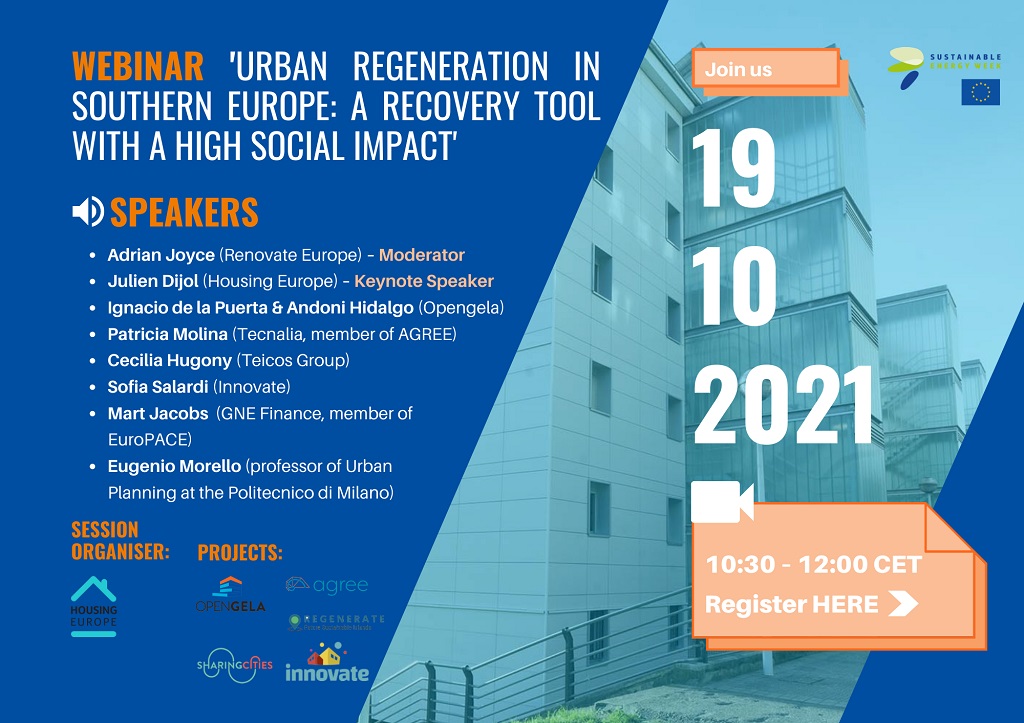
  • Opengela will participate on 19 October along with other European projects in the conference ‘Urban Regeneration in Southern Europe: a recovery tool with a high social impact’.
  • The conference, organised by Housing Europe, will be online and will feature urban regeneration projects from Spain and Italy, including Opengela and AGREE from the Basque Country.
  • The session is part of the EU Sustainable Energy Week, which will be held in October under the theme ‘Towards 2030: reshaping Europe’s energy system’.
Urban regeneration has -and will continue to have- a central role in European energy policies. And to guide them, it is necessary to draw on success stories, which serve as a guide and as proven experiences for subsequent projects. The EU Sustainable Energy Week 2021 (EUSEW) is being organised this October and Opengela will be part of the programme. It will participate in the conference ‘Urban Regeneration in Southern Europe: a recovery tool with a high social impact’. The event will be held online on 19 October and is organised by Housing Europe (the European Federation of Public, Cooperative and Social Housing). It aims to bring the multifaceted aspects of urban regeneration to the European landscape, with particular emphasis on the profound social impact that regeneration projects – currently supported by European funds from the Next Generation EU Programme – can have in the Southern European countries where the pandemic has had the most devastating effects. In addition to representatives of Opengela, other European urban regeneration projects from Spain and Italy will be present to demonstrate, through these real and ongoing examples, how holistic interventions focused on the built environment and the transformation of neighbourhoods can catalyse a fair and inclusive energy transition. Two experiences of urban rehabilitation and regeneration in the Basque Country will be presented: Opengela and AGREE, a project led by the Basque Government. The EuroPACE initiative from Catalonia and Regenerate from the Balearic Islands will also be present. Two other projects from Italy will also participate: Sharing Cities and Innovate. Among the participants, Ignacio de la Puerta, Director of Territorial Planning and Urban Agenda of the Basque Government and coordinator of the Opengela project, will be a highlight. Other speakers will include Julien Dijol, deputy secretary general of Housing Europe; Adrian Joyce (Renovate Europe), Cecilia Hugony (Teicos Group), Patricia Molina, senior researcher at Tecnalia (on behalf of AGREE); Andoni Hidalgo (representative of Opengela), Sofia Salardi (Mantova City Council, member of Innovate), Mart Jacobs (GNE Finance, member of EuroPACE) and Eugenio Morello, professor of Urban Planning at the Politecnico di Milano. Bottom-up initiatives The conference highlights the need to accompany EU policy strategies and actions with bottom-up initiatives. The aim is to demonstrate that progress is feasible and that transformation can happen in a sustainable way, involving citizens and leaving no one behind. Participating projects will be key to demonstrating this, with a focus on different governance and management solutions, innovative financing solutions and co-creation mechanisms deployed to foster inclusive citizen participation. The event is part of the extended programme of the EU Sustainable Energy Week 2021 (EUSEW) organised by the European Commission, which will be held from 11 to 21 October 2021, as a prelude to the main conference EUSEW 2021, which will take place from 25 to 28 October and has as its main focus the theme ‘Towards 2030: Reshaping Europe’s Energy System’.
Bandera de la Unión Europa

This project has received funding from the European Union’s Horizon 2020 research and innovation programme under grant agreement No 846707.

Otxar Opengela

Address: Avenida Pau Casals, No. 16, Otxarkoaga, Bilbao (In front of Plaza Kepa Enbeita)

Telephone: 946 85 19 32

E-mail: otxaropengela@vvmm.bilbao.eus

Txonta Opengela

Address: Calle Txonta No. 3, ground floor, Eibar

Telephone: 688 77 97 37

E-mail: txontabulegoa@eibar.eus

Copyright@2019 | All rights reserved | Legal notice | Icono de Twitter  Icono de Youtube

Copyright@2019 | All rights reserved | Legal notice Icono de Twitter  Icono de Youtube

Otxar Opengela to host a course on the management of rehabilitation and urban regeneration

Otxar Opengela to host a course on the management of rehabilitation and urban regeneration

  • During November and December, the Bilbao neighbourhood office will become a classroom to prepare professionals in technical and organisational aspects for tackling rehabilitation and urban regeneration projects.
  • This course is closely linked to the Opengela programme, as its main objective is to provide transversal and holistic training for the members of the technical and proximity management offices that will in the future deal with all the vulnerable neighbourhoods in the Basque Country.
  • The course has 17 places available, for which public administration professionals and people with a university degree can register before 14 October.

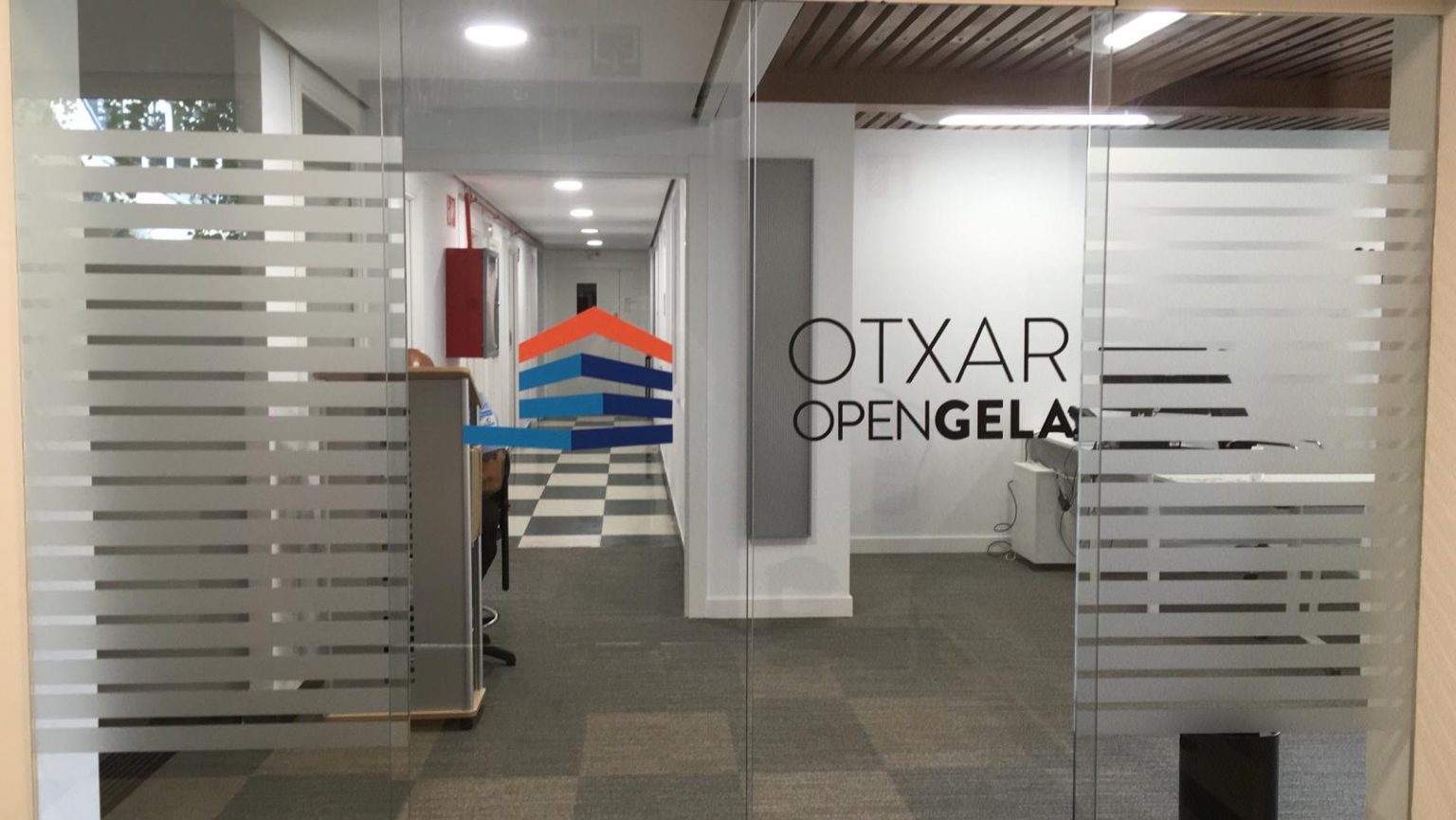
The course ‘Management of rehabilitation and urban regeneration’ organised by the IVAP (Basque Institute of Public Administration) will be held at the Otxar Opengela during November and December. During these two months, comprehensive and integrated training will be offered to public administration professionals and university graduates.

Speakers from the IVAP and EVETU (Basque School of Territorial and Urban Studies) will present the keys to achieving a broad knowledge of the technical and organisational role of professionals in this discipline. The aim is to be able to tackle any work related to the rehabilitation of neighbourhoods, at any scale.

Thus, aspects related to the technical planning of proposals will be addressed, as well as the participation of beneficiaries, management processes and financial viability. All this, under the regulatory and administrative frameworks (European, state, regional, local) and applied to all scales where rehabilitation can be developed (neighbourhood, homogeneous building complex, building or group of them).

Ignacio de la Puerta, director of Territorial Planning and Urban Agenda of the Basque Government; and Gerardo Ruiz Palomeque, professor at the School of Architecture of the Polytechnic University of Madrid and expert in rehabilitation and urban regeneration, co-direct this course, which will begin on 2 November in a conference given by both to establish a conceptual framework at European and territorial level.

Professionals from different disciplines, such as law, sociology, architecture, engineering or technical staff, will be responsible for providing students with the knowledge generated by their experiences through a theoretical-practical methodology, where debate and explanations based on real examples will prevail. In this way, the course will cover topics related to urban planning and rehabilitation on a regional and local scale, as well as the technical keys to carry out rehabilitation projects in a comprehensive, interactive and simultaneous manner.

The deadline for registration is 14 October and there are three ways to enrol: on the one hand, Basque Government staff can register by self-registration; on the other, local and regional government staff can register through their training coordinator; and, finally, professionals, graduates and/or graduates should send the completed application form to evetu@ivap.eus.

This course is closely linked to the Opengela programme, as its main objective is to provide transversal and holistic training for the members of the technical and proximity management offices that will in the future attend to all the vulnerable neighbourhoods in the Basque Country.

Bandera de la Unión Europa

This project has received funding from the European Union’s Horizon 2020 research and innovation programme under grant agreement No 846707.

Otxar Opengela

Address: Avenida Pau Casals, No. 16, Otxarkoaga, Bilbao (In front of Plaza Kepa Enbeita)

Telephone: 946 85 19 32

E-mail: otxaropengela@vvmm.bilbao.eus

Txonta Opengela

Address: Calle Txonta No. 3, ground floor, Eibar

Telephone: 688 77 97 37

E-mail: txontabulegoa@eibar.eus

Copyright@2019 | All rights reserved | Legal notice | Icono de Twitter  Icono de Youtube

Copyright@2019 | All rights reserved | Legal notice Icono de Twitter  Icono de Youtube

Visit by COAVN Gipuzkoa to Otxarkoaga and Txonta for World Architecture Day

Visit by COAVN Gipuzkoa to Otxarkoaga and Txonta for World Architecture Day

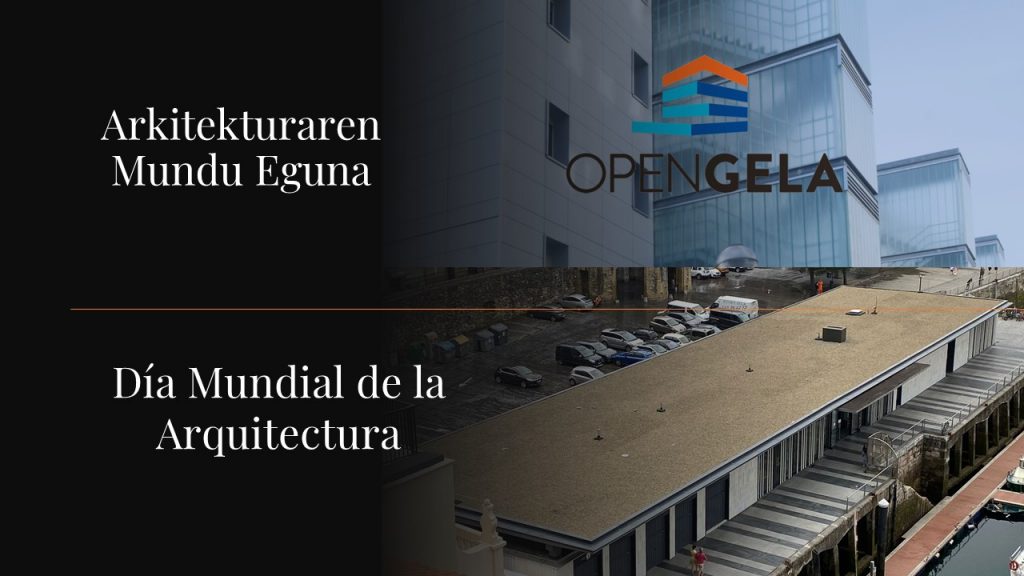
To celebrate World Architecture Day on the first Monday in October, the Gipuzkoa branch of the Official Basque-Navarrese Architects’ Association (COAVN) has drawn up a programme to highlight the importance of building renovation and urban regeneration. As a central event, it has organised a guided visit to the Opengela of Otxarkoaga (Bilbao) and Txonta (Eibar), neighbourhood offices that accompany the neighbourhood throughout the process of rehabilitating their buildings.

COAVN Gipuzkoa has invited all its members to take part in this bus trip to Bilbao and Eibar, which will depart from San Sebastian. The first destination will be the Otxarkoaga neighbourhood, where Ignacio de la Puerta, Director of Territorial Planning and Urban Agenda of the Basque Government, and Claudia Pennese, COAVN Gipuzkoa’s culture spokesperson, will welcome the participants and explain what the European Opengela project consists of.

After the presentation of the project and an explanation of how the neighbourhood offices work, there will be a guided tour of Otxarkoaga. After lunch, the participants will travel to Eibar, where they will visit the Opengela in Txonta. Participation is completely free, but it is essential to sign up in advance on the COAVN Gipuzkoa website.

Bandera de la Unión Europa

This project has received funding from the European Union’s Horizon 2020 research and innovation programme under grant agreement No 846707.

Otxar Opengela

Address: Avenida Pau Casals, No. 16, Otxarkoaga, Bilbao (In front of Plaza Kepa Enbeita)

Telephone: 946 85 19 32

E-mail: otxaropengela@vvmm.bilbao.eus

Txonta Opengela

Address: Calle Txonta No. 3, ground floor, Eibar

Telephone: 688 77 97 37

E-mail: txontabulegoa@eibar.eus

Copyright@2019 | All rights reserved | Legal notice | Icono de Twitter  Icono de Youtube

Copyright@2019 | All rights reserved | Legal notice Icono de Twitter  Icono de Youtube

An integrated home renovation service in your territory

An integrated home renovation service in your territory

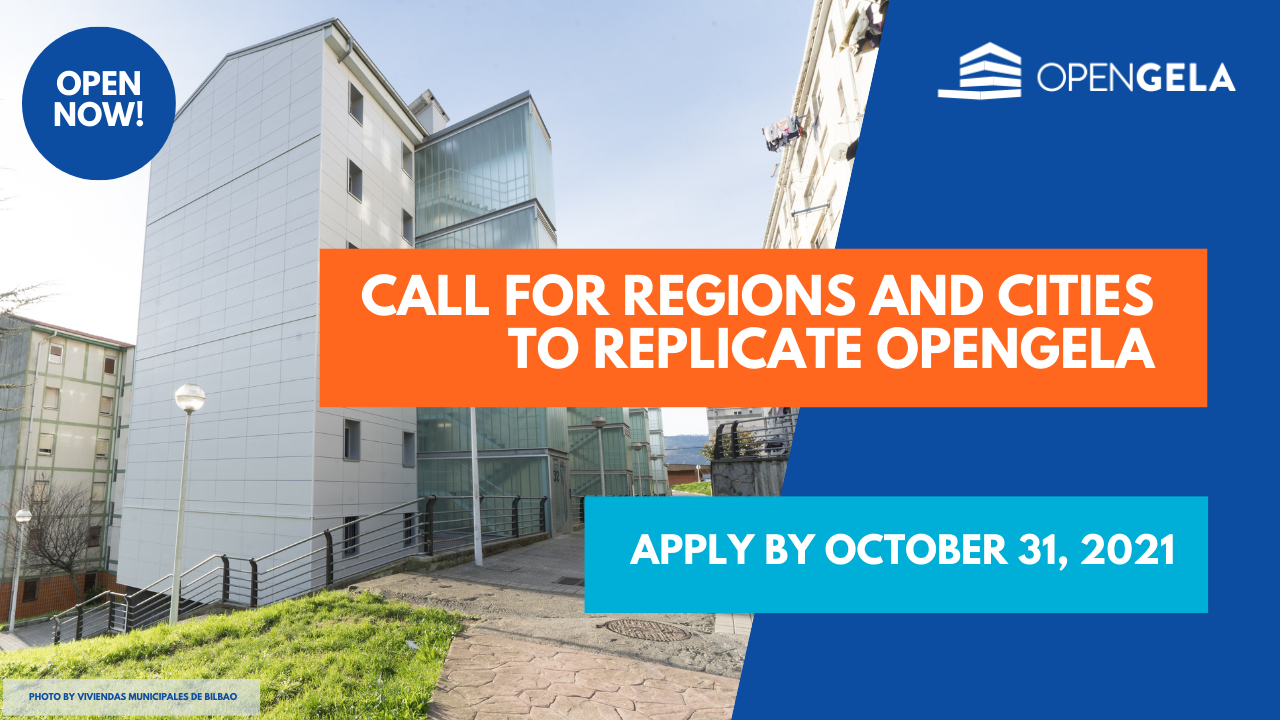
Opengela is a one-stop-shop renovation service in Basque Country, Spain. The project uses an economically viable business model which includes the active engagement of citizens and an innovative financial instrument. This ensures that the renovation service is suitable for vulnerable populations.

After years of development and the running of 6 pilot neighbourhoods, the Opengela model is ready to be replicated not only in the Basque Country but elsewhere in Spain and Europe.

With this call, the project invites 5 regions and cities from across Europe to come to the Basque Country to see how the pilot offices work and bring home what they can replicate from the Opengela model to their territory. 

Who? The call is open to European regional or local energy agencies or public authorities who have the willingness to develop an integrated home renovation service and can make an impact on the urban regeneration in the territory.

What? The participants will enjoy a 2-day visit to Basque Country to see how the Opengela model works.  

How? Answer the questionnaire by October 31, 2021, with concise and complete information. Only applications in English will be evaluated. 

APPLY HERE

Bandera de la Unión Europa

This project has received funding from the European Union’s Horizon 2020 research and innovation programme under grant agreement No 846707.

Otxar Opengela

Address: Avenida Pau Casals, No. 16, Otxarkoaga, Bilbao (In front of Plaza Kepa Enbeita)

Telephone: 946 85 19 32

E-mail: otxaropengela@vvmm.bilbao.eus

Txonta Opengela

Address: Calle Txonta No. 3, ground floor, Eibar

Telephone: 688 77 97 37

E-mail: txontabulegoa@eibar.eus

Copyright@2019 | All rights reserved | Legal notice | Icono de Twitter  Icono de Youtube

Copyright@2019 | All rights reserved | Legal notice Icono de Twitter  Icono de Youtube

Opengela collects in a document best practices shared with other European projects of urban regeneration

Opengela collects in a document best practices shared with other European projects of urban regeneration

Since its launch in 2019, the Opengela urban regeneration project has among its priorities the exchange of information and good practices with other similar experiences that are implementing One-Stop-Shops (OSS) in Europe.

To date, there have been exchanges with four initiatives in three European countries: Tipperary Energy Agency (Ireland), Île-de-France Énergies and Picardie PASS-Amiens (France), Sharing Cities-Milan (Italy) and Renobooster-Vienna (Austria). In addition, Opengela is in close contact with two other initiatives due to their geographical and operational proximity: the AGREE project, led by the Department of Territorial Planning, Housing and Transport of the Basque Government, and the INNOVATE project. All this work is included in the document ‘Best practices in Europe: lessons learned’, which details the contacts made and the conclusions reached.

The first visit was made to the Tipperary Energy Agency in Ireland, where Opengela offered its experience as a project in the initial phase of physical OSS, as well as a perspective of local action to complement the example of the Irish agency as a virtual office. Following this first meeting, two other visits were organised to leading projects in Europe, namely in France, regarding the development of district offices: Picardie-PASS and Île-de-France Énergies,

The pandemic that broke out in March 2020 paralysed the visit plans that had been advanced with the two SSOs identified as strategic to complete the European Peer-to-Peer activity: the Sharing Cities project (Milan) and Renobooster (Vienna).

In order to continue contacts, Opengela organised on 12 May 2020 the webinar ‘Post Covid-19 urban regeneration: one-stop-shops for a fair, green and social regeneration’, with the participation of five other international OSS projects: Sharing Cities (Milan, Italy), EuroPACE (Spain), RenoBooster (Vienna, Austria), SuperHomes (Ireland) and Orfée (France).

The event, moderated by representatives of EASME – the European Commission’s Agency for Small and Medium-sized Enterprises – was followed by more than 180 participants from 26 countries and 4 continents, and aimed to foster a collective brainstorming on how to address the situation caused by the Covid-19 crisis in local urban regeneration projects.

Bandera de la Unión Europa

This project has received funding from the European Union’s Horizon 2020 research and innovation programme under grant agreement No 846707.

Otxar Opengela

Address: Avenida Pau Casals, No. 16, Otxarkoaga, Bilbao (In front of Plaza Kepa Enbeita)

Telephone: 946 85 19 32

E-mail: otxaropengela@vvmm.bilbao.eus

Txonta Opengela

Address: Calle Txonta No. 3, ground floor, Eibar

Telephone: 688 77 97 37

E-mail: txontabulegoa@eibar.eus

Copyright@2019 | All rights reserved | Legal notice | Icono de Twitter  Icono de Youtube

Copyright@2019 | All rights reserved | Legal notice Icono de Twitter  Icono de Youtube

REGENERATE Illes Balears project visits Opengela to learn about the comprehensive building renovation programme in the Basque Country

REGENERATE Illes Balears project visits Opengela to learn about the comprehensive building renovation programme in the Basque Country

Representatives of REGENERATE Illes Balears visit Otxar Opengela

  • At a double technical conference held in Bilbao, both European projects exchanged experiences and good practices to be applied in their urban regeneration services.

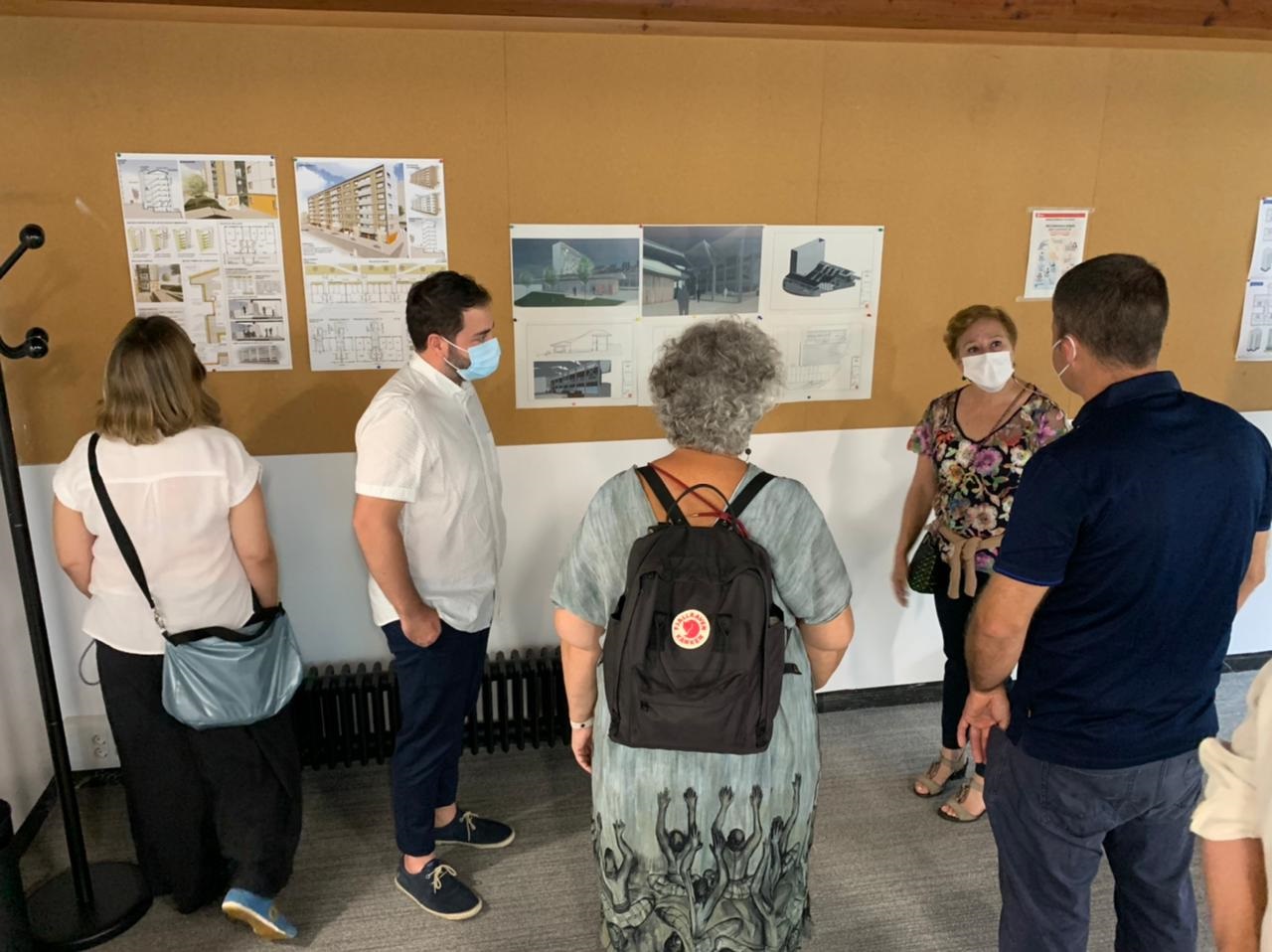
The experience gained in the two years of Opengela’s work in the Basque Country has served as inspiration for the REGENERATE Illes Balears project, which has recently started its housing regeneration programme in Menorca, the city of Palma de Mallorca and the town of Ibiza. The partners of both projects, which are funded by the European Commission, met at a double technical conference held on 20 and 21 July in Bilbao, where they exchanged experiences and good practices in the field of urban regeneration.

The Basque Government, together with Bilbao Municipal Housing, Debegesa and Lasarte-Oria Town Council, hosted the visit, which included various presentations on the technical and socio-economic aspects of the Opengela programme. Among the topics discussed, financing was the responsibility of GNE, Opengela’s partner organisation, which also coordinates the REGENERATE project. In this regard, Borja Gumuzio explained that one of the objectives is to try to ensure that vulnerable households receive 100% financing for the energy renovation of their homes.

In addition, Opengela representatives accompanied Cristina Gómez, Menorca’s island councillor for Employment, Housing and Local Cooperation, and Josep Maria Rigo, director general for Housing of Palma de Mallorca City Council, on their visits to the neighbourhood office in Otxarkoaga (Bilbao) and the operational neighbourhood office in Basaundi, a neighbourhood in Lasarte-Oria (Gipuzkoa) where the city council is promoting a project similar to the Opengela programme.

At the Otxar Opengela, the Balearic representatives learned first-hand about the urban regeneration services developed in 16 portals and 240 homes in the Bilbao neighbourhood, which include attention to the neighbourhood’s residents, support in administrative procedures, relations with related professionals and the channelling of aid. In the municipality of Lasarte-Oria (Gipuzkoa), the Balearic representatives were received by David Mateos, second deputy mayor and councillor for Public Services of the City Council, who presented the service offered by the neighbourhood office in the Basaundi neighbourhood, while they also visited the area of action and the works carried out in terms of rehabilitation of the public pavement.

Opengela and REGENERATE, two European projects with one goal: urban regeneration

The Opengela project was launched in 2019 with the support of the European Union’s Horizon 2020 programme with 1.7 million euros. Led by the Basque Government’s Department of Territorial Planning and Urban Agenda, Opengela seeks to improve the quality of life in cities through urban regeneration. It consists of the creation of neighbourhood offices that, as a one-stop shop, accompany the neighbourhood throughout the process of rehabilitating their buildings. Otxarkoaga (in Bilbao) and Txonta (Eibar) are the pilots, and the process to replicate the model in other places has already begun.

For its part, the REGENERATE Illes Balears project also has the support of the European Commission through Horizon2020, which has granted two million euros for the development of a programme to promote the urban rehabilitation of the housing stock, with the aim of combating climate change, facilitating universal accessibility and increasing the comfort of its inhabitants.

Bandera de la Unión Europa

This project has received funding from the European Union’s Horizon 2020 research and innovation programme under grant agreement No 846707.

Otxar Opengela

Address: Avenida Pau Casals, No. 16, Otxarkoaga, Bilbao (In front of Plaza Kepa Enbeita)

Telephone: 946 85 19 32

E-mail: otxaropengela@vvmm.bilbao.eus

Txonta Opengela

Address: Calle Txonta No. 3, ground floor, Eibar

Telephone: 688 77 97 37

E-mail: txontabulegoa@eibar.eus

Copyright@2019 | All rights reserved | Legal notice | Icono de Twitter  Icono de Youtube

Copyright@2019 | All rights reserved | Legal notice Icono de Twitter  Icono de Youtube

Opengela European project moves forward with the rehabilitation of buildings in Otxarkoaga

Opengela European project moves forward with the rehabilitation of buildings in Otxarkoaga

Miguel de los Toyos y Jon Bilbao

Miguel de los Toyos, Deputy Minister for Territorial Planning and Urban Agenda of the Basque Government and Jon Bilbao, Councillor for Housing and President of Bilbao Municipal Housing, at Otxar Opengela

The Deputy Minister for Territorial Planning and Urban Agenda of the Basque Government, Miguel de los Toyos, and the Councillor for Housing and President of Bilbao Municipal Housing, Jon Bilbao, visited on Tuesday 29 June the Opengela project for urban regeneration and rehabilitation of buildings that is being carried out in the Otxarkoaga neighbourhood. The meeting was held at the Otxar Opengela, as well as in the buildings that are part of the initiative.

The Bilbao neighbourhood is one of the pilot projects, together with Eibar, where a neighbourhood office has been set up to accompany the neighbourhood throughout the process of refurbishing their buildings. Its managers support homeowners’ associations in the contracting of works, in the management of public aid, in access to financing, in the improvement of energy efficiency or accessibility. This model of neighbourhood offices has begun to be replicated in other Basque municipalities.

The Otxar Opengela is the place for meetings with the residents of three of the five blocks to coordinate the necessary actions to proceed with the refurbishment work. Specifically, these are the blocks at 18-24 Txotena Street, 1 Larrakoetxe Street and 12-16 Txotena Street. In the first two, the works are currently underway, while the one corresponding to Txotena 12-16 is in the tendering phase.

In order to offer assistance and advice to residents in these buildings, the Otxar Opengela staff have already been in contact with the neighbourhood and have made progress on the details for carrying out the work in four of the five blocks involved.

Specifically, so far this year, the local office has hosted seven neighbourhood meetings to advise on the decisions to be taken. The Otxar Opengela advisors also carry out individualised procedures with each owner for the execution of interior finishes, as well as resolving doubts and complaints. They also attend the telephone enquiries about the progress of the refurbishment work. Their functions also include guidance on financing and the processing of individualised public aid.

The office also has a space for research on urban regeneration in which public and private agents are getting involved. Several courses and workshops on urban regeneration have already been held in these multi-purpose rooms, as well as employability launchers. Specifically, two courses and three workshops have been given, as well as the coordination meetings of the neighbourhood offices of the Basque Country, which have chosen the Otxar Opengela to hold these sessions.

The Deputy Minister of Territorial Planning and Urban Agenda of th e Basque Government, Miguel de los Toyos, has highlighted the role of Opengela in the whole regeneration process. «It is a one-stop-shop that provides general support and guidance to residents, and helps them with both technical and administrative aspects». He also wanted to highlight the ambition of the Otxarkoaga project «because it is not limited to the renovation of public spaces and housing, but also proposes a comprehensive revitalisation of the neighbourhood, also taking into account economic aspects, employment and social cohesion».

Numerous actions

There are numerous actions in the district related to urban regeneration and energy efficiency, with the involvement of the associative fabric. Within the framework of an initiative called Orain Otxar, the aim is to turn Otxarkoaga into a socially sustainable eco-neighbourhood. This is the first experience of its kind in the city, the result of institutional collaboration and the shared commitment to urban regeneration of the Department of Territorial Planning, Housing and Transport of the Basque Government and Bilbao Municipal Housing.

According to the Councillor for Housing of Bilbao City Council and President of Municipal Housing, Jon Bilbao, «of the five blocks of buildings that are part of the project’s rehabilitation plan, two of them are being developed at full capacity, the remodelling of the F shopping centre building has also been completed to host socio-cultural activities in the near future and we are working on the design of the shared energy self-consumption association that will allow residents to use the surplus energy from the installation of solar panels».

The most relevant actions of the project are the refurbishment of five buildings under energy efficiency and universal accessibility criteria. In total, the intervention that is being proposed to the rest of the owners affects 240 homes spread over 16 house numbers and three streets in the neighbourhood (Irumineta, Txotena and Larrakoetxe). This work will be added to the one that has already been carried out until 2017 with improvement works in four buildings with a total of 228 homes in Bilbao.

This is complemented by another European project called PV Adapt, which aims to apply a new building-integrated photovoltaic solar energy system. It consists of the design and testing of new generation photovoltaic solar panels that will be installed in the Otxar Opengela office, in the F Shopping Centre and in one of the buildings to be refurbished. In addition to producing electricity, the panels are insulating and act as a finish for façades and roofs.

Bandera de la Unión Europa

This project has received funding from the European Union’s Horizon 2020 research and innovation programme under grant agreement No 846707.

Otxar Opengela

Address: Avenida Pau Casals, No. 16, Otxarkoaga, Bilbao (In front of Plaza Kepa Enbeita)

Telephone: 946 85 19 32

E-mail: otxaropengela@vvmm.bilbao.eus

Txonta Opengela

Address: Calle Txonta No. 3, ground floor, Eibar

Telephone: 688 77 97 37

E-mail: txontabulegoa@eibar.eus

Copyright@2019 | All rights reserved | Legal notice | Icono de Twitter  Icono de Youtube

Copyright@2019 | All rights reserved | Legal notice Icono de Twitter  Icono de Youtube

«I hope that Opengela will be a reference for other urban environments and inspire other initiatives»

Interview – Miguel de los Toyos, Deputy Minister for Territorial Planning and Urban Agenda of the Basque Government

«I hope that Opengela will be a reference for other urban environments and inspire other initiatives»

Miguel de los Toyos, viceconsejero de Planificación Territorial y Agenda Urbana del Gobierno Vasco

Miguel de los Toyos, Deputy Minister for Territorial Planning and Urban Agenda of the Basque Government

Miguel de los Toyos took office as Deputy Minister of Territorial Planning and Urban Agenda of the Basque Government last March, after leaving the post of Mayor of Eibar, which he had held since 2008. Therefore, his knowledge of the Opengela project is complete, both from a municipal point of view and a wider point of view coming from the responsibilities of his current post.

In this interview, he gives his point of view on the progress of the project, coordinated by his department of the Basque Government, which implements neighbourhood offices to undertake urban regeneration processes and is financed by the Horizon 2020 programme of the European Commission. Otxarkoaga (Bilbao) and Txonta (Eibar) are the pilot schemes, and the process to replicate the model in other places has already begun.

You are familiar with the Opengela project. It requires a high level of coordination between institutions, and also with the neighbourhood. Two years after it started, how do you rate the progress of the project? 

It is a project that has three pillars, and none can be dispensed with: the Basque Government, as the promoter; city councils, which require a serious and convinced commitment; and the neighbourhood communities in which you want to act. This means that the previous work, of informing and of showing commitment, is long and progressive. Therefore, the tangible – the building renovation, comes in the final phase of the project, which does not mean that it has not been worked on previously. You have to invest a lot of time so that in the end, the project progresses and has strength in its foundations. At this time, those foundations are already in place and now we will begin to see how the building grows.

Europe is going through a period of strong commitment to the ‘Renovation Wave’, within the European Green Deal, as one of the main driving forces to boost the economy after the pandemic. How does the Opengela project fit into this context?

Opengela, from the outset, is aligned with all public policies at international, European, national and Basque Country levels. In 2015, the United Nations established the 17 SDGs, where SDG 11 is the one for sustainable cities. Opengela is a practical example of the materialisation of this SDG. There is now talk of three transitions and all of them converge on Opengela. Green transition: Opengela aims for energy efficiency and decarbonisation by 2050. Digital transition: Energy communities are created, the digitalisation of consumption, electric mobility. Social and demographic transition: It is an urban regeneration project that considers not only the environment (buildings, streets, squares) but also people. It works on training, employment, protection of vulnerable people… The virtue of Opengela is that it is aligned with the Green Deal from its origin, before the pact itself existed. 

There are numerous urban regeneration projects in Spain and Europe, what distinguishes Opengela?

This project has a holistic, transversal vision. The urban environment has been identified not only by the government but also by the city councils. And the social part is fundamental because it acts in vulnerable neighbourhoods.

The success of this European project will depend on the possibility of scaling up the model beyond Bilbao and Eibar. There are already other Basque municipalities that are taking the first steps to apply the same model. How is this process progressing?

The two municipalities that joined the project, Bilbao and Eibar, have already been joined by another two: Lasarte and Durango. And soon, Pasaia will also be part of it. A lot of internal work has been done, and we are now moving forward to achieve visible results in urban regeneration. We are at an embryonic stage. At the same time, we are incorporating four other Biscayan town councils into Opengela: Portugalete, Valle de Trápaga, Abanto-Zierbena and Santurtzi. In their reflections on how to act in their areas, they have identified urban regeneration as a strategic project. The same is happening in Alava, in the Ayala Valley. This shows the interest in integral urban regeneration. We will soon receive additional funds from Europe and, in order to promote urban regeneration projects, we have received the strategic interest of more than 70 municipalities and more than 110 initiatives. From a pilot experience in two municipalities that is still in the development phase, Opengela has attracted the interest of other municipalities that have a similar diagnosis. This is a symptom that we were right to present this European project. We took a step forward, and others are confirming that it was the right step to take.

What do you consider to be the main difficulty in undertaking the project?

I have seen most of this project from the City Council, as Mayor. The main complexity of Opengela is to unite people’s wishes and make all the communities and people who participate in the project see how it will improve their quality of life. First, the Basque Government explains the project to the town councils and then it is the town councils who do the same work with the neighbourhood. It is a slow, progressive process. If it can be difficult for a community of 16 homes to decide to install a lift, imagine a community of 200 homes in a vulnerable environment. We have to get them to agree. The exercise of teaching and visualising the opportunity may be complex, but it is undoubtedly indispensable.

It is essential that these urban regeneration processes are carried out hand in hand with the neighbourhood. You have listened to the concerns of residents on the street, how do you think the project has been received?

There are often differences. There are communities that have a concern and have detected their own needs: the lift, fixing the façade … In that case, it is easier to approach, and you become a collaborator. Other communities have not detected this need and view it with a certain scepticism. This initial reluctance is more easily overcome as they see the projects in their neighbourhood go ahead, see the buildings being successfully refurbished and the positive impact this has on the daily lives of those living nearby.

Opengela’s European projection is undeniable. Why should other parts of the European Union pay attention to the process being developed in the Basque Country with regard to urban regeneration?

We all have to learn from each other. We have looked elsewhere. But I think we have initiatives to teach here. It probably will not work for everyone because each country and municipality has its own idiosyncrasies. But there may be variables that can be useful for them. The greatest virtues of Opengela are, on the one hand, that it is aligned with the cities we want to achieve by 2050 and with the path we want to take to reach that year. And, on the other hand, the transversal nature of the project. Intellectually, it is well armed. We do not say so ourselves, this comes from the Ministry of the Urban Agenda and the national and international forums we attend. Now we are taking it to vulnerable neighbourhoods and transforming it into something tangible. I hope it will be a reference for other urban environments and inspire other initiatives.

Bandera de la Unión Europa

This project has received funding from the European Union’s Horizon 2020 research and innovation programme under grant agreement No 846707.

Otxar Opengela

Address: Avenida Pau Casals, No. 16, Otxarkoaga, Bilbao (In front of Plaza Kepa Enbeita)

Telephone: 946 85 19 32

E-mail: otxaropengela@vvmm.bilbao.eus

Txonta Opengela

Address: Calle Txonta No. 3, ground floor, Eibar

Telephone: 688 77 97 37

E-mail: txontabulegoa@eibar.eus

Copyright@2019 | All rights reserved | Legal notice | Icono de Twitter  Icono de Youtube

Copyright@2019 | All rights reserved | Legal notice Icono de Twitter  Icono de Youtube

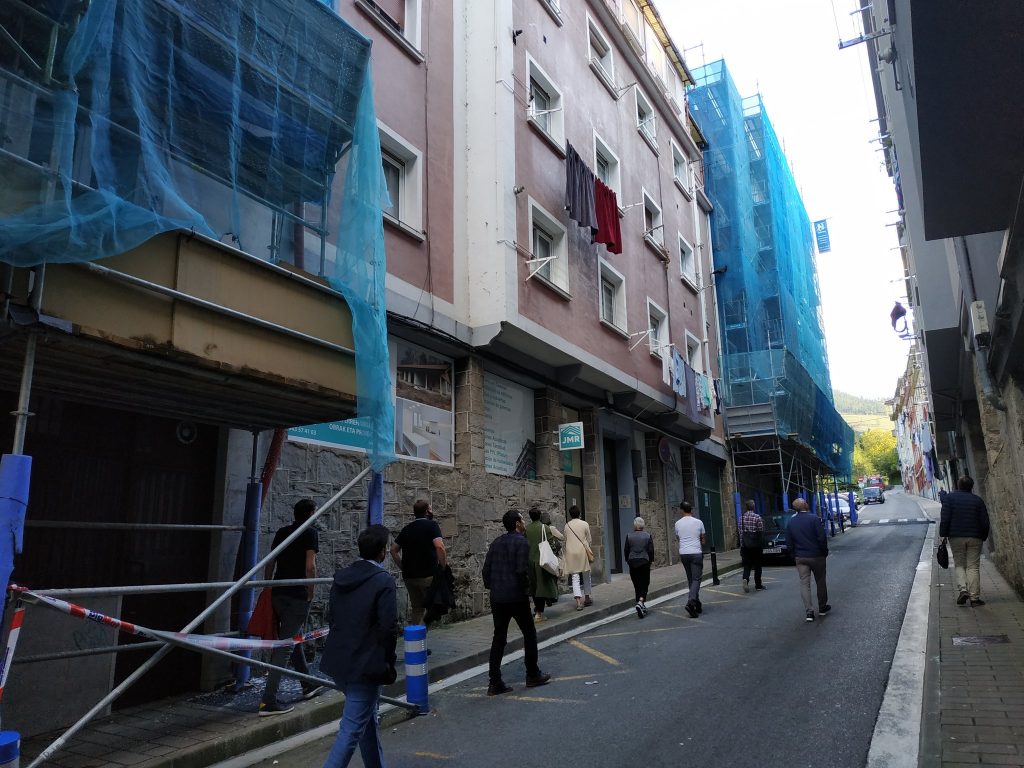
The first scaffolding in the neighbourhoods

The first scaffolding in the neighbourhoods

The essence of the Opengela project is urban regeneration and, specifically, the refurbishment of buildings. Both Txonta, in Eibar, and Otxarkoaga, in Bilbao, are making progress in the work of the communities that have joined the programme. The first building works are already underway, even though the pandemic has hampered the process. 

In Otxarkoaga, where the project covers 16 apartment buildings with 240 homes, work is already progressing in 5 apartment buildings and 108 homes: Txotena 18, 20, 22 and 24, as well as Larrakoetxe 1.

In Txotena Street, the scaffolding indicates that the works are underway. But, in addition, all kinds of specialised tasks continue to be defined: thermal installations and renewable energies, thermal enclosures…

Contact between the office and the residents is constant, with all kinds of queries related to the works or the replacement of windows.

In Larrakoetxe 1, the execution phase of the project has been completed. There, the neighbourhood office has participated in the review of the construction specifications, the evaluation of the bids and the selection of the construction company to carry out the work.

In Txonta, the office re-established relations with the neighbourhood in June last year, always in compliance with strict security measures due to the pandemic. And the work has continued.

In total, the Opengela project is working on 221 homes in 17 apartment buildings. The buildings with the greatest progress are Txonta 36, 38 and 40, as well as Txonta 2, with a total of 67 homes, which are already nearing the end of the building works. In Txonta 3, work has already begun and is expected to be completed within a year.

Bandera de la Unión Europa

This project has received funding from the European Union’s Horizon 2020 research and innovation programme under grant agreement No 846707.

Otxar Opengela

Address: Avenida Pau Casals, No. 16, Otxarkoaga, Bilbao (In front of Plaza Kepa Enbeita)

Telephone: 946 85 19 32

E-mail: otxaropengela@vvmm.bilbao.eus

Txonta Opengela

Address: Calle Txonta No. 3, ground floor, Eibar

Telephone: 688 77 97 37

E-mail: txontabulegoa@eibar.eus

Copyright@2019 | All rights reserved | Legal notice | Icono de Twitter  Icono de Youtube

Copyright@2019 | All rights reserved | Legal notice Icono de Twitter  Icono de Youtube