“Opengela has made it easier for us to rehabilitate not only buildings in Otxarkoaga, but also spaces that were in disuse”

Interview

“Opengela has made it easier for us to rehabilitate not only buildings in Otxarkoaga, but also spaces that were in disuse”

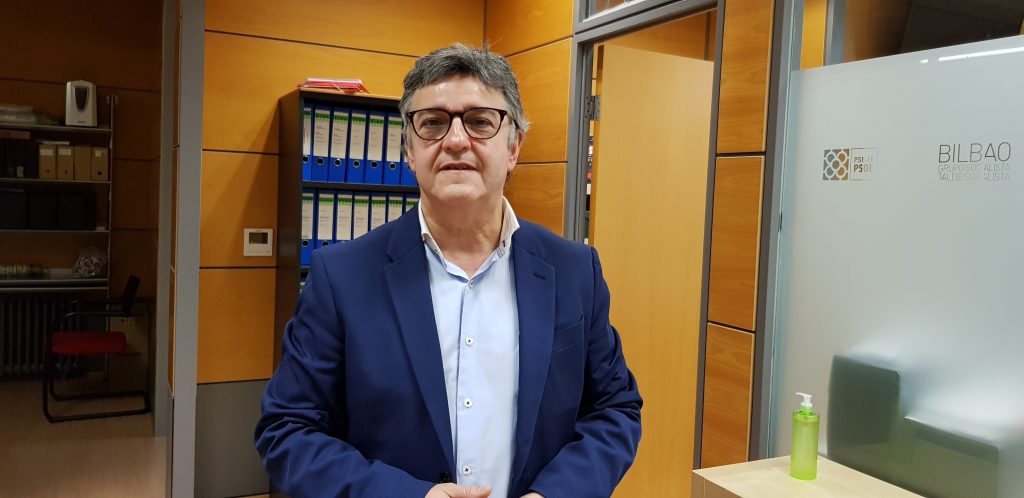
Jon Bilbao

Jon Bilbao, Councillor for Housing and President of the Bilbao Municipal Housing Association.

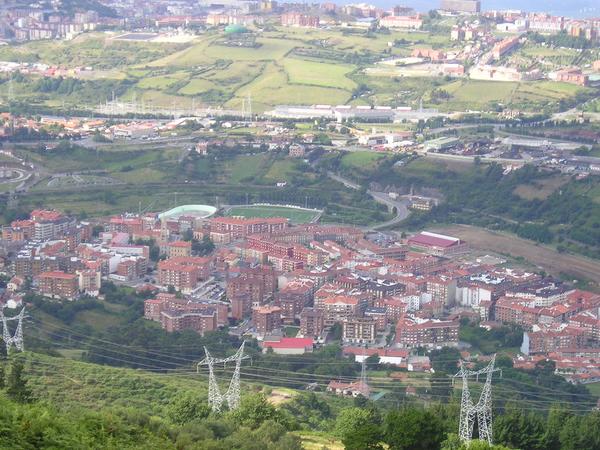
The city of Bilbao is promoting one of the two pilot experiences of the Opengela project. The Otxarkoaga neighbourhood has set up an office to help the neighbourhood throughout the process of refurbishing its buildings. Within the scope of this European project, five blocks of buildings with 16 portals and a total of 240 dwellings are being rehabilitated. 

In the case of Otxarkoaga, unlike the other pilot project in Txonta (in Eibar), the particularity lies in the fact that most of the housing (around 60%) is publicly owned, through the company Viviendas Municipales de Bilbao. Its president, in addition to being the councillor responsible for Housing, is Jon Bilbao. 

Bilbao City Council has an ambitious urban regeneration plan for the Otxarkoaga neighbourhood, with the Orain Otxar plan. Within this framework, there is the Opengela project and the neighbourhood office that has been operating for almost two years. How do you assess the progress of the project so far? 

It has been a very positive experience. The project has enabled us to rehabilitate not only residential buildings, but also spaces that were in disuse in the neighbourhood, giving them new life and services for Otxarkoaga. The office allows us to have a local view of the progress of the refurbishment work and to have a real awareness of what is happening in each dwelling and thus be able to make better decisions.  

In this case, the City Council, as well as being the driving force behind the project, is also the owner of many of the homes that form part of it. What lessons and conclusions can be drawn from this dual status? 

We had already carried out similar projects in Otxarkoaga and other neighbourhoods in Bilbao, which allowed us to use the experience we had gained in this project. The idea of tackling projects in public-private properties seems to us to be a great success that benefits both parties. The owners are delighted to be able to count on the professionalism and involvement of the Municipal Housing workers in the projects and we are delighted to be able to count on them in the various participatory projects, as well in the day-to-day running of the works.

How is the neighbourhood reacting to the creation of the office and all that it entails, and what receptivity and encouragement do you see? 

We believe that the office is working very well. The people who are affected by the works know where to go with any doubts that may arise in a project of this magnitude and it allows us to organise ourselves better with all the agents involved in these processes. 

This is a vulnerable neighbourhood, what difficulties are you encountering in intervening there, and how are you dealing with them? 

The great difficulty is the uncertainty that comes with these major rehabilitation works, nothing that does not happen in other neighbourhoods. We deal with the problems one by one and try to provide ‘ad hoc’ solutions to each of the queries. Transparency and constant information about the projects help to deal with the inconvenience of such lengthy projects. 

How is the financing of building renovation projects being resolved? 

This is currently being channelled using a programme of instalments over a long period, combined with public financing via subsidies and the added improvements of financing from private entities and the construction companies awarded the works. A specific working methodology has been developed. 

The European project will end in 2022. With the knowledge already accumulated over the years, what would you say to any other municipality interested in applying this model, both in the Basque Country and at the European level? 

They should be encouraged to set up this type of mechanism in their municipalities. Many neighbourhoods need to undertake this type of projects and having neighbourhood offices facilitates the task of individualised assistance. 

Bandera de la Unión Europa

This project has received funding from the European Union’s Horizon 2020 research and innovation programme under grant agreement No 846707.

Otxar Opengela

Address: Avenida Pau Casals, No. 16, Otxarkoaga, Bilbao (In front of Plaza Kepa Enbeita)

Telephone: 946 85 19 32

E-mail: otxaropengela@vvmm.bilbao.eus

Txonta Opengela

Address: Calle Txonta No. 3, ground floor, Eibar

Telephone: 688 77 97 37

E-mail: txontabulegoa@eibar.eus

Copyright@2019 | All rights reserved | Legal notice | Icono de Twitter  Icono de Youtube

Copyright@2019 | All rights reserved | Legal notice Icono de Twitter  Icono de Youtube

Opengela brings its urban regeneration model to Abanto-Zierbena, Trápaga eta Santurtzi with three new neighbourhood offices

Opengela brings its urban regeneration model to Abanto-Zierbena, Trápaga eta Santurtzi with three new neighbourhood offices

The three municipalities will benefit from the funds of the Berpiztu programme, through which the Department of Territorial Planning, Housing and Transport will allocate 17 million euros to strengthen urban regeneration actions in neighbourhoods in the Basque Country between 2021 and 2023.

Opengela is taking its urban regeneration model to the Ezkerraldea-Meatzaldea region, where it will set up three new neighbourhood offices in the municipalities of Abanto-Zierbena, Valle de Trápaga-Trapagaran and Santurtzi.

This measure is part of the Berpiztu programme, with which the Department of Territorial Planning, Housing and Transport will allocate 17 million euros to strengthen urban regeneration actions in neighbourhoods in the Basque Country between 2021 and 2023. The direct subsidy to these town councils, in addition to Portugalete, was approved by the Governing Council, at the proposal of Iñaki Arriola, Minister of Territorial Planning, Housing and Transport.

In the three cases, Abanto-Zierbena, Valle de Trápaga-Trapagaran and Santurtzi, highly vulnerable neighbourhoods have been identified in which, according to preliminary analyses, the average income per household does not exceed 15,000 euros per-home per year. In the three cases, a neighbourhood office (known as opengelas) will be set up to accompany and advise residents and communities on how to carry out and finance the works, and families with the greatest economic difficulties will be given access to a guarantee fund for complementary financing to help them pay for the works.

In the case of Abanto-Zierbena, the direct subsidy of 6.28 million euros between 2021 and 2023 will be earmarked for the Peñucas neighbourhood, an area of 200 homes spread over 20 portals (seven blocks). The comprehensive action will consist of energy rehabilitation, accessibility, habitability, security and digitalisation of buildings and housing, the redevelopment of the area paying attention to accessibility, energy rehabilitation of the municipal euskaltegi, employment plans, financing and studies of the neighbourhood.

In the case of Valle de Trápaga-Trapagaran, for its part, the direct subsidy of 3.91 million will go to the San Andrés neighbourhood, where 195 homes will participate in the urban regeneration project. The intervention will cover the refurbishment of buildings and dwellings in terms of energy efficiency and various urban planning actions in terms of environmental sustainability, as well as the analysis of the reuse of obsolete buildings and actions for social inclusion, employment and R+D+i.

In Santurtzi, the Basque Government grants a direct subsidy of 3.42 million euros to refurbish a group of buildings housing 104 dwellings -Aurora Vildosola 1-13-.

The aid to these three new town councils will increase the number of neighbourhoods in the Basque Country that form part of the network of municipalities with urban regeneration projects underway. At the moment, those of Bilbao, Durango, Eibar and Lasarte-Oria are active, initiatives that are improving the quality of life of around 2,000 people living in 741 dwellings divided into 42 buildings.

The Opengela model is based on the implementation of district offices, which unify the regeneration processes of the neighbourhoods, serving both the neighbourhood and coordinating the rest of the groups involved. Opengela, which starts with two pilot projects in the neighbourhoods of Otxarkoaga (Bilbao) and Txonta (Eibar), seeks to be replicable throughout the Autonomous Community and to this end establishes guidelines that facilitate scalability to other territories.

Bandera de la Unión Europa

This project has received funding from the European Union’s Horizon 2020 research and innovation programme under grant agreement No 846707.

Otxar Opengela

Address: Avenida Pau Casals, No. 16, Otxarkoaga, Bilbao (In front of Plaza Kepa Enbeita)

Telephone: 946 85 19 32

E-mail: otxaropengela@vvmm.bilbao.eus

Txonta Opengela

Address: Calle Txonta No. 3, ground floor, Eibar

Telephone: 688 77 97 37

E-mail: txontabulegoa@eibar.eus

Copyright@2019 | All rights reserved | Legal notice | Icono de Twitter  Icono de Youtube

Copyright@2019 | All rights reserved | Legal notice Icono de Twitter  Icono de Youtube