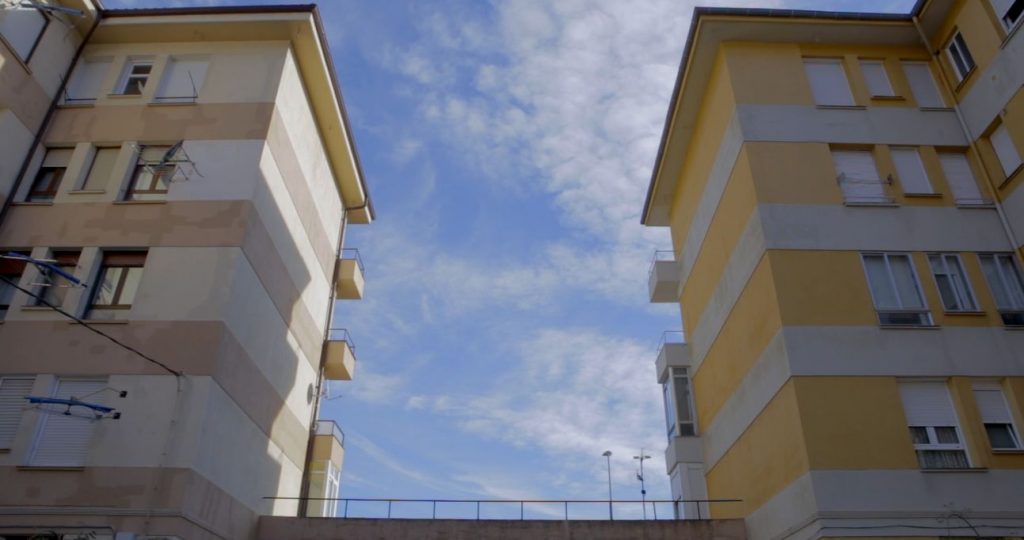
The comprehensive transformation of Vista Alegre in Sestao to be finished in October 

The comprehensive transformation of Vista Alegre in Sestao to be finished in October 

One of the 11 doorways in Vista Alegre that is being refurbished

The historic neighbourhood of Vista Alegre, in Sestao, faces the final stretch of its transformation thanks to an ambitious comprehensive urban regeneration project that will be completed in October 2025. The initiative is led by the Basque Government, in collaboration with the Sestao City Council and the neighborhood communities themselves, with the technical and social support of the Opengela neighbourhood office.

The intervention focuses on the rehabilitation of the Vista Alegre Group, a closed block built in 1914, consisting of 11 doorways and 93 dwellings, which is undergoing a profound structural, energy and urban transformation. The project was recognised with the AVS 2024 Award for the best comprehensive regeneration initiative in Spain for its impact on habitability, accessibility, energy efficiency and community involvement.

The action has a total investment of 5,276,975 euros, financed through a collaborative model. The Basque Government has contributed 4,403,178 euros, of which 4,235,743.80 euros come from the Inter-institutional Strategic Investment Plan and 167,435 euros from complementary funds. Sestao Town Council has contributed 682,305 euros, while the owners have contributed an investment of 191,491 euros.

An intervention with multiple dimensions

The project combines several integrated lines of action that make this intervention a benchmark in sustainable urban regeneration. The buildings are being thoroughly refurbished, improving their thermal envelope by insulating the façades, ground floor and roofs, installing new window frames and glazing, as well as thermal and electrical energy generation systems using aerothermal energy and solar panels. In addition, sensors are incorporated to control indoor air quality and fire protection systems.

The urban environment is also being renovated with nature-based criteria. The urbanisation works cover streets such as Resurrección María de Azkue, Antonio Machado, Los Baños and the Amador Palma park, and include new service connections, paving, lighting and street furniture.

In the field of energy, the creation of a local energy community is being promoted together with Edinor and Piztu Sestao, which will allow between 25 and 50 agents in the neighbourhood (including homes, businesses and public facilities) to benefit from shared self-consumption.

The digitalisation of the neighbourhood is another of the project’s commitments. It is planned to install a public wifi network, community ADSL infrastructure, and intelligent systems for energy and environmental management. Elements of historical memory will also be integrated, in recognition of the bombing suffered in 1937. This provides an identity value that reinforces the social and cultural dimension of the regenerated environment.

This whole process is carried out with the constant support of the Opengela neighbourhood office. This technical office serves as a liaison between the neighbourhood communities and the institutions, and facilitates procedures, advice, resolution of technical doubts and decision-making. Its role has been fundamental for citizen involvement in the project and has been recognised at state level for its community value.

OPENGELA NEWSLETTER

Receive all news related to Opengela
Co-funded by the European Union. The views and opinions expressed are solely those of the authors and do not necessarily reflect those of the EU or CINEA. Neither the European Union nor the funding authority can be held responsible for them.

Uretamendi renews itself through the Opengela programme: more time, more support and new spaces to recover the neighbourhood 

Uretamendi renews itself through the Opengela programme: more time, more support and new spaces to recover the neighbourhood 

Bilbao City Council and the Basque Government are carrying out an ambitious urban regeneration plan in Uretamendi, one of the 25 neighbourhoods belonging to the Opengela programme. This initiative seeks to improve the living conditions of its inhabitants by rehabilitating housing; promoting accessibility; renaturalising degraded spaces and strengthening the social fabric.

Uretamendi, together with Betolaza, has a very old housing stock (average 58 years old) and serious structural deficiencies: barely 30% of the buildings have lifts. Since 2023, the municipal company Surbisa has been carrying out improvement work in 19 blocks, benefiting more than 200 homes. These actions, which include renovation of roofs, façades and structures damaged by termites, have mobilised 1.34 million euros, with significant public subsidies.

In addition, the Basque Government has declared 143 buildings in the neighbourhood as an Integrated Rehabilitation Area, which allows access to increased aid, in some cases up to 100% of the cost.

To facilitate the procedures, Surbisa has set up a neighbourhood office (Opengela) where residents receive technical and legal assistance. It will also pay for the technical projects necessary for the works, with grants covering up to 10,000 euros per community, which will make it easier to access future regional or European subsidies.

In addition to the structural works, the aim is to transform degraded courtyards and small squares into green spaces for neighbourhood coexistence. Six key areas have been identified for their recovery, including Betolaza, 48. The interventions include paving; installation of vegetation; benches; vegetable gardens and playgrounds, with aid that will cover up to 80% of the cost in Uretamendi.

Adaptation of the subsidy calendar

Given that many processes have been slowed down by neighbourhood dynamics, the shortage of materials (due to factors such as the war in Ukraine) and conflicts with awarding companies, the Basque Government has approved a rescheduling of the timetable for execution and justification of subsidies. Although the total amount (455,507.60 euros) has not been increased, the deadline for justification has been extended until December 2026 and the planned annual payments have been redistributed.

This modification responds to the need to manage two new sources of aid: one for energy rehabilitation and accessibility, and the other for the renaturation of private spaces.

The Director of Neighbourhood Regeneration and Urban Agenda, Ana Telleria, stresses that these processes require time and proximity: «It is not only a physical transformation, but also a social and community one. That is why we work together with local councils and neighbours, adapting to their real needs».

This comprehensive approach will be extended to other neighbourhoods such as El Peñascal and Uribarri and could in the future reach 635 buildings in 16 different areas of Bilbao that are more than 55 years old. The aim is to prevent the abandonment of vulnerable areas, promote social cohesion and build more sustainable, accessible and inclusive neighbourhoods.

Sources: El Correo and Irekia website

OPENGELA NEWSLETTER

Receive all news related to Opengela
Co-funded by the European Union. The views and opinions expressed are solely those of the authors and do not necessarily reflect those of the EU or CINEA. Neither the European Union nor the funding authority can be held responsible for them.

Urban regeneration in the Basque Country: Addressing housing, sustainability and energy efficiency challenges 

Urban regeneration in the Basque Country: Addressing housing, sustainability and energy efficiency challenges 

ManagEnergy, the European Commission’s initiative for regional and local energy agencies, has published an article on its website exploring how the Basque Country is transforming its older neighbourhoods into models of inclusive and climate-resilient living through the Opengela programme.

As they explain, “with 30% of its housing stock in urgent need of renovation, the Basque Country is leading a bold and ambitious urban regeneration effort. Through the Opengela programme, supported by the BIRTUOSS project, the region is moving from individual refurbishment to the complete transformation of neighbourhoods”.

They add thatmore than a housing initiative, it is a powerful model for combining energy efficiency, social equity and urban transformation”.

Read the full article here.

OPENGELA NEWSLETTER

Receive all news related to Opengela
Co-funded by the European Union. The views and opinions expressed are solely those of the authors and do not necessarily reflect those of the EU or CINEA. Neither the European Union nor the funding authority can be held responsible for them.

Two new tools enable an architectural, energy and economic diagnosis of each building in the Basque Country

Two new tools enable an architectural, energy and economic diagnosis of each building in the Basque Country

  • Opengela Roadmap and Opengela Communities are two tools created by Cíclica and the Polytechnic University of Catalonia (UPC), with funding from the Basque Government.  
  • With this method it is possible to work on a hypothesis of what will happen to each building in the Basque stock, and it provides key information for the Digital Building Register and the Renovation Passport. 
  • Ana Telleria, head of Neighbourhood Regeneration and Urban Agenda of the Basque Government, assures that “the main objective of these two tools is to facilitate decision-making by all the agents involved in housing renovation: Administration, professionals, companies in the sector and residents, whom we want not only to involve in the process but also to empower”.

The Basque Government, in collaboration with Cíclica and the Polytechnic University of Catalonia (UPC), has developed two pioneering tools that will transform the management and planning of urban regeneration: Opengela Roadmap and Opengela Communities. These advanced solutions facilitate the architectural, energy and economic diagnosis of each building in the Basque Country, providing a unique framework for decision-making and neighbourhood involvement in housing renovation.

Ana Telleria, head of Neighbourhood Regeneration and Urban Agenda of the Basque Government, highlighted that “these tools are a decisive step towards a more sustainable and equitable Basque Country”. According to her, “they allow us to look to the future with solid, data-driven planning, ensuring that all communities, regardless of their size or vulnerability, can benefit from change”.

Comprehensive diagnosis with Opengela Roadmap

Opengela Roadmap is a key tool for public administration, designed to create roadmaps towards the decarbonisation of the Basque building stock with a view to 2050. Using UBEM (Urban Building Energy Model) technology, it analyses each building in the territory, identifying priorities according to its location, year of construction, energy performance and other indicators such as energy vulnerability. This makes it possible to generate customised scenarios for each community and to evaluate the effectiveness of public policies, such as subsidies and grants.

In the words of Telleria, “thanks to these new methodologies, and as part of the research that has enabled a first approach to the long-term Action Plan for improving the energy efficiency of the Basque Country’s building stock, an architectural, energy and economic diagnosis has been made of all the residential buildings in the Basque Autonomous Community”. In this case, the homogenised data obtained from the cadastres of the three territories have served as the basis for generating a database of buildings in the Basque Country.

Thus, through the Roadmap tool, the user can select and prioritise different sectors of the stock according to specific characteristics: geographical location – provinces, municipalities and their aggregated areas, districts or streets -, type, year of construction, energy performance or previous segmentations included in the database such as, for example, energy vulnerability. “This allows you to create different scenarios and, depending on the data entered, it is possible to obtain a renovation roadmap that covers all the buildings considered in the selection analysed, and ultimately, the entire stock as a whole”, explains Cíclica.

It is therefore possible to test and confirm the effectiveness of the policies associated with the inputs -subsidies, grants, etc.- through the results obtained. These can be checked in terms of, for example, final and cumulative performance improvement, cost distribution over time by the stakeholder or demands on the industry. The best options for the whole stock and for each of the segments under consideration can then be assessed.

According to Telleria, “the Roadmap tool is an instrument of analysis and strategic planning and scenario modelling to check the different variables that the public administration can introduce into the equation”. Moreover, she states that, “depending on the optimisation criteria used, it also provides a renovation itinerary for each building, organising the different interventions over time, together with their economic and environmental balances and in line with the evolution established in the minimum energy efficiency standards”.

Furthermore, working with the entire building stock -or only with some of its segments- implies having tools that allow for a quick visualisation of the information. Beyond the synthetic results of the scenarios, a precise visualisation of the geographical distribution of the characteristics of the building stock must be provided at various scales. In this sense, the Roadmap tool integrates a viewer of the building stock, which allows data to be extracted and offers a highly operational visualisation that facilitates decision-making.

Digital Building Register and Renovation Passport

Consequently, once a roadmap for the stock -or a segment of it- has been selected, a set of data on each building is available to provide an individual draft for the Digital Building Register and the Renovation Passport. In this way, a top-down view of each building in the stock is obtained, together with its evolution over time.

This information defined for each building can also be used to search for synergies between projects. The tool offers the possibility to develop these urban projects by planning the aggregation of interventions of different buildings in the same street, square or neighbourhood. It is at this urban scale where, based on the drafts generated by the tool, architectural quality criteria are introduced in energy renovation and urban regeneration projects.

Neighbourhood empowerment with Opengela Communities

On the other hand, Opengela Communities focuses on involving owners and tenants in the renovation process. Through a web platform, neighbours can access the Digital Building Register and the Renovation Passport, receiving technical, administrative, financial and support guidance. In addition, this tool prioritises the most vulnerable communities, tailoring support plans to their specific needs to ensure an inclusive transition.

“We want this transformation to be not only technical, but also social”, explains Telleria. The Opengela Communities tool helps “residents to become active agents of change, facilitating their participation in a process that might have seemed inaccessible before”, adds Telleria.

Seven main groups of indicators are considered for this tool. The architectural ones refer to the current situation of the building stock. The energy and economic ones allow to analyse the impact of renovation measures. Three categories of use, construction system and devices show additional information about the building and are improved by the local technician of the neighbourhood office with the support of the neighbour.

The visualisation of the Digital Building Register is based on a prototype with detailed building information; a renovation and financing plan; and a decision support system. This support can be provided face-to-face or virtually, and covers tasks related to the consolidation of the draft of these two documents as required.

In conclusion, these tools not only represent a technological advance, but also a commitment to sustainability and social cohesion in the Basque Country. With Opengela Roadmap and Opengela Communities, the Basque Government is positioning itself as a benchmark in urban regeneration, leading the way towards a greener and more equitable future.

OPENGELA NEWSLETTER

Receive all news related to Opengela
Co-funded by the European Union. The views and opinions expressed are solely those of the authors and do not necessarily reflect those of the EU or CINEA. Neither the European Union nor the funding authority can be held responsible for them.

Successful completion of the comprehensive refurbishment of 63 homes in two buildings in the Beraun neighbourhood in Errenteria (Gipuzkoa) 

Successful completion of the comprehensive refurbishment of 63 homes in two buildings in the Beraun neighbourhood in Errenteria (Gipuzkoa) 

The authorities in the Aldakoenea building

Two years ago, the transformation of part of Beraun (Errenteria), one of the 21 neighbourhoods belonging to the Opengela programme, began. As a result, 63 homes have been completely refurbished and the public space has been urbanised and improved. This urban regeneration plan has been promoted jointly by Errenteria City Council and the Basque Government and has also involved the participation of the neighbourhood.

It should be noted that, as the Basque Government indicates, ‘the operation as a whole has made it possible to carry out the necessary actions to guarantee the structural, constructive and habitability adaptation of the blocks and has served to improve their energy efficiency by installing ETICS and a ventilated façade’. Likewise, to regenerate the public space and improve the facilities, two new squares have been created in Beraun street; the forms of sustainable and safe mobility in this street have been improved and lifts have been built between Juan Crisóstomo, Aita Donostia and Mauricio Ravel streets. The construction of the new car park building at the end of Beraun street and the surface car park in front of the Basque pelota court have also been carried out.

The plan has also included the refurbishment of the Aldakoenea building for use as a multi-purpose municipal facility by creating a space for the ZU! service to attend to citizens; another for social services and, finally, one managed by the library for the use of citizens.

However, as the Regional Minister for Housing and the Urban Agenda, Denis Itxaso, specified during his visit to the neighbourhood, ‘the department is continuing with the urbanisation and improvement work on the public space’ in order to complete the works as soon as possible.

All this would not have been possible without the support and advice provided by the neighbourhood office (Opengela) to the neighbourhood and community administrators, acting as a one-stop shop for the application and processing of subsidies and carrying out the coordination work between the neighbourhood and the administration for the implementation and execution of the refurbishment work. In fact, the Regional Minister has highlighted ‘the key role’ of the office in the management and accompaniment of the project to the neighbourhood.

OPENGELA NEWSLETTER

Receive all news related to Opengela
Co-funded by the European Union. The views and opinions expressed are solely those of the authors and do not necessarily reflect those of the EU or CINEA. Neither the European Union nor the funding authority can be held responsible for them.

Video: Opengela expands to 25 Basque neighbourhoods

Video: Opengela expands to 25 Basque neighbourhoods

Since September 2023, the European BIRTUOSS project develops the Opengela model, created in a previous project (HIROSS4all, funded by the Horizon 2020 programme), and explores social, economic and environmental aspects. It also explores ways to scale up the rehabilitation of buildings to the urban regeneration of each neighbourhood.

In fact, in recent years this model, led by the Basque Government’s Department of Housing and Urban Agenda, has grown to be implemented in 25 neighbourhoods in 21 municipalities in the Basque Country and is enabling the improvement of up to 2,800 homes. And at the same time as the network of offices is being extended to municipalities throughout the autonomous community, BIRTUOSS is developing a ‘living lab’ in TorreUrizar, in Bilbao, as it is being used as a test bench to experiment with the advances of this European project.

This new video shows the current state of the works and the offices that attend to the different neighbourhoods. Over several weeks, recordings were made in TorreUrizar (Bilbao); Aramotz (Durango); Altza (San Sebastian); Trintxerpe (Pasaia); Basaundi Bailara (Lasarte-Oria); Peñucas (Abanto); Santa Teresa (Mondragón); Txonta (Eibar); Zaramaga (Vitoria-Gasteiz); Otxarkoaga (Bilbao) and Vista Alegre (Sestao).

The video has been premiered in Madrid by Ana Telleria, director of Neighbourhood Regeneration and Urban Agenda of the Basque Government, during the meeting of EU Peers, a European platform related to the Integrated Home Renovation Services (IHRS), which aims to significantly increase the rate of residential energy renovation by strengthening and expanding one-stop-shops.

Together with the Basque Government, the European project has a public-private consortium formed by the Basque Energy Agency (EVE), Bilbao Municipal Housing (VVMM), the clusters of Environment (Aclima), Construction (Build:Inn) and Knowledge and Technology (GAIA), the CAVIAR research group of the University of the Basque Country (UPV/EHU), EDE Fundazioa, the cooperative Cíclica (specialist in decarbonisation strategies), as well as companies with expertise in financing (GNE Finance), communication (Gabineteseis) and European affairs (Zabala Innovation), as well as two European-level bodies such as Fedarene (European Federation of Energy and Environment Agencies and Regions) and the Spanish Sustainable Building Council (GBCe).

OPENGELA NEWSLETTER

Receive all news related to Opengela
Co-funded by the European Union. The views and opinions expressed are solely those of the authors and do not necessarily reflect those of the EU or CINEA. Neither the European Union nor the funding authority can be held responsible for them.

Investments in the revitalisation of the ‘Opengela neighbourhoods’ move forward   

Investments in the revitalisation of the ‘Opengela neighbourhoods’ move forward   

Works in Olasogain Berritzen (Elgoibar)

Neighbourhoods in the Basque Country that are undergoing urban regeneration through the Opengela model (including a neighbourhood office) can already see how investments and works are making progress in their buildings.

In Alava, for example, Amurrio City Council has approved grants for the refurbishment of buildings in the Goikolarra neighbourhood and is making progress in the transfer of public land for the construction of social housing with the aim of promoting social inclusion and sustainability.

In Biscay, Bilbao City Council will undertake the second phase of the works for the comprehensive improvement of the area around Txotena Street in the neighbourhood of Otxarkoaga. The works, which will be carried out in two phases to minimise the impact on the public, will take six months to complete.

The main objective of the project is to replant the entire area. To this end, the existing green areas will be improved and new planters will be created to increase the natural surface area. These new planters will also serve to separate passers-by from the façades, preserving the continuity of the public space and improving the recreational areas near the houses.

In Gipuzkoa, the comprehensive refurbishment work on the Sigma residential buildings of the Olasogain Berritzen programme in Elgoibar began in September and is expected to be completed in October 2025. Olasogain Opengela, located in the former SIGMA schools, is managed by Degebesa, thanks to the collaboration agreement signed with the City Council.

OPENGELA NEWSLETTER

Receive all news related to Opengela
Co-funded by the European Union. The views and opinions expressed are solely those of the authors and do not necessarily reflect those of the EU or CINEA. Neither the European Union nor the funding authority can be held responsible for them.

The Bultzatu 2050 Urban Agenda moves towards sustainable and inclusive cities with its third monitoring report 

The Bultzatu 2050 Urban Agenda moves towards sustainable and inclusive cities with its third monitoring report 

  • The European conference Basque4SC presents a new report on the Basque Urban Agenda with a focus on the themes of ‘Climate-resilient, diverse and inclusive cities’.
  • The Opengela project stands out as a benchmark programme in urban regeneration with offices in 25 municipalities. 

Opengela, the programme that aims to extend urban regeneration in the Basque Country, was one of the speakers at the conference organised on Wednesday 11 December in Bilbao by the Basque Government under the slogan ‘Sustainable cities in the Basque Country: innovation, internationalisation and progress’. During the conference, the third monitoring report of the Basque Urban Agenda – Bultzatu 2050 was presented, which highlighted the importance of building resilient and inclusive cities.

The Opengela model, which has already enabled the implementation of proximity offices in 25 municipalities in the Basque Country, was mentioned as a key example of urban regeneration. Its approach combines energy efficiency in buildings and improved social cohesion, in line with the strategic objectives of sustainability and climate neutrality promoted by the Basque Urban Agenda.

Mikel Gargallo, Director of Territorial Planning and Urban Agenda of the Basque Government opened the event by underlining that the Basque Urban Agenda constitutes a strategic framework to respond to current urban challenges, from climate change to social cohesion. ‘Urban regeneration is essential to improve built environments and promote more liveable cities’, he stressed.

Likewise, Juan Carlos Abascal, Vice-councillor for Territorial Planning, emphasised at the closing speech the importance of collaborative and multilevel governance in order to achieve the objectives set out in the 2050 horizon. ‘We are living through a change of era with many challenges, such as the need to generate cities and urban environments that promote well-being, sustainability and challenges such as effective and real equality, attention to an increasingly ageing society, and social justice’, said the Vice-councillor.

Sustainable cities facing climate change

The conference was attended by experts such as Estibaliz Sanz, researcher at the Basque Centre for Climate Change (BC3), who presented the advances in the field of sustainable and resilient cities, one of the strategic axes of Bultzatu 2050. In her analysis, Sanz highlighted that 73% of the population is concentrated in metropolitan urban areas and that there is a significant ageing of the population, with an average age of 46. She also stressed that, according to the analysis of climate change vulnerability in the Basque Country, with a scenario for the end of the century, 100% of municipalities will be affected by heat waves, 81% by river flooding, 23% by rising sea levels (which affects 60% of the population). These data indicate a forecast of economic losses due to climate change, significant health impacts and an increase in social inequality.

In response to these challenges, the researcher stressed the objectives of the Basque Urban Agenda Bultzatu 2050: to promote a comprehensive urban perspective in the sustainability class in response to environmental challenges; to encourage co-responsibility, collaboration and participation, public, private, social and citizen sectors; to respond to the objectives of the Klima 2050 Strategy urban fabric; and to promote an environmental policy as an economic vector and the generation of new opportunities for employment, wellbeing and health in cities.

Inclusive and sustainable cities

The conference also addressed aspects such as social inclusion, a priority axis for the Basque Urban Agenda. Julia Shershneva, PhD from the University of the Basque Country (UPV/EHU), presented an analysis of strategic priority 8, which focuses on inclusion as a sign of identity. During her intervention, she underlined the importance of understanding social inclusion as a multidimensional phenomenon that affects territory, quality of life, income and access to citizenship rights.

Shershneva proposed various lines of action, including the promotion of social cohesion, tackling inequality and social exclusion, guaranteeing universal access to education and promoting culture and leisure accessible to all citizens. Shershneva also highlighted key challenges such as the fight against socio-economic and school segregation, the consolidation of the Basque language as an element of cohesion, and the development of actions to strengthen inclusion and coexistence.

An international model

The session also included the intervention of Sébastien Vaulzelle, director of the United Nations Local2030 Office, with the presentation ‘The role of Urban Agendas in the localisation of the 2030 Agenda’. Vaulzelle stressed that the cities of the future depend on both local policies and external factors, such as relations with other territories, geopolitical tensions and the effects of climate change. He stressed that the 2030 Agenda boosts the Bultzatu 2050 Urban Agenda and presented four keys to build integrated and sustainable cities:

  • Common reference: The 2030 Agenda and its localisation provide a shared framework at horizontal (between actors) and vertical (between levels of government) levels.
  • Policy coherence: Ensure that investments are aligned with common indicators.
  • Internationalisation: Disseminate and replicate the models generated.
  • Continuous work: Requires a constant, multi-level, multi-actor effort.

OPENGELA NEWSLETTER

Receive all news related to Opengela
Co-funded by the European Union. The views and opinions expressed are solely those of the authors and do not necessarily reflect those of the EU or CINEA. Neither the European Union nor the funding authority can be held responsible for them.

EU Peers highlights BIRTUOSS-Opengela as a success case in IHRS

EU Peers highlights BIRTUOSS-Opengela as a success case in IHRS

EU Peers has compiled and published a series of success stories of Integrated Home Renovation Services (IHRS) across Europe. These examples, as they say, ‘serve as crucial resources, not only inspiring other IHRS providers, but also offering guidance to external parties interested in supporting the deployment of such services’.

Among these cases, Opengela in the Basque Country is mentioned as an example of building trust among citizens by establishing one-stop shops in vulnerable neighbourhoods that guide residents through the entire renovation process.

In fact, in their desire to generate synergies at European level to achieve common objectives, an increasing number of members of the 14 partner organisations of the BIRTUOSS-Opengela project are joining the EU Peers project, also funded by the LIFE programme.

OPENGELA NEWSLETTER

Receive all news related to Opengela
Co-funded by the European Union. The views and opinions expressed are solely those of the authors and do not necessarily reflect those of the EU or CINEA. Neither the European Union nor the funding authority can be held responsible for them.

‘The Opengela model not only promotes urban improvement but also aims to create community at the neighbourhood level’.  

‘The Opengela model not only promotes urban improvement but also aims to create community at the neighbourhood level’.  

  • Juan Carlos Abascal, Vice-Minister of Housing and Urban Agenda of the Basque Government, took part in the session ‘The New European Bauhaus and the Urban Agenda beyond Architecture’.

The Hibridalab space in Vitoria-Gasteiz has hosted this Friday the session ‘The New European Bauhaus and the Urban Agenda beyond Architecture’ in the format of a radio programme broadcast by the Pop-up radio station.

The New European Bauhaus (NEB) is an EU policy and funding initiative launched by the European Commission in 2021 that promotes sustainable solutions to transform the built environment and lifestyles in the framework of the ecological transition. The aim of this conference organised by the Conexiones improbables initiative, together with the Basque Government, and with the support of Euroiker and EDE Fundazioa, was to analyse how the NEB infuses ideas into the Urban Agenda of the Basque Country.

Juan Carlos Abascal, Vice-Minister of Housing and Urban Agenda of the Basque Government, attended the opening conversation together with Andoni Hidalgo, director of Euroiker; Laura Hageman, policy officer of the New European Bauhaus; and Roberto Gómez de la Iglesia, director of Conexiones Improbables.

During his intervention, Abascal emphasised that in the development of the local Urban Agenda ‘inter-institutional collaboration is necessary, with private companies, technology centres and universities, in order to tackle the challenges, not only urban, but also environmental, economic and technological challenges of urban regeneration’. In this regard, the Vice-Minister for Housing and the Urban Agenda gave as an example the Opengela model, which is working on the refurbishment of neighbourhoods and housing in the Basque Country. ‘We are working in 25 neighbourhoods in 20 municipalities. We have 130 million euros of our own funds, 40 million of European funds, in addition to what the local councils contribute,’ he said. Opengela, as Abascal explained, ‘is also going to achieve an energy improvement in housing, but far from improving the urban and architectural aspect, what it aims to do is to create community by integrating environmental, economic and social issues…’.

In the same terms, Andoni Hidalgo said, ‘we are talking about making cities more habitable, and there is a fundamental element: we have to place what is being done at a local level in the European sphere, the efforts being made in the Basque Country in the Urban Agenda in the European area’.

Other aspects related to the Urban Agenda, such as inclusive sustainability and creative sustainability, were also discussed during the event.

OPENGELA NEWSLETTER

Receive all news related to Opengela
Co-funded by the European Union. The views and opinions expressed are solely those of the authors and do not necessarily reflect those of the EU or CINEA. Neither the European Union nor the funding authority can be held responsible for them.

OPENGELA

Suscripción correcta

Logo