

The neighbourhoods of the Opengela project will be the first in Spain to receive aid from the Next Generation funds

The neighbourhoods of the Opengela project will be the first in Spain to receive aid from the Next Generation funds

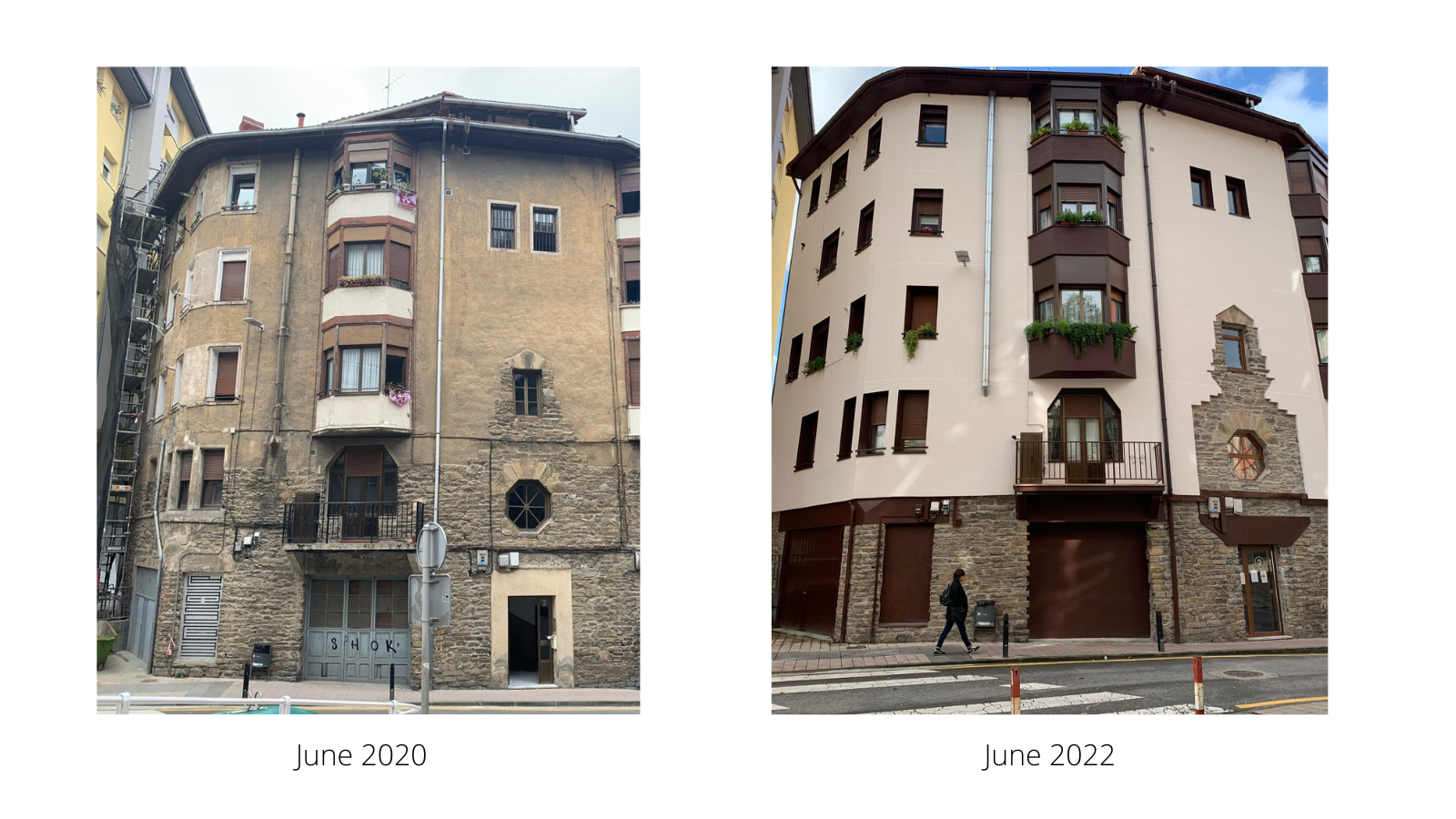
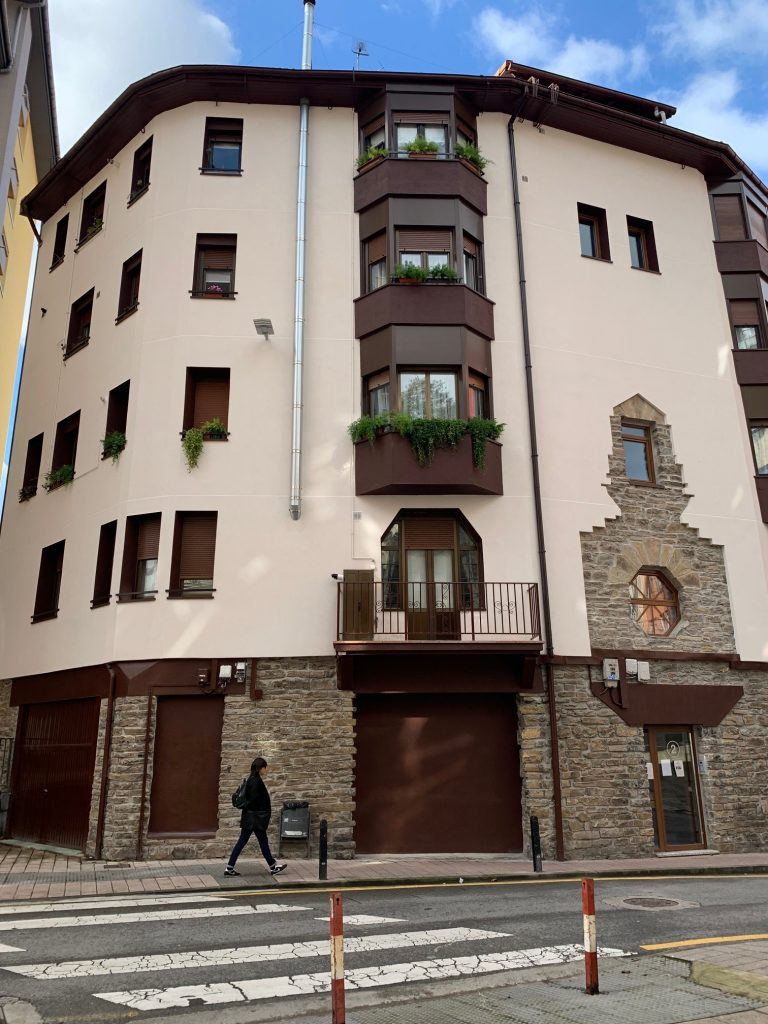
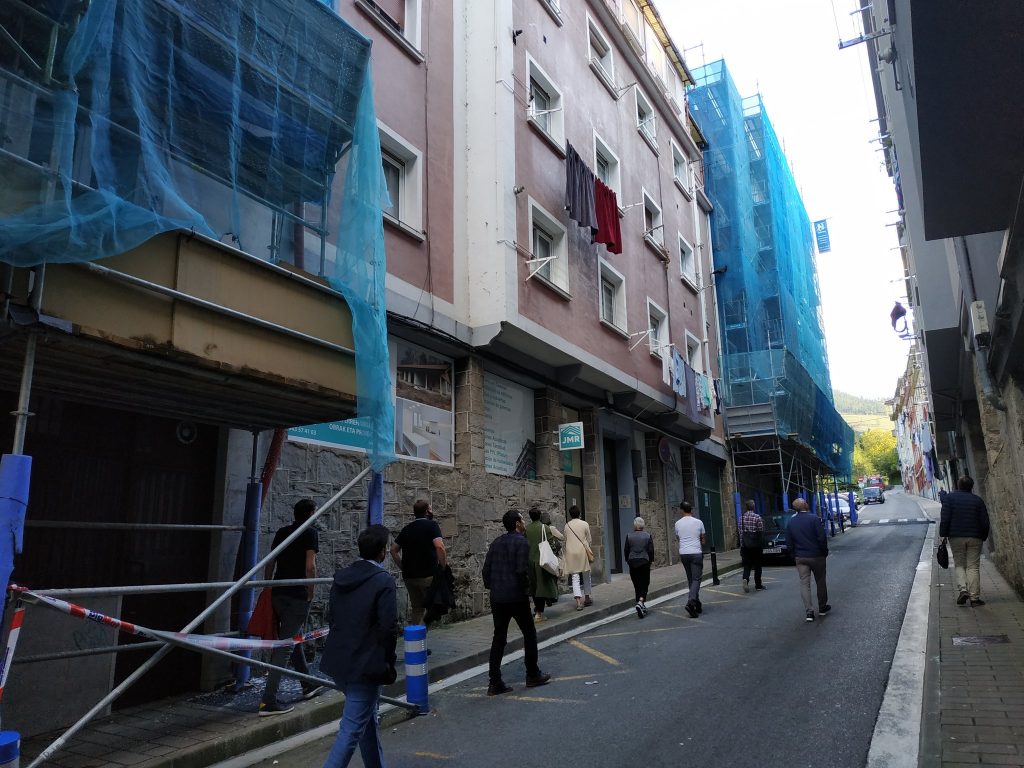
Refurbished building in Txonta (Eibar)

The Spanish Government is providing the Basque Country with 16.7 million euros to reinforce urban regeneration in Otxarkoaga, Txonta, as well as in Aramotz (Durango) and Basaundi Bailara (Lasarte-Oria). The European aid will make it possible to increase the subsidy received by each owner to alleviate their contribution to the payment of the projected works.   

The Basque Government announced today that the Basque Country is the first autonomous community in Spain to receive the initial batch of Next Generation European Funds related to urban regeneration, which form part of the Recovery Plan to repair the economic and social damage caused by the pandemic. The Government of Spain has delivered 16.7 million euros that will go to the four neighbourhoods that have their projects underway as part of the Opengela project.  

“The Basque Country is the first Spanish community to receive this aid for having advanced projects in this area,” explained the Department of Territorial Planning, Housing and Transport. This refers to the urban regeneration initiatives in the neighbourhoods of Otxarkoaga (Bilbao), Txonta (Eibar), Aramotz (Durango) and Basaundi Bailara (Lasarte-Oria), whose distribution of funds has already been established and which will now begin the administrative process to access them.  

The first two neighbourhoods started the European Opengela project in May 2019, as pilots. Durango and Lasarte-Oria are subsequently replicating the model and it is hoped that in the future it will be extended to other Basque cities, and also in Europe.   

The 16.7 million received will be used to increase the direct subsidies granted to the four local councils to finance the integral urban regeneration projects in vulnerable neighbourhoods, which are already underway and aim to improve the quality of life of a total of more than 1,500 people and 740 dwellings spread over 65 house numbers. 

The aim of these projects is not only to improve accessibility and energy efficiency with the refurbishment of residential buildings and the redevelopment of the whole area, but also to address their social situation, through technical offices and neighbourhood proximity offices to provide information, manage works and aid and promote local training and employment plans to boost their economic reactivation.  

Specifically, the investment from the European funds will be used to improve the energy efficiency of the homes and buildings to be refurbished, which should achieve a reduction in non-renewable primary energy consumption of more than 45% in some cases and 60% in general depending on the case. 

Otxarkoaga (Bilbao) 

The regeneration project of the Otxarkoaga neighbourhood in Bilbao, which affects 240 dwellings spread over 16 house numbers (five blocks), will add 6.56 million euros to the 3.55 million euros provided by the Basque Government and 997,139 euros from the City Council. Private individuals are investing 1.17 million. The integral action of this project consists of, in addition to the aforementioned actions, the extension of housing in three of the portals, the recovery of a commercial building to house socio-cultural activities and the installation of photovoltaic panels on its roof, and the constitution of a community of shared energy self-consumption. 

Txonta (Eibar) 

In addition to the 1.8 million euro grant from the Basque Government to Eibar Town Council – which in turn is providing a further 2.45 million euro – 2.15 million euro from the Next Funds have been added for the Txonta rehabilitation project, which will benefit 75 homes spread over 16 house numbersenergy-savingenergy-saving, and which stands out for the construction of a public lift to improve accessibility and the demolition of obsolete industrial ruins, which involves the redevelopment of the space. The owners will contribute 734,868 euros for the intervention. It should be borne in mind that, although the Txonta project covers 221 homes, the Next Funds are limited to 75 of them as they are the ones that meet the project start dates or the energy saving percentages established in Royal Decree 853/2021. 

Aramotz (Durango) 

The project for the regeneration of the Aramotz neighbourhood in Durango, which involves 128 dwellings spread over 16 house numberss, will receive an additional 3.66 million euros for its refurbishment from European funds, which will be added to the 3.4 million euro subsidy from the Basque Country and 1.08 million euros from the municipality itself. The owners, for their part, will invest 2.86 million euros. Its urban regeneration has the peculiarity of including the diversion of a channelled stream, which runs unburied in the inner area of the residential buildings. 

Basaundi Bailara (Lasarte-Oria) 

The regeneration project for the Basaundi Bailara neighbourhood in Lasarte-Oria will add 4.38 million euros to the 3.3 million euro grant awarded by the Basque Government, which covers 151 dwellings spread over 16 portals, and includes urban development work and refurbishment of residential buildings with improvements in accessibility and energy efficiency. The City Council will invest 1.93 million and the owners 3.33 million. 

Bandera de la Unión Europa

This project has received funding from the European Union’s Horizon 2020 research and innovation programme under grant agreement No 846707.

Otxar Opengela

Address: Avenida Pau Casals, No. 16, Otxarkoaga, Bilbao (In front of Plaza Kepa Enbeita)

Telephone: 946 85 19 32

E-mail: otxaropengela@vvmm.bilbao.eus

Txonta Opengela

Address: Calle Txonta No. 3, ground floor, Eibar

Telephone: 688 77 97 37

E-mail: txontabulegoa@eibar.eus

Copyright@2019 | All rights reserved | Legal notice | Icono de Twitter  Icono de Youtube

Copyright@2019 | All rights reserved | Legal notice Icono de Twitter  Icono de Youtube

The Office of the Historian of the City of Havana is interested in the Opengela urban regeneration programme

The Office of the Historian of the City of Havana is interested in the Opengela urban regeneration programme

  • The deputy councillor Miguel de los Toyos and the councillor Jon Bilbao accompany the officials of the Cuban organisation on their visit to the Otxarkoaga neighbourhood and its Opengela office.

The Deputy Minister for Territorial Planning and Urban Agenda of the Basque Government, Miguel de los Toyos, and the Councillor for Housing of the Bilbao City Council and President of the Bilbao Municipal Housing Association, Jon Bilbao, accompanied the heads of the Office of the Historian of Havana this morning on their visit to Otxarkoaga and its neighbourhood office (Otxar Opengela): Perla Rosales, Deputy Director General; Nelys García, director of International Cooperation; Anabell Cedeño, technical specialist of the International Cooperation Directorate; Malena Roche, director of Habana Espacios Creativos; and Ariam L. Mayor, senior specialist at Habana Espacios Creativos. The visit was also attended by the Director of Territorial Planning and Urban Agenda of the Basque Government, Ignacio de la Puerta, and the Director General of Municipal Housing of Bilbao, Eider Bilbao.

The Office of the Historian of the City of Havana, founded in 1938 by Emilio Roig for the protection of the cultural heritage of Old Havana, has carried out the rehabilitation of many buildings in the historic centre of the city. It had its heyday in the 1980s with historian Eusebio Leal at the helm, the first project for the restoration of the entire area and the declaration by UNESCO of the Historic Centre of Havana and its system of fortifications as a World Heritage Site in 1982. He is currently in the process of extending this type of project to other areas, not only in the Cuban capital, but in the whole of the Caribbean country.

Today’s meeting, requested by this Cuban body, was therefore a meeting and exchange of ideas between the latter and those responsible for the Opengela urban regeneration programme, coordinated by the Department of Territorial Planning, Housing and Transport of the Basque Government and involving 9 public and private organisations, including Bilbao Municipal Housing.

The Opengela project, which is funded by the European Commission’s Horizon 2020 programme, consists of setting up neighbourhood offices that accompany the neighbourhood throughout the process of refurbishing their buildings, offering support to homeowners’ associations in contracting works, managing public aid, accessing financing, improving energy efficiency and accessibility.

This programme is linked to the integral urban regeneration projects in vulnerable neighbourhoods, through which the aim is not only to improve accessibility and energy efficiency with the rehabilitation of residential buildings and the redevelopment of the entire environment, but also to address their social situation (low income, high unemployment and low level of education), through these technical offices and neighbourhood proximity.

The place chosen for the meeting was the Otxarkoaga neighbourhood, whose urban regeneration and building rehabilitation project, known as Orain Otxar, for 240 homes spread over 16 doorways and three streets in the neighbourhood (Irumineta, Txotena and Larrakoetxe) is well underway and its neighbourhood office Otxar Opengela is hosting a multitude of actions to accompany and support residents and other initiatives such as the remodelling of the old shopping centre and the launch of entrepreneurial initiatives in premises that are now empty.

Opengela, whose European project will end in January 2023, has generated a management model for neighbourhood offices that is already beginning to be deployed in other municipalities, beyond the two pilots in Otxarkoaga and Eibar. Specifically, in Lasarte and Durango, as well as in Pasaia, Abanto-Zierbena, Santurtzi and Valle de Trápaga.

Bandera de la Unión Europa

This project has received funding from the European Union’s Horizon 2020 research and innovation programme under grant agreement No 846707.

Otxar Opengela

Address: Avenida Pau Casals, No. 16, Otxarkoaga, Bilbao (In front of Plaza Kepa Enbeita)

Telephone: 946 85 19 32

E-mail: otxaropengela@vvmm.bilbao.eus

Txonta Opengela

Address: Calle Txonta No. 3, ground floor, Eibar

Telephone: 688 77 97 37

E-mail: txontabulegoa@eibar.eus

Copyright@2019 | All rights reserved | Legal notice | Icono de Twitter  Icono de Youtube

Copyright@2019 | All rights reserved | Legal notice Icono de Twitter  Icono de Youtube

Webinar: Deep Retrofit Community of Practice: Highly ambitious regions and projects across Europe

Webinar: Deep Retrofit Community of Practice: Highly ambitious regions and projects across Europe

Date: Thursday 2nd of June 2022 from 10:00 am to 12:30 pm CEST
 
This online seminar brings together ambitious regions and already running renovation and one-stop-shop EU funded projects, to offer a complete outlook for the sector: from up-skilling, policy, implementation, examples, to future development.
 
Moreover, it looks at replicating and expanding upon the work of diverse actors, while driving the innovation and implementation of the deep retrofit sector and the associated value chain of stakeholders.
 
Agenda
 
10:00-10:05 – Welcoming participants and speakers by Irene Egea Saiz, EHPA
 
10:05-10:20 – Keynote Speech: Cities and Regions leading Europe’s transition to climate-neutrality via the Covenant of Mayors by Frédéric Boyer, Covenant of Mayors Europe
 
10:20-11:00 – Region Panel Discussion moderated by Seamus Hoyne, Limerick Institute of Technology
 
  • Romania, Ministry of Energy, Label20.eu – Eugen Opritescu
  • L’orient urban heat – David Bourguignon
  • Extremadura Region in Spain, By AGENEX (TBC)
 
11:00-11:20 – How the EIB could support your region in the implementation of a One-Stop-Shop: focus on ELENA, by Louise White, Energy Efficiency & Energy Advisory Division of the European Investment Bank.
 
11:20-12:20 – Project examples: Renovation and One-Stop-Shop Initiatives, moderated by Irene Egea Saiz, EHPA
 
  • Superhomes2030
  • Sunhorizon
  • Opengela
  • One-Stop-Shop in Carlow, Kilkenny, and Wexford countries, Ireland, by 3CEA (TBC)
 
12:20-12:30 – Closing remarks by Daniela Bachner, Project Advisor Superhomes2030, CINEA
Bandera de la Unión Europa

This project has received funding from the European Union’s Horizon 2020 research and innovation programme under grant agreement No 846707.

Otxar Opengela

Address: Avenida Pau Casals, No. 16, Otxarkoaga, Bilbao (In front of Plaza Kepa Enbeita)

Telephone: 946 85 19 32

E-mail: otxaropengela@vvmm.bilbao.eus

Txonta Opengela

Address: Calle Txonta No. 3, ground floor, Eibar

Telephone: 688 77 97 37

E-mail: txontabulegoa@eibar.eus

Copyright@2019 | All rights reserved | Legal notice | Icono de Twitter  Icono de Youtube

Copyright@2019 | All rights reserved | Legal notice Icono de Twitter  Icono de Youtube
The European Commission highlights the Opengela project’s “energy savings and support for vulnerable people”

The European Commission highlights the Opengela project’s “energy savings and support for vulnerable people”

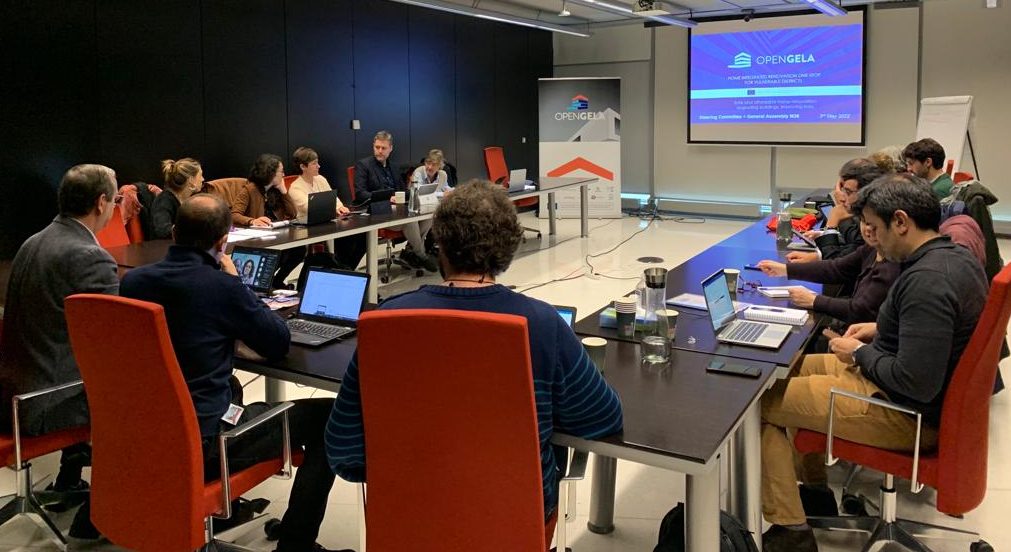
Opengela’s General Assembly

  • This European Project funded by the Horizon 2020 programme will continue for a further eight months, until January 2023. Therefore, the pilot neighbourhoods of Otxarkoaga (Bilbao) and Txonta (Eibar) will be able to finish the refurbishment of the buildings of 460 dwellings
  • CINEA (the European Climate, Infrastructures and Environment Executive Agency) values Opengela for its “ambitious energy-savings”, “the creation of local experiences and employment”, the scalability of the processes and the financing” and “the support for vulnerable communities of owners”

The European Union is living a key moment in the energy and ecological transition because of the geopolitical crisis consequence of the invasion of Ukraine. Now, more than ever, the European Commission is determined to reduce its dependence on Russian gas and has launched some initiatives to the end.The recently approved REPowerEU Plan or the ‘Fit for 55’ regulatory framework (aimed at reducing emissions) are oriented in this direction, and the Commission stresses the fundamental role that energy-saving must play in our buildings: in this sense, there is a clear preference for in-depth rehabilitation projects, which involve savings of more than 60% of energy consumption.

In this context of a double need for decarbonisation and reduction of energy dependence, the Commission clearly supports projects such as Opengela that also include a social component. Martin Eibl, Senior Project Advisor at CINEA, the official body that oversees such projects, explained.

During the General Assembly of Opengela, which yesterday brought together all the partners of the consortium led by the Department of Territorial Planning, Housing and Transport, Mr Eibl highlighted the role played by Opengela, an urban regeneration project that is developing two pilot projects in the Otxarkoaga (Bilbao) and Txonta (Eibar) neighbourhoods. He highlighted four reasons: on the one hand, he emphasised the “ambitious energy savings” proposed by the project thanks to the works related to efficiency in the intervened buildings. On the other hand, he underlined the importance given to “the value chain to create local experiences and employment”, which speaks in favour of “long-term policies”.

Opengela's partners
Opengela’s partners

Thirdly, emphasis was placed on “scalable processes and funding” beyond the two pilot neighbourhoods, which have already begun to be applied in other Basque localities and have been the subject of interest from other European regions. In addition, CINEA values “the support to vulnerable communities of homeowners”, a relevant aspect of the project.

Eight-month extension for Horizon 2020 project

The General Assembly also served to confirm that this project financed by the EU through the Horizon 2020 programme (with 1.7 million euros) will be extended by eight months more than initially planned. Instead of ending in May 2022, the European Commission has accepted an extension – without additional funding – until January 2023 to allow all the objectives to be reached and to finalise the works in the Txonta and Otxarkoaga neighbourhoods, some of which were delayed due to the difficulties arising from the pandemic and the recent supply crisis.

This is not to say that the urban regeneration process, and in particular the Opengela model, will end there. In fact, the replication phase has already begun in other places. Specifically, there are already 10 Basque municipalities that are applying this initiative based on the implementation of neighbourhood offices as a one-stop-shop for all procedures related to the refurbishment of buildings. In addition to the 460 homes covered by the project in Txonta and Otxarkoaga, work has begun in Lasarte and Durango, as well as in Pasaia, in three Biscayan municipalities in Ezkerraldea (Abanto-Zierbena, Santurtzi and Trapagarán), as well as another two in the Ayala Valley: Orduña and Amurrio. In total, there are 1,800 dwellings.

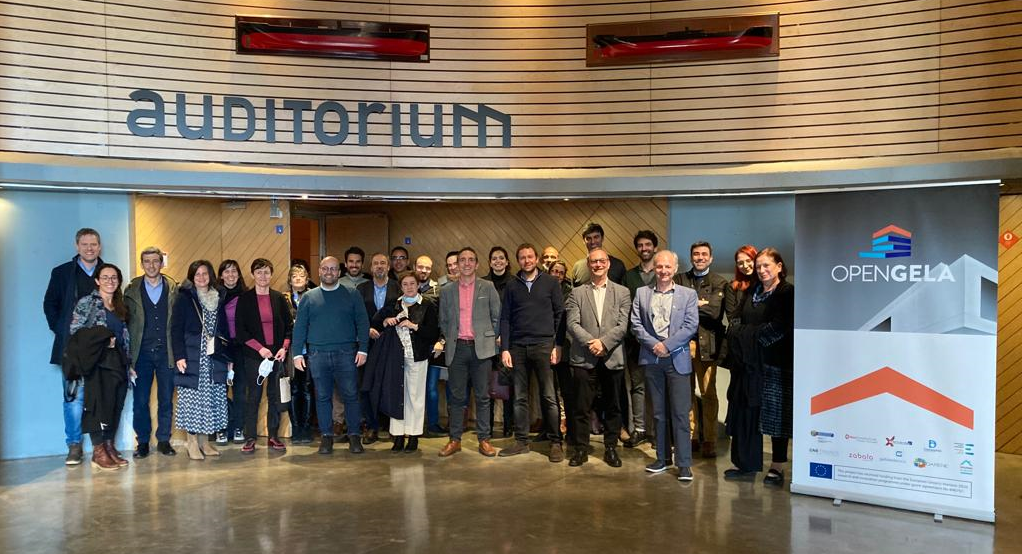
The European Opengela project started in May 2019 and is an example of public-private collaboration. In addition to the Basque Government, there are other public entities in the consortium, such as the Basque Energy Agency (EVE), Bilbao Municipal Housing and Debegesa, as well as two organisation at the European level (FEDARENE and Housing Europe) and firms specialising in financing (GNE Finance), communication (Gabineteseis) and European affairs (Zabala).

Bandera de la Unión Europa

This project has received funding from the European Union’s Horizon 2020 research and innovation programme under grant agreement No 846707.

Otxar Opengela

Address: Avenida Pau Casals, No. 16, Otxarkoaga, Bilbao (In front of Plaza Kepa Enbeita)

Telephone: 946 85 19 32

E-mail: otxaropengela@vvmm.bilbao.eus

Txonta Opengela

Address: Calle Txonta No. 3, ground floor, Eibar

Telephone: 688 77 97 37

E-mail: txontabulegoa@eibar.eus

Copyright@2019 | All rights reserved | Legal notice | Icono de Twitter  Icono de Youtube

Copyright@2019 | All rights reserved | Legal notice Icono de Twitter  Icono de Youtube
Seven European regions visit Bilbao and Eibar to replicate the Opengela model of urban regeneration

Seven European regions visit Bilbao and Eibar to replicate the Opengela model of urban regeneration

  • The pilot projects in the neighbourhoods of Otxarkoaga and Txonta have received heads of organisations interested in implementing similar initiatives in two regions of Croatia, two in Spain, three counties in Ireland, and also two in Poland and Greece.
  • The Opengela project, which is supported by the European Commission through the Horizon 2020 programme, is already being replicated in other Basque municipalities.

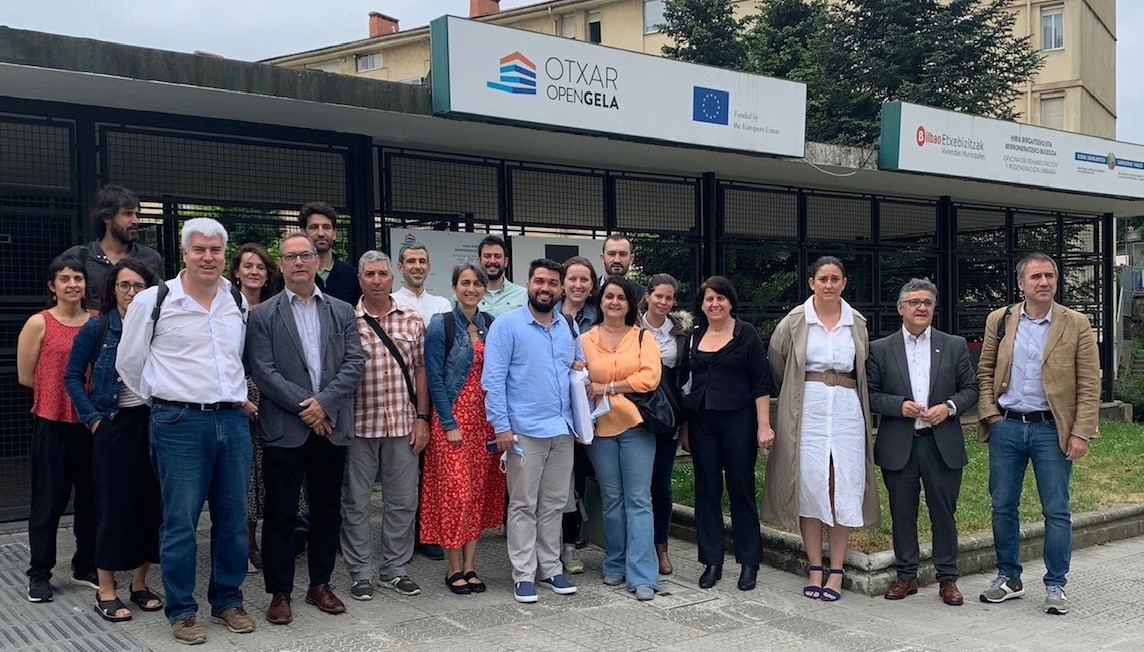
The Opengela model of urban regeneration is expanding not only in the rest of the Basque Country but also in different European countries. On Thursday 31 March and Friday 1 April, representatives from seven municipalities and regions visited Bilbao and Eibar to see first-hand the pilot projects being developed in the Otxarkoaga and Txonta neighbourhoods, respectively.

The selection of the regions to replicate the model has been made by Fedarene, the European Federation of Energy and Environment Agencies and Regions, which in turn is one of the partners in the Opengela consortium. housing Europe also assisted in the selection of the regions that visited the project.

These are two regions in Croatia, two more in Spain – Extremadura and Asturias- and also an Irish entity established in three counties, Poland and Greece.

From Croatia, officials have come from two regions: on the one hand, from the county of Medjimurje, which covers three cities and 22 municipalities. There, the regional energy agency MENEA operates as an advisory centre for energy and climate issues and is now in the process of expanding its services to, among other things, integrate a home renovation service collaboratively and ensure financial sustainability.

The other Croatian region present in Euskadi covers the counties of Varazdin, Koprivnica-Krizevci and Virovitica-Podravina. There, the regional energy agency, REA North, has already started to provide consultation and technical guidance related to housing renovation. However, it is looking for ideas to address the financial side and questions on how to establish an innovative citizen-driven one-stop-shop model at the local and regional levels.

There was also a Spanish presence, through representatives from Extremadura and Asturias. Representatives from Extremadura came with AGENEX, an energy agency that has already participated in other European projects such as INNOVATE or HousEEnvest. It is looking for ideas and experiences to address social housing from a perspective in which homeowners are involved, in addition to the search for sustainable financial tools. For its part, Asturias was present through Viviendas del Principado de Asturias-VIPASA, the company that manages the public housing stock of the Principality of Asturias.

The fifth region comes from Ireland. There, the energy agency 3cea is active in the counties of Carlow, Kilkenny, and Wexford and is committed to energy efficiency and renewables. Finally, there were also the presence of the Polish region of Mazovia through the Mazovia Energy Agency, and from Greece via the Thessaloniki social rental agency.

Opengela, until January 2023

The heads of the seven European cities and regions have attended a busy programme in which they have learned about the general lines of the Opengela project, which started in May 2019 and is scheduled to end in January next year. They also visited the two pilot neighbourhoods: Txonta (Eibar) and Otxarkoaga (Bilbao), where work is already progressing on the buildings where the intervention is being carried out. Opengela focuses on the creation of neighbourhood offices that act as a one-stop-shop, where the neighbourhood receives support to tackle the refurbishment of their buildings from a perspective of improving energy efficiency and also with social criteria.

In Otxarkoaga, in Bilbao, work is being carried out on five buildings totalling 16 portals with a total of 240 dwellings. The office is located in the former BBK kindergarten. In the Txonta neighbourhood in Eibar, the pilot project involves work on 221 homes in 17 home owners.

The project has received 1.7 million euros from the European Commission’s Horizon 2020 programme and is led by the Basque Government’s Department of Territorial Planning, Housing and Transport. The consortium is joined by eight other partners: the local urban development companies of the two municipalities (Viviendas Municipales de Bilbao and the Gipuzkoa-based Debegesa), the Basque Energy Agency (EVE), as well as three companies: one specialising in financing, GNE Finance; another in European affairs, Zabala; and another in communication, Gabineteseis; together with two European organisations based in Brussels: Fedarene and the European Federation of Public, Cooperative and Social Housing (Housing Europe).

Bandera de la Unión Europa

This project has received funding from the European Union’s Horizon 2020 research and innovation programme under grant agreement No 846707.

Otxar Opengela

Address: Avenida Pau Casals, No. 16, Otxarkoaga, Bilbao (In front of Plaza Kepa Enbeita)

Telephone: 946 85 19 32

E-mail: otxaropengela@vvmm.bilbao.eus

Txonta Opengela

Address: Calle Txonta No. 3, ground floor, Eibar

Telephone: 688 77 97 37

E-mail: txontabulegoa@eibar.eus

Copyright@2019 | All rights reserved | Legal notice | Icono de Twitter  Icono de Youtube
Copyright@2019 | All rights reserved | Legal notice Icono de Twitter  Icono de Youtube
Otxarkoaga and Txonta have already mobilised a private investment of 3,6 million with the comprehensive refurbishment of their buildings

Otxarkoaga and Txonta have already mobilised a private investment of 3,6 million with the comprehensive refurbishment of their buildings

  • In 2021, the progress of the two one-stop shops of the Opengela project is already visible: more than 700 people are participating in the programme, with a reduction of more than 50% in the CO2 emissions of the intervened buildings.

The Opengela project continues to make progress. It started in May 2019, and even though the pandemic slowed down the urban regeneration process in the two pilot neighbourhoods (Otxarkoaga in Bilbao and Txonta in Eibar), by the end of 2021, some outstanding results can already be seen.

This project, which is funded by the European Commission through the Horizon 2020 programme, has set various objectives, both in the refurbishment of buildings and improving energy efficiency. And, in this regard, it is making notable progress.

At this moment, the two neighbourhoods have managed to reduce their CO2 emissions by more than 50% in the buildings where work is being carried out. Thus, in Otxarkoaga an average of 74% has been reduced in the four blocks that are currently being refurbished. According to the samples taken, the Bilbao neighbourhood has managed to reduce the emission of 340 tonnes of CO2 per year. This is possible thanks to the fact that 69,14% of the budget has been allocated to energy efficiency (both active and passive actions).

In the case of Txonta, the reduction in emissions is quantified at an average of 54,09%, with a total reduction of 157 tonnes of CO2 in the projects already executed. If the works currently underway are added, the number rises to 378,70 tonnes of CO2 per year. In the Gipuzkoa neighbourhood, 67,60% of the budget has gone directly to promoting energy efficiency.

3,6 million private investments

Public-private partnerships are fundamental to this progress. In addition to institutional support, the homeowner’s associations must agree to carry out the refurbishment projects. In this sense, private investment is important. By the end of 2021, total of 3,6 million euros had been mobilised between the two neighbourhoods: 825.438 euros in Txonta and 2,83 million in Otxarkoaga, where most of the property is owned to Municipal Housing. In fact, if the investment of the Bilbao public company is added, the investment is increased by a further 3,92 million.

In this sense, the final objective of the project is closed to being achieved, as it reached 4,6 million euros of private investment.

More than 700 people from 22 buildings in both neighbourhoods have already signed up to the project. It is worth highlighting the high degree of agreement among the neighbourhood to carry out the works (90% in Otxarkoaga and 88% in Txonta). This is reflected in concrete improvements. For example, it has already been agreed to replace a third of the carpentry in the buildings being refurbished.

The district offices, both Txonta Opengela and Otxar Opengela, accompany the neihbourhood throughout the refurbishment process. In Eibar, 143 aid applications have been processed for homeowner’s associations and individuals in different typologies. It is worth noting that this neighbourhood, which is considered vulnerable, has increased its registered population by 3,4% since 2018.

In Otxar Opengela more than 600 interactions have been registered last year between the people who manage the office and the neighbourhood, to accompany them in the refurbishment process.

Finally, a dozen homes in both neighbourhoods have expressed interest in taking advantage of Opengela’s specific financing, which offers payment facilities for renovation work.

Bandera de la Unión Europa

This project has received funding from the European Union’s Horizon 2020 research and innovation programme under grant agreement No 846707.

Otxar Opengela

Address: Avenida Pau Casals, No. 16, Otxarkoaga, Bilbao (In front of Plaza Kepa Enbeita)

Telephone: 946 85 19 32

E-mail: otxaropengela@vvmm.bilbao.eus

Txonta Opengela

Address: Calle Txonta No. 3, ground floor, Eibar

Telephone: 688 77 97 37

E-mail: txontabulegoa@eibar.eus

Copyright@2019 | All rights reserved | Legal notice | Icono de Twitter  Icono de Youtube
Copyright@2019 | All rights reserved | Legal notice Icono de Twitter  Icono de Youtube
Opengela, as an example of urban regeneration in the Basque Country in a training day

Opengela, as an example of urban regeneration in the Basque Country in a training day

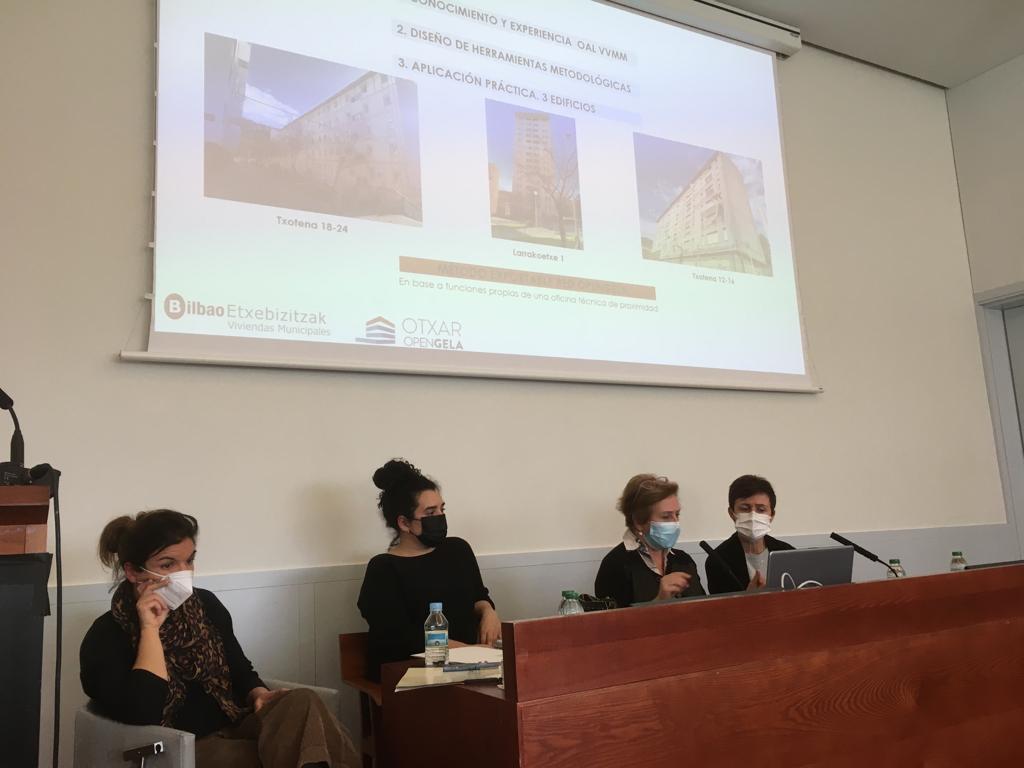
Representatives of Bilbao Municipal Housing and Debegesa during their intervention.

  • A course of the Basque Institute of Public Administration (IVAP), aimed at civil servants and profesional, presents the cases of integral refurbishment in Otxarkoaga (Bilbao) and Txonta (Eibar), as well as in Lasarte-Oria and Durango.
  • In addition, Ignacio de la Puerta, Director of Territorial Planning and Urban Agenda of the Basque Government, explains the different actions that are being carried out in the Basque Country in terms of urban regeneration.
  • On the other hand, Gerardo Ruiz, architect and professor of the Polytechnic University of Madrid, presented the great economic and social potential of urban regeneration presents in Basque neighbourhoods.

A training day organised on Tuesday 16 February by the Basque Institute of Public Administration (IVAP) has oriented civil servants and professionals in the Basque Country on the technical and organisational aspects of urban regeneration. In order to make this known, it used the Opengela project, which is developing two pilot projects in Otxarkoaga (Bilbao) and Txonta (Eibar).

The aim of the course was to show the regulatory and administrative frameworks in the field of urban regeneration and the scales at which it can be developed, as well as to learn about technical and organisational aspects.

Representatives of two of Opengela’s partners, Bilbao Municipal Housing and Debegesa, have presented the comprehensive refurbishment they are carrying out in Otxarkoaga and Txonta. In the Bilbao neighbourhood, work is being carried out on five buildings which with a total of 16 house numbers and 240 homes. In the case of Txonta, the work is being carried out on 221 homes of 17 house numbers.

For his part, the Director of Territorial Planning and Urban Agenda of the Basque Country, Ignacio de la Puerta, was in charge of presenting the actions being carried out in the Basque Country in urban matters, including Opengela, the project driven by the Basque Government which looks to improve quality of life in cities through urban regeneration.

Gerardo Ruiz Palomeque, professor at the School of Architecture of the Polytechnic University of Madrid and who collaborates with the Basque Government in the development of these actions, also participated in the conference. In his lecture, he explained the great economic and social potential of urban regeneration in the Basque neighbourhoods.

In addition to the representatives of Debegesa and Bilbao Municipal Housing, who coordinates the Txonta and Otxarkoaga offices, those responsible for two offices where the Opengela model has begun to be replicated, in the neighbourhoods of Aramotz (Durango) and Basaundi Bailara (Lasarte-Oria), aso participated and explained the actions they are carrying out.

The conference also included the sociologist Aitor Vallejo, founder of the European Research Survey, and the architect Sonia De Gregorio, who spoke about urban regeneration and the gender perspective.

Bandera de la Unión Europa

This project has received funding from the European Union’s Horizon 2020 research and innovation programme under grant agreement No 846707.

Otxar Opengela

Address: Avenida Pau Casals, No. 16, Otxarkoaga, Bilbao (In front of Plaza Kepa Enbeita)

Telephone: 946 85 19 32

E-mail: otxaropengela@vvmm.bilbao.eus

Txonta Opengela

Address: Calle Txonta No. 3, ground floor, Eibar

Telephone: 688 77 97 37

E-mail: txontabulegoa@eibar.eus

Copyright@2019 | All rights reserved | Legal notice | Icono de Twitter  Icono de Youtube
Copyright@2019 | All rights reserved | Legal notice Icono de Twitter  Icono de Youtube
The Euskal Hiria congress highlights the role of urban regeneration and the Opengela model

The Euskal Hiria congress highlights the role of urban regeneration and the Opengela model

Opengela en Euskal Hiria 2021
  • This forum, organised by the Basque Government and UN-Habitat at the end of November, stressed the need to recover cities, focusing on social and environmental aspects.

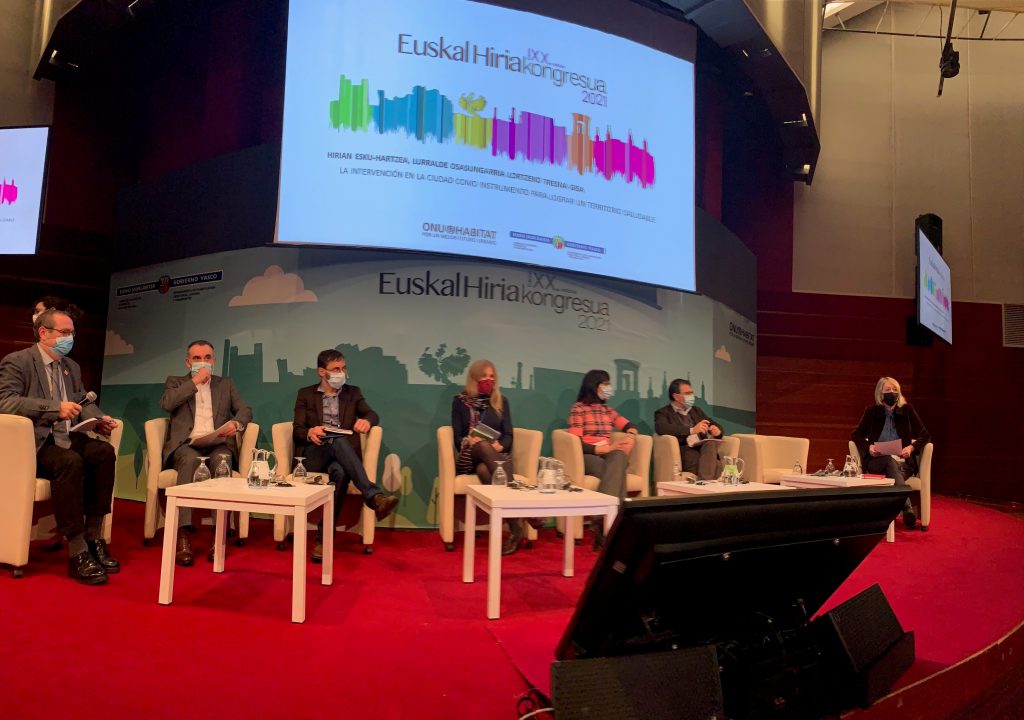
The Euskal Hiria congress held its twentieth edition this year. It is a classic event for experts in territorial planning, an area in which the Basque Country has excelled in recent decades. On this occasion, the focus was on the social and environmental transformation of cities, and it focused on specific cases of urban regeneration in vulnerable areas of the Basque Country, especially the Opengela model.

The importance of urban regeneration took centre stage at this congress held in Vitoria-Gasteiz. In a keynote speech, Ignacio de la Puerta, Director of Territorial Planning and Urban Agenda of the Basque Government, explained the need to “recover cities”. A study by the Government itself reveals that, despite the last 40 years of public investment, “30% of the Basque Country’s neighbourhoods are in conditions of high or very high vulnerability”, as well as “the relationship between vulnerability and health”.

To tackle this situation, the Basque Government has proposed a PERTE (Strategic Project for Economic Recovery and Transformation) for integral urban regeneration, a project open to multiple agents to intervene in 47 municipalities. To carry it out, it is proposed to “extend the Opengela model”, funded by the European Commission.

Ignacio de la Puerta, Director of Territorial Planning and Urban Agenda of the Basque Government, stressed the importance of generating “trust” with the neighbourhood, “raising awareness of the benefits of intervention to improve comfort and habitability”, carrying out a “diagnosis of economic, social and cultural aspects”, promoting employment opportunities and “offering a space for meeting and trust that functions as a one-stop shop”. In this sense, the Opengela model promotes the creation of proximity offices in each neighbourhood, which accompany the neighbourhood in the process of urban regeneration”. He also pointed out the novelty that it provides “fair and affordable financing for all”.

On the opening day, Iñaki Arriola, Basque Government Minister of Territorial Planning, Housing and Transport, encouraged us to “consider the promotion of new urban models that allow the different fabrics that make up our cities to coexist and improve their interrelation with the rural and natural environment, through a new configuration and use of public spaces and a new mobility”.

To achieve this, the Basque Country has equipped itself with a fundamental tool: the Bultzatu 2050 Urban Agenda, one of the first to be drawn up at regional level and which is aligned with the United Nations New Urban Agenda and the Sustainable Development Goals (SDGs). In this regard, Iñaki Arriola highlighted urban regeneration as a way to achieve “the transformation of cities towards fairer and more sustainable cities”.

The Basque Country already has several experiences in this area, which involves not only the rehabilitation of buildings, the improvement of energy efficiency and the accessibility of housing, but with a broader sense and consequences in social, economic, environmental and governance aspects. Opengela served as an example on several occasions for the speakers at the congress.

During Euskal Hiria, the head of UN-Habitat’s Spain office, Carmen Sánchez-Miranda, stressed that “if the Sustainable Development Goals are the What, the urban agendas are the How. UN-Habitat has been accompanying the Basque Agenda Bultzatu 2050 since its creation, convinced that the territorial level is a key level in the processes of implementation, coordination and promotion of effective governance, and that the role of sub-national governments is just as important as that of the national and local levels in this regard”.

The head of UN-Habitat in Spain added that “the way in which towns and cities recover from the pandemic will have a major impact on global efforts to achieve a sustainable future for all (…) the Sustainable Development Goals are precisely the articulating rails capable of ensuring that the short lights of the emergency are aligned with the long lights of development”. Euskal Hiria served as a contrast between experiences at a more local level and others at a global level.

Bandera de la Unión Europa

This project has received funding from the European Union’s Horizon 2020 research and innovation programme under grant agreement No 846707.

Otxar Opengela

Address: Avenida Pau Casals, No. 16, Otxarkoaga, Bilbao (In front of Plaza Kepa Enbeita)

Telephone: 946 85 19 32

E-mail: otxaropengela@vvmm.bilbao.eus

Txonta Opengela

Address: Calle Txonta No. 3, ground floor, Eibar

Telephone: 688 77 97 37

E-mail: txontabulegoa@eibar.eus

Copyright@2019 | All rights reserved | Legal notice | Icono de Twitter  Icono de Youtube
Copyright@2019 | All rights reserved | Legal notice Icono de Twitter  Icono de Youtube

Ignacio de la Puerta: “We are interested in intervening in the housing stock to improve the living conditions and health of citizens”

Ignacio de la Puerta: “We are interested in intervening in the housing stock to improve the living conditions and health of citizens”

Visita UIPI a la Otxar Opengela
  • The director of Territorial Planning and Urban Agenda of the Basque Government and coordinator of Opengela, presented the urban regeneration project being developed in the Basque Country to the International Union of Property Owners (UIPI).
  • The conference held at the Palacio de Villasuso in Vitoria-Gasteiz brought together institutional representatives who explained what is expected at European, national and local level in terms of regulations and support plans focused on energy efficiency.
  • In addition, attendees had the opportunity to visit the refurbishment works of the pilot project being carried out in Otxarkoaga (Bilbao).

The renovation of the building stock and the improvement of the energy efficiency of buildings is one of the objectives pursued by the European Union. To this end, it has set up different regulations and financial support systems such as the Next Generation funds. The conference ‘Basque property owners on board’, organised by the International Union of Property Owners (UIPI), brought together institutional representatives on 28 October in Vitoria and Bilbao (Basque Country) to put into context what is expected at EU, national and local level in terms of regulations and support schemes focused on energy efficiency.

One of the speakers was Ignacio de la Puerta, director of Territorial Planning and Urban Agenda of the Basque Government, who stressed the need to intervene in the housing stock “to improve the living conditions and health of citizens”. De la Puerta also had the opportunity to present Opengela, the project to set up neighbourhood offices to promote urban regeneration that is currently being carried out in five neighbourhoods in the Basque Country – Otxarkoaga (Bilbao), Txonta (Eibar), Aramotz (Durango), Basaundi (Lasarte) and Pasaia. “With the Opengela project, we are working on the one-stop shop model for the integral attention of citizens in urban regeneration, with the aim of extending this model to the whole of the Basque Country”, he explained.

The Opengela coordinator also pointed out the importance of the neighbourhood offices already operating in Otxarkoaga and Txonta to reach out to citizens: “It’s about providing a support service where the fundamental thing is to gain the trust of those who are going to be affected by the interventions, and to convey in simple terms the benefits of these works, which are not only related to energy efficiency, but also to improvements in living conditions”.

Visit to Otxar Opengela

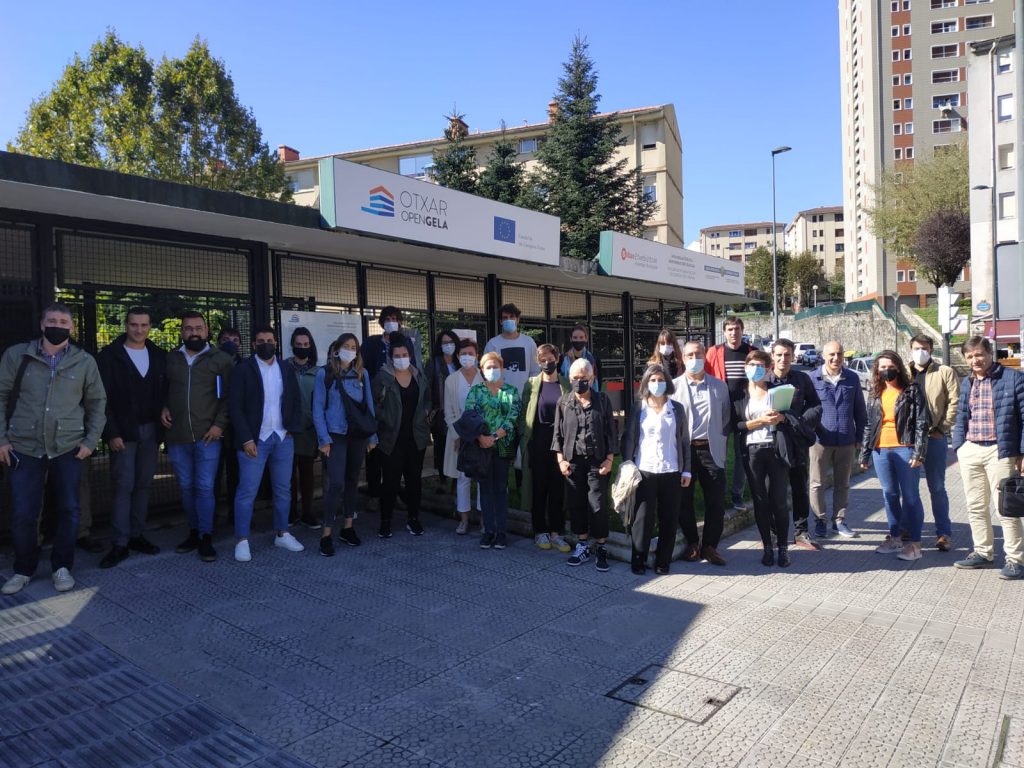
The attendees had the opportunity to learn first-hand about the work carried out in the neighbourhood offices set up by Opengela, with a visit to the Otxar Opengela in the Otxarkoaga district of Bilbao. Regarding these offices, Ignacio de la Puerta highlighted their capacity to act as a multifunctional space: “We also use this space as a space for knowledge, where, for example, courses can be given and new employment opportunities can be developed”.

The day ended with a visit to the Otxarkoaga buildings where rehabilitation work has begun. Opengela serves the neighbourhood of 16 portals and 240 homes in the neighbourhood, where the old shopping centre has also been remodelled and entrepreneurship initiatives have been launched in premises that were previously closed.

Bandera de la Unión Europa

This project has received funding from the European Union’s Horizon 2020 research and innovation programme under grant agreement No 846707.

Otxar Opengela

Address: Avenida Pau Casals, No. 16, Otxarkoaga, Bilbao (In front of Plaza Kepa Enbeita)

Telephone: 946 85 19 32

E-mail: otxaropengela@vvmm.bilbao.eus

Txonta Opengela

Address: Calle Txonta No. 3, ground floor, Eibar

Telephone: 688 77 97 37

E-mail: txontabulegoa@eibar.eus

Copyright@2019 | All rights reserved | Legal notice | Icono de Twitter  Icono de Youtube

Copyright@2019 | All rights reserved | Legal notice Icono de Twitter  Icono de Youtube

COAVN Gipuzkoa gets to know Opengela’s pilot projects in Otxarkoaga and Txonta

COAVN Gipuzkoa gets to know Opengela’s pilot projects in Otxarkoaga and Txonta

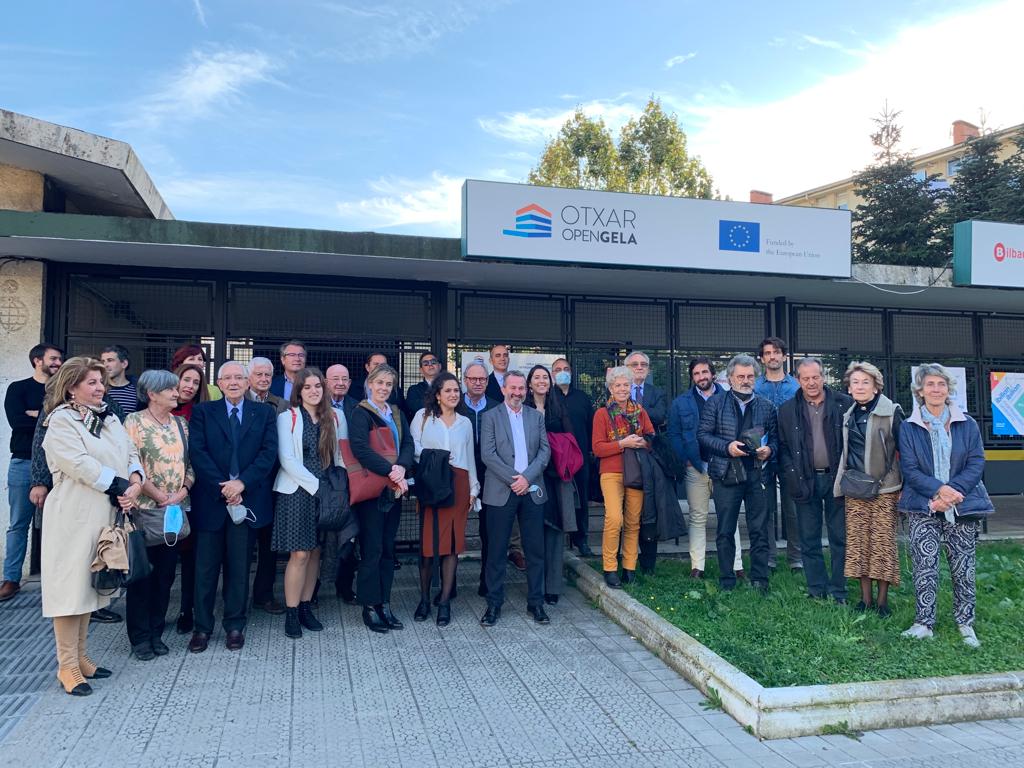
Representatives of COAVN Gipuzkoa visit the Otxar Opengela in Otxarkoaga (Bilbao)

Coinciding with World Architecture Day, on 4 October, representatives of the Gipuzkoa branch of the Official Association of Architects of the Basque Country (COAVN) visited the Otxarkoaga (Bilbao) and Txonta (Eibar) neighbourhoods, the pilot projects with which Opengela began its comprehensive urban regeneration activity in 2019.

The first destination was the Otxar Opengela, where Ignacio de la Puerta, director of Territorial Planning and Urban Agenda of the Basque Government, and coordinator of Opengela, and Claudia Penesse, member of COAVN Gipuzkoa, welcomed the attendees. De la Puerta explained what Opengela consists of, a project which, as he pointed out, “aims to accompany and advise the neighbourhood throughout the rehabilitation process”.

During their tour of the Bilbao neighbourhood, the attendees visited some of the buildings where work has begun. In total, work is being carried out on 16 houses numbers and 240 homes. In addition, the remodelling of the old shopping centre has been undertaken and entrepreneurship initiatives have been set up in premises that were previously empty.

Visit of COAVN Gipuzkoa to Txonta (Eibar)

In the afternoon, the delegation went to Opengela’s office in Txonta street (Eibar), where the refurbishment of 17 houses numbers and 221 homes is being managed, with the participation of the residents of the neighbourhood taking priority. Esther Zarrabeitia, representative of Debegesa, the company for the economic development of Debabarrena, showed the works that are being carried out with criteria of energy efficiency and accessibility, and highlighted the opportunity that the neighbourhood has to renovate their homes. “There has never been as much aid as there is now for refurbishment”, he recalled.

Bandera de la Unión Europa

This project has received funding from the European Union’s Horizon 2020 research and innovation programme under grant agreement No 846707.

Otxar Opengela

Address: Avenida Pau Casals, No. 16, Otxarkoaga, Bilbao (In front of Plaza Kepa Enbeita)

Telephone: 946 85 19 32

E-mail: otxaropengela@vvmm.bilbao.eus

Txonta Opengela

Address: Calle Txonta No. 3, ground floor, Eibar

Telephone: 688 77 97 37

E-mail: txontabulegoa@eibar.eus

Copyright@2019 | All rights reserved | Legal notice | Icono de Twitter  Icono de Youtube

Copyright@2019 | All rights reserved | Legal notice Icono de Twitter  Icono de Youtube